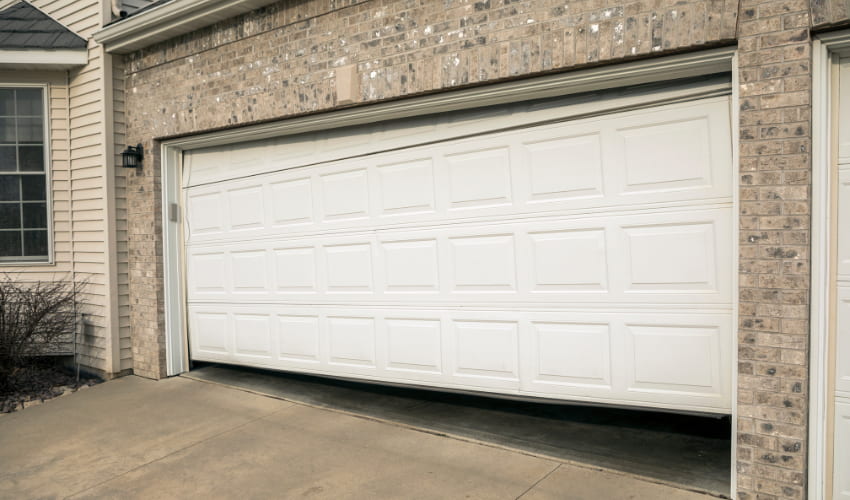
Garage door springs are among the components most homeowners ignore—until something goes wrong. They are small in size compared to the door itself, yet they carry the entire weight and make daily operation smooth and effortless.
When a garage door spring breaks, the entire system can become heavy, unresponsive, or even dangerous to operate. In many cases, the door may refuse to open at all, creating inconvenience and safety risks.
Understanding how these springs work, why they fail, and what to do when they break can help you make safer decisions and avoid costly mistakes.
Why Garage Door Springs Are So Important
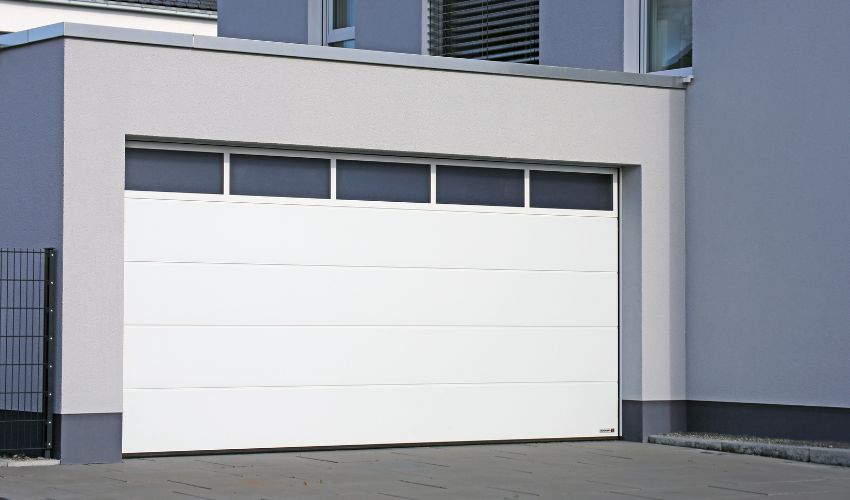
Garage door springs are responsible for balancing the heavy weight of the door. Without them, even a standard garage door would feel extremely difficult to lift manually.
These springs work by storing mechanical energy when the door closes and releasing it when the door opens. This balance allows smooth movement with minimal effort from the motor or user.
There are two main types of garage door springs:
- Torsion springs are mounted above the door and use torque to lift it evenly. Extension springs are installed along the sides and stretch to provide a lifting force.
- Both types serve the same purpose, which is reducing strain on the garage door opener and ensuring controlled movement.
Without functioning springs, the entire system becomes unstable and unsafe to operate.
Safety First: Why DIY Repair Is Risky
Garage door springs are under extreme tension. This stored energy makes them powerful but also dangerous if handled incorrectly.
Attempting to repair or replace a broken spring without proper training can lead to serious injury. Even a small mistake can cause the spring to snap unexpectedly.
The weight of a garage door also adds risk. Without a functioning spring, the door can weigh hundreds of pounds, making it difficult to control manually. For these reasons, professional repair is strongly recommended for spring-related issues.
How Professionals Fix Garage Door Springs
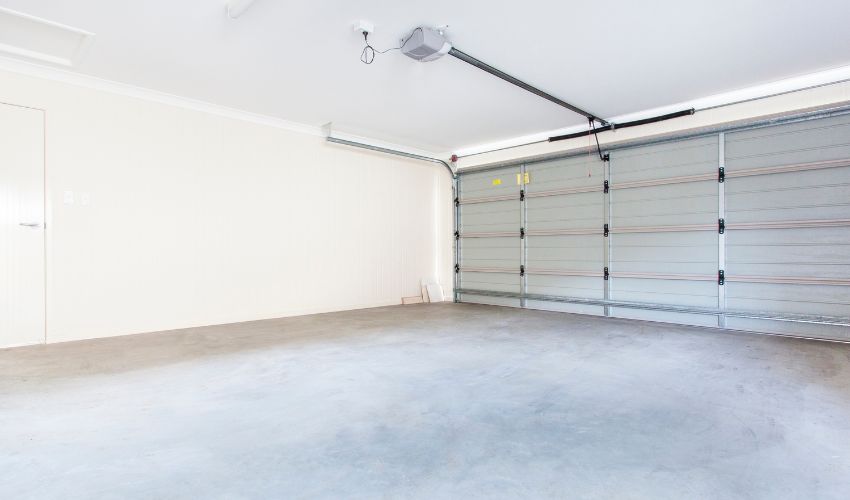
While the process is complex, understanding the general workflow helps you know what to expect.
Technicians begin by securing the garage door to prevent movement. The tension in the spring is then carefully released using specialised tools.
The damaged spring is removed and replaced with a new one that matches the correct size, weight capacity, and tension requirements.
After installation, the system is balanced to ensure both sides of the door lift evenly. Finally, lubrication is applied to reduce friction and improve performance.
This process requires precision and experience, which is why it is not recommended as a DIY task.
What Happens When a Garage Door Spring Breaks
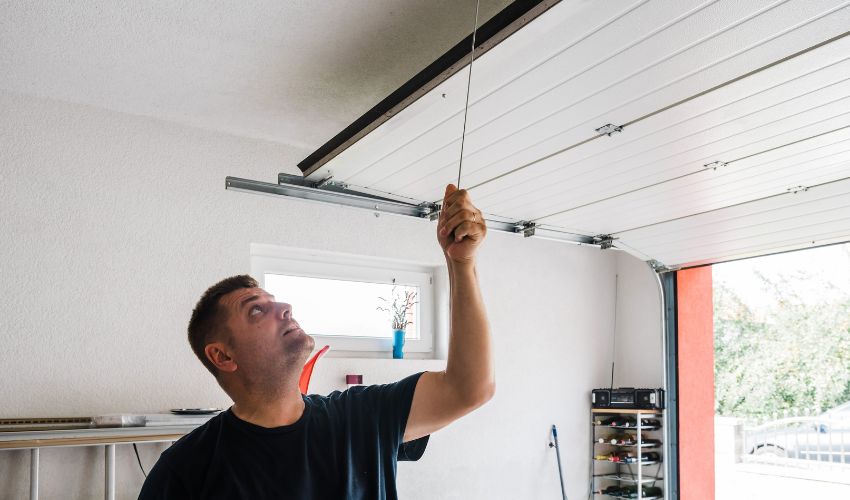
A broken garage door spring can disrupt the entire system instantly. In most cases, the door becomes extremely heavy or completely stuck in place.
You may also notice uneven movement, where one side lifts while the other stays down. This imbalance puts pressure on other components like cables, rollers, and the opener motor.
Another common issue is loud snapping sounds when the spring breaks. This happens because the spring is under high tension and releases energy suddenly when it fails.
In some cases, attempting to force the door open can cause further damage or even injury. This is why broken springs should always be treated as a serious mechanical issue rather than a minor repair.
What to Do When a Garage Door Spring Breaks
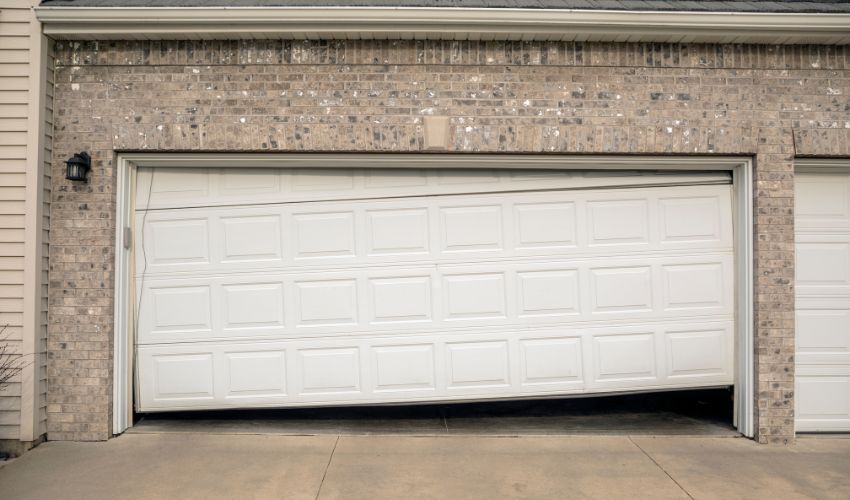
Instead of attempting a full repair yourself, the safest approach is to follow a controlled response.
- First, avoid forcing the garage door open. This can cause damage to cables, rollers, and the motor system.
- Second, disconnect the automatic opener if the door is stuck or unbalanced. This prevents accidental activation.
- Third, visually inspect the spring from a safe distance to confirm the issue. Do not attempt to touch or adjust it.
- Finally, contact a qualified technician who specializes in garage door systems. They have the tools and experience to handle high-tension components safely.
Why Garage Door Springs Break Over Time
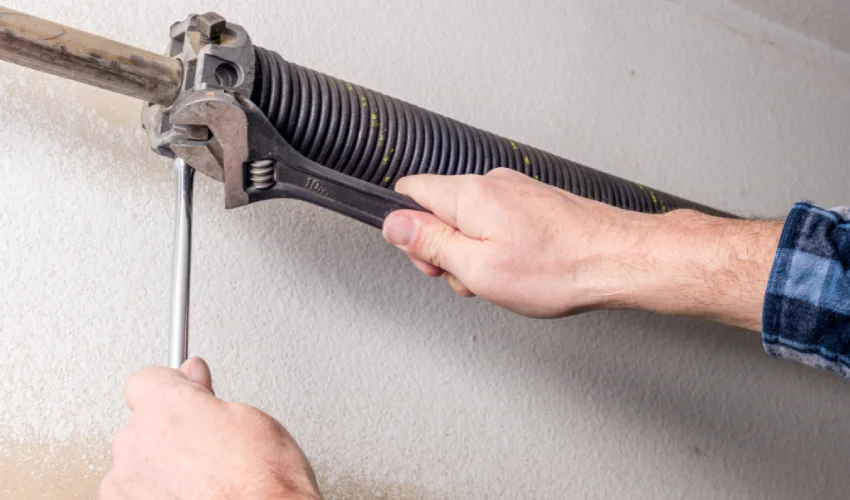
Garage door springs are designed for repeated use, but they are not permanent. Most springs are rated for a limited number of cycles, meaning each time the door opens and closes contributes to wear.
- One of the most common reasons for failure is natural wear and tear. Over time, the metal weakens due to constant tension and release.
- Rust and corrosion also play a major role. Moisture exposure can degrade the metal, making it more likely to snap under pressure.
- Improper installation is another factor. If springs are not installed or balanced correctly, they can wear unevenly and fail earlier than expected.
- Temperature changes can also affect performance. Extreme heat or cold can cause expansion and contraction, adding stress to the metal over time.
Warning Signs of a Failing Garage Door Spring
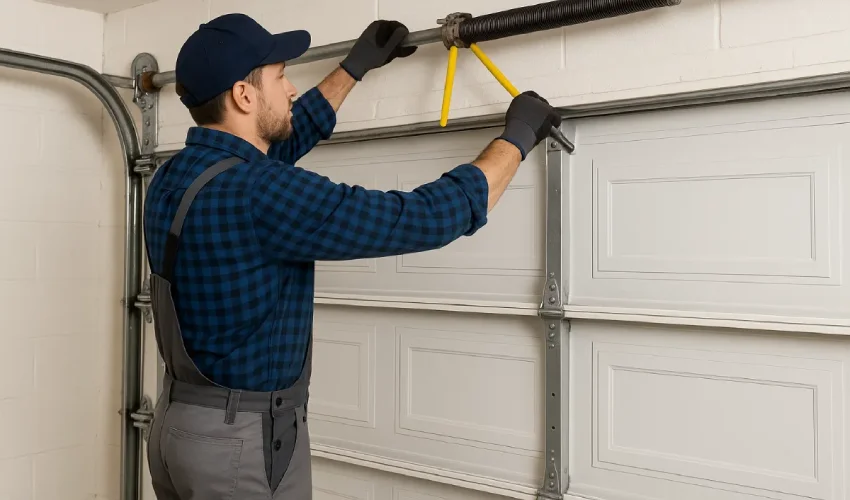
A broken spring rarely fails without warning. There are usually visible or audible signs before it completely breaks.
One of the earliest signs is difficulty in opening the garage door. It may feel unusually heavy or refuse to lift smoothly.
You may also hear squeaking, grinding, or popping noises during operation. These sounds often indicate strain on the spring system.
Visible gaps in the spring coils are another clear indicator of damage. In torsion springs, a noticeable separation in the coil usually means the spring has snapped.
Rust buildup is another warning sign that should not be ignored. Corrosion weakens the metal structure over time.
If the door appears uneven while moving or stops midway, it may also indicate spring failure or an imbalance in the system.
Preventing Future Garage Door Spring Issues
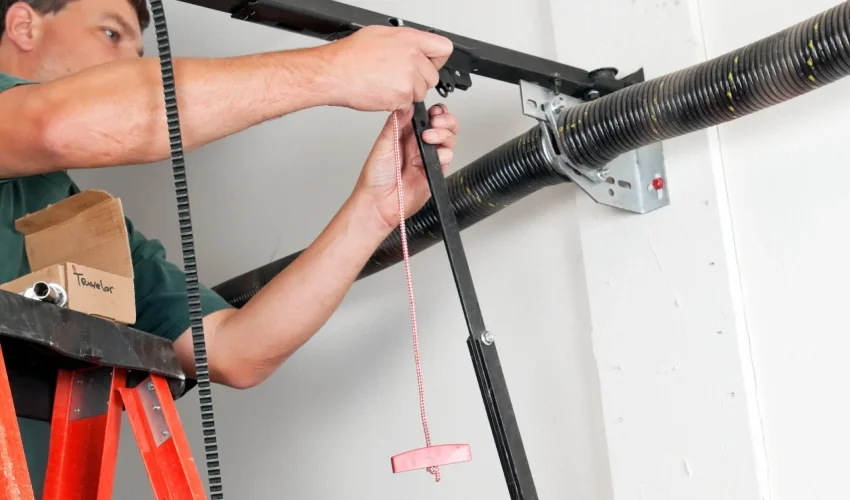
Regular maintenance can significantly extend the lifespan of garage door springs.
Lubricating springs periodically helps reduce friction and prevents rust buildup. Keeping the system clean also reduces strain on moving parts.
Avoiding unnecessary door cycles can also help reduce wear. Each open-and-close movement counts as one cycle, so limiting frequent use can extend lifespan.
Scheduling periodic inspections is also a good practice. A professional can identify early signs of wear before they turn into major failures.
7 Practical Tips for Better Garage Door Spring Care
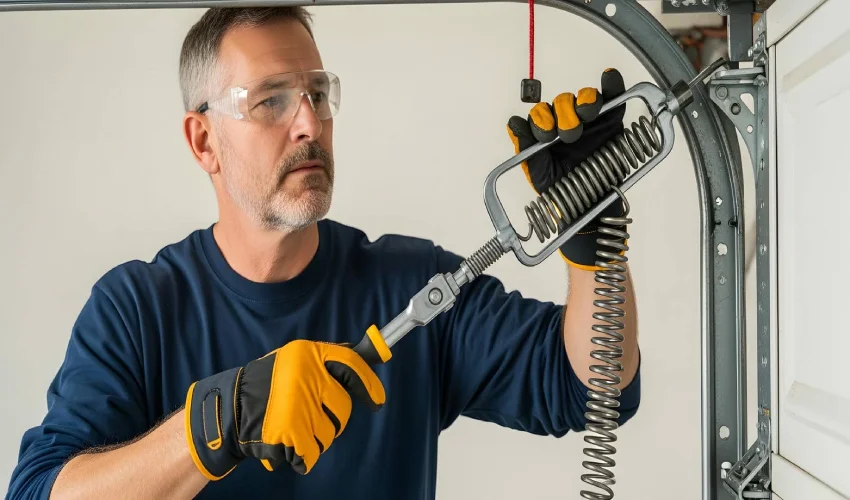
While spring replacement should be left to professionals, there are several maintenance habits that can help prevent early failure.
First, keep the springs lightly lubricated to reduce friction. Second, inspect for rust or corrosion every few months. Third, listen for unusual noises during operation.
Fourth, avoid forcing the door if it feels heavy or stuck. Fifth, ensure proper alignment of tracks and rollers.
Sixth, avoid DIY adjustments to spring tension. And finally, schedule professional servicing at least once a year.
These small habits can significantly improve safety and performance.
Final Thoughts
Garage door springs are small components with a critical role. When they function properly, they make daily life easier and safer. When they fail, they can create serious inconvenience and risk.
Understanding how they work and recognizing early warning signs can help you respond correctly. While minor maintenance can be done safely, actual spring repair or replacement should always be handled with caution and professional expertise—just as you would rely on a trusted Renovation Company for safe and high-quality home improvements.
A well-maintained garage door system not only improves convenience but also ensures long-term safety and reliability for your home.