I’ve cleaned many types of curtains, including soap scum, hard water stains, mold, and disgusting slime. Shower curtains get dirty in many ways, and one cleaning product won’t work for every stain. Treating stains by type can return shower curtains to like-new condition.
Different materials mean different washing instructions. For example, most shower curtains can’t be put in the washing machine. For removing soap scum and hard water stains, you can use distilled white vinegar. To get rid of odors and stains that aren’t caused by mold, use baking soda. If you’re dealing with mold, both bleach and hydrogen peroxide also work. Rinse the curtain at least once a month, fully dry it every time so it doesn’t mold, and the stronger cleaning methods won’t be necessary.
What Tools & Supplies Do I Need to Clean a Shower Curtain?
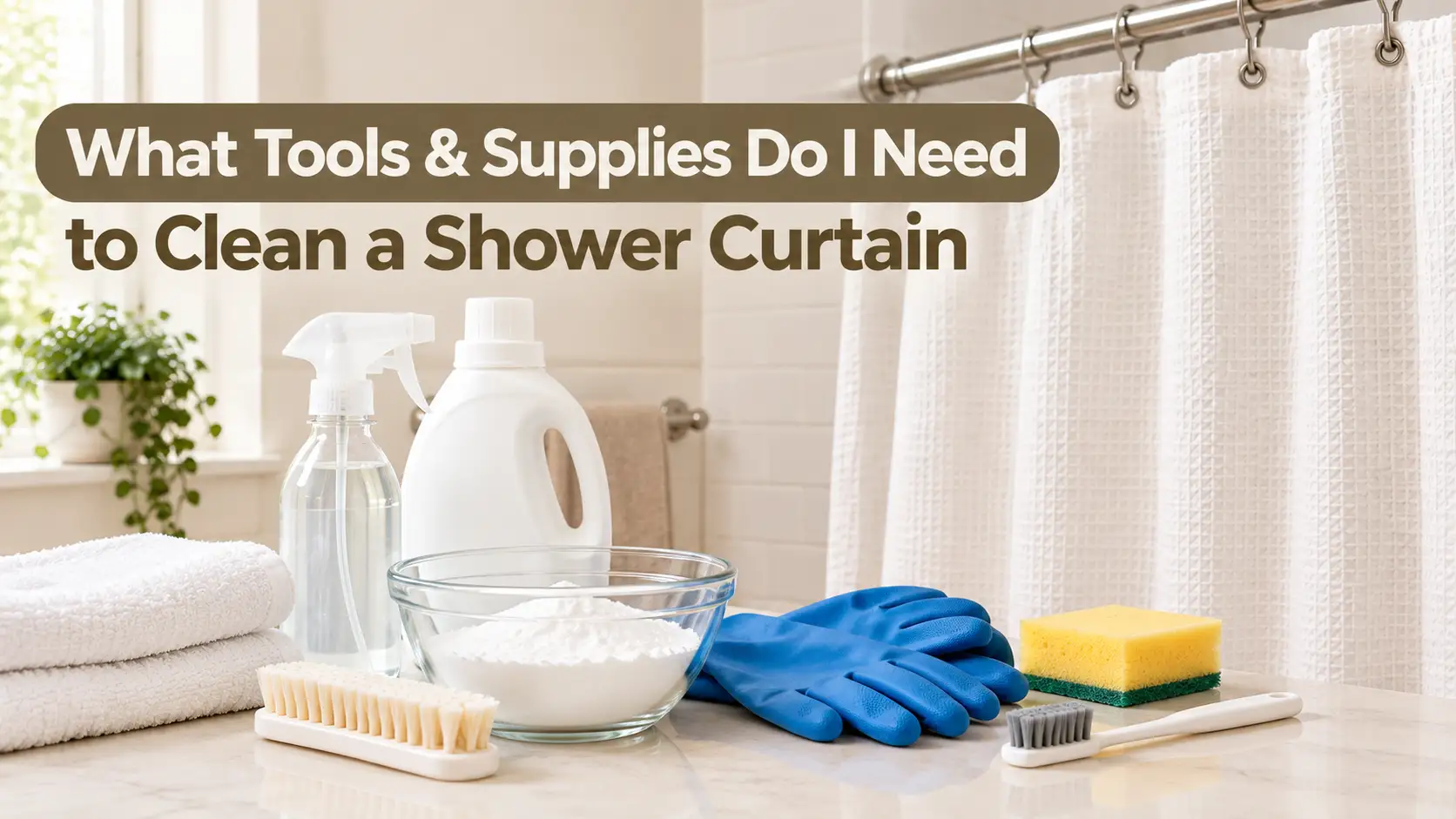
My shower curtain cleaning kit is pretty spot on, and I rarely have to buy anything extra.
- Mild laundry detergent
- White or Clear Vinegar
- Baking soda
- Citric acid (hard water)
- Bleach or 3% Hydrogen peroxide
- Soft-bristled brush
- Spray bottle
- Microfiber towels
- Handheld shower head, if you have one
This doesn’t require expensive items; you don’t have to go shopping, and you’ll also find that most items serve multiple functions, including cleaning your bathroom. The one item I’d say to skip would be fabric softener. Fabric softener coats shower curtains and removes the water-repellent finish on shower curtains, which helps prevent water from dripping onto the floor.
Get all your supplies before you start instead of going back and forth to find citric acid or a spray bottle. It’s a 5-minute step to not have to work with a partly treated curtain.
How Do I Know Which Cleaning Method My Shower Curtain Needs?
I always check the material I’m going to use before spraying any solution on curtains because the wrong solution on the wrong material creates the effect you were hoping to remove in the first place.
| Material | Safe cleaning method | What goes wrong if you guess wrong |
| Fabric (cotton, polyester, linen blends) | Gentle machine wash | Generally forgiving, low risk |
| PEVA / EVA plastic | Hand wash only | Machine heat and agitation crack and cloud the material |
| PVC | Gentle wash, lukewarm water | High heat warps the plastic |
| Polyester liner | Machine washable | Low risk, most durable of the group |
| Vinyl or nylon liner | Hand wash or gentlest machine cycle | Machine spin can tear or crease it |
If there is a care label, then that takes priority over the suggestions in the table. If not, these suggestions are the safest for each material. Additionally, if you’re thinking of buying a new shower curtain instead of cleaning the old one, comparing a less expensive sheer blend to a silky curtain is worth the extra thought you take before purchasing since the fabric takes the longest to clean and maintain.
Always check the material before you pick a method. A fabric curtain and a plastic curtain require almost the opposite solutions, and guessing wrong is why most plastic curtains end up being cracked and shrunk, instead of clean.
What Makes Shower Curtains Get Dirty So Fast?
A shower curtain attracts several different issues and requires several different solutions, which is why you end up using several different chemicals, creating the need for an all-in-one spray, which never works.
Soap scum is formed when fatty acids in soap interact with mineral compounds in tap water and bond to fabric and plastic. Limescale is the hard water mineral deposit left behind as calcium and magnesium carbonate, and it is a buildup deposited in multiple layers. A shower curtain that is not cleaned for months will have a visible deposit much greater than a curtain that was cleaned a few weeks earlier. Shower curtains provide warmth and moisture and are a permanent surface, which makes them ideal for mold and mildew growth unless they are dried between uses. The EPA guides on mold removal advocate removing the moisture source to eliminate mold because cleaning only the visible mold is simply a temporary measure.
Although the stains they leave are similar, these build-ups have various removal methods, which is why this is section is instead organized by the stain cause rather than “shower curtain cleaner.”
How Do I Wash a Shower Curtain in the Washing Machine?
This is a quick full clean and will work on many PVC curtains and polyester curtains as long as the fabric can withstand it.
Step 1: Remove the Curtain and Rings
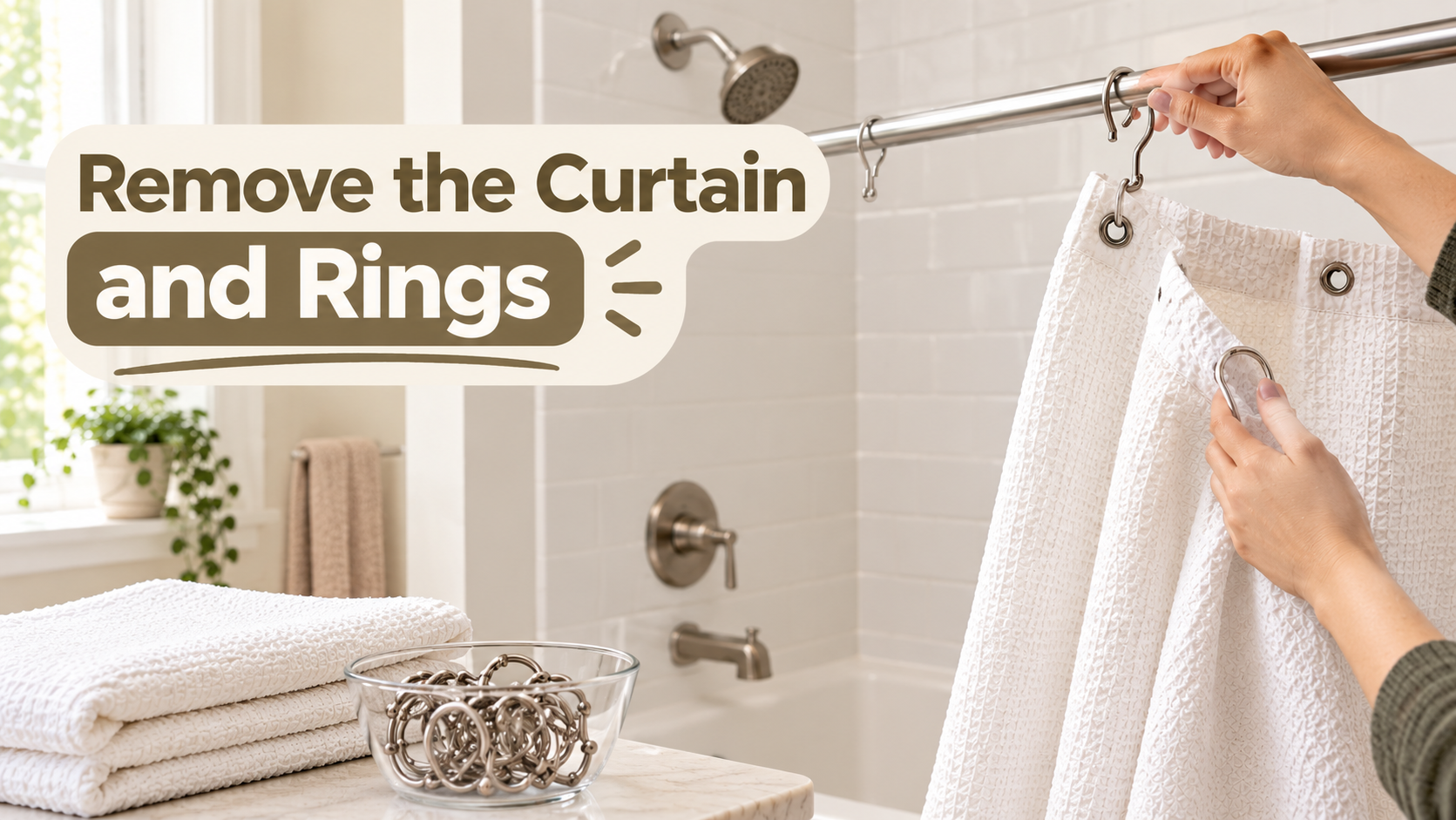
Removing the curtains from the shower is much easier than washing the curtains on the rod.
Step 2: Add Towels to Your Load
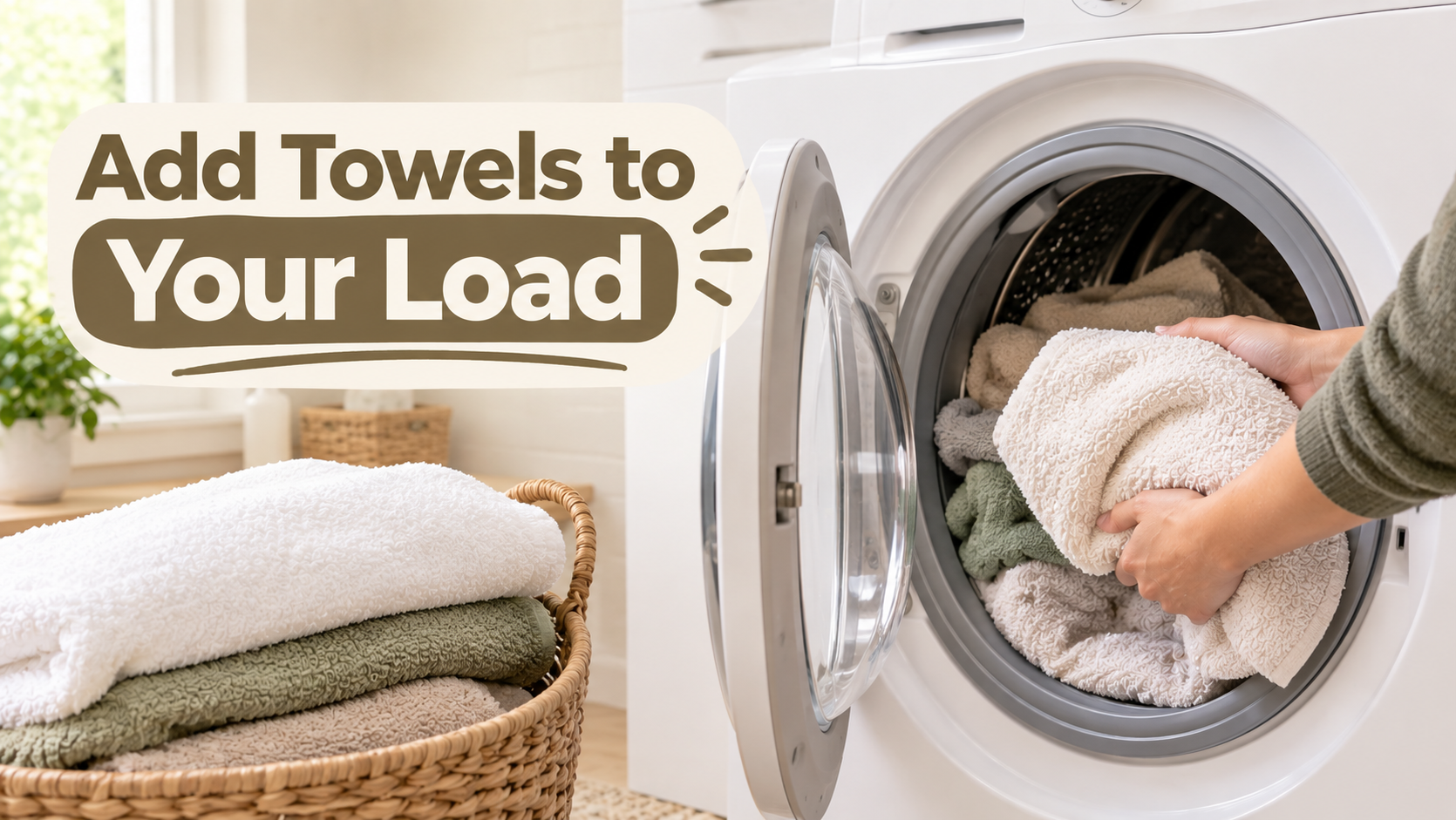
Two old towels provide scrubbing friction and will stop the curtains from getting all knotted up during a wash.
Step 3: Add a Few Ingredients
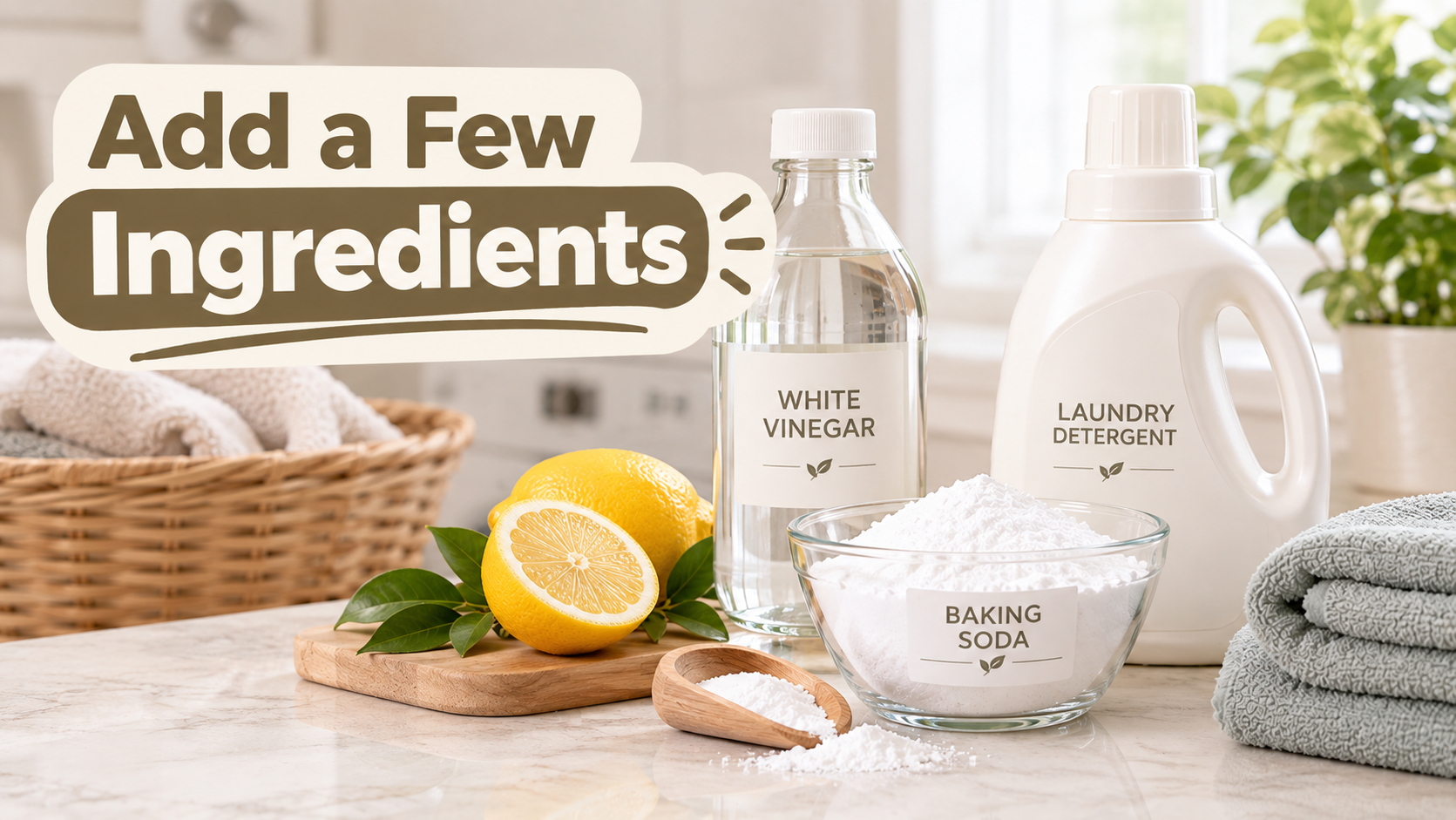
A combination of laundry detergent and half a cup of baking soda will remove dirt and odor.
Step 4: Set a Gentle Cycle at the Right Temperature
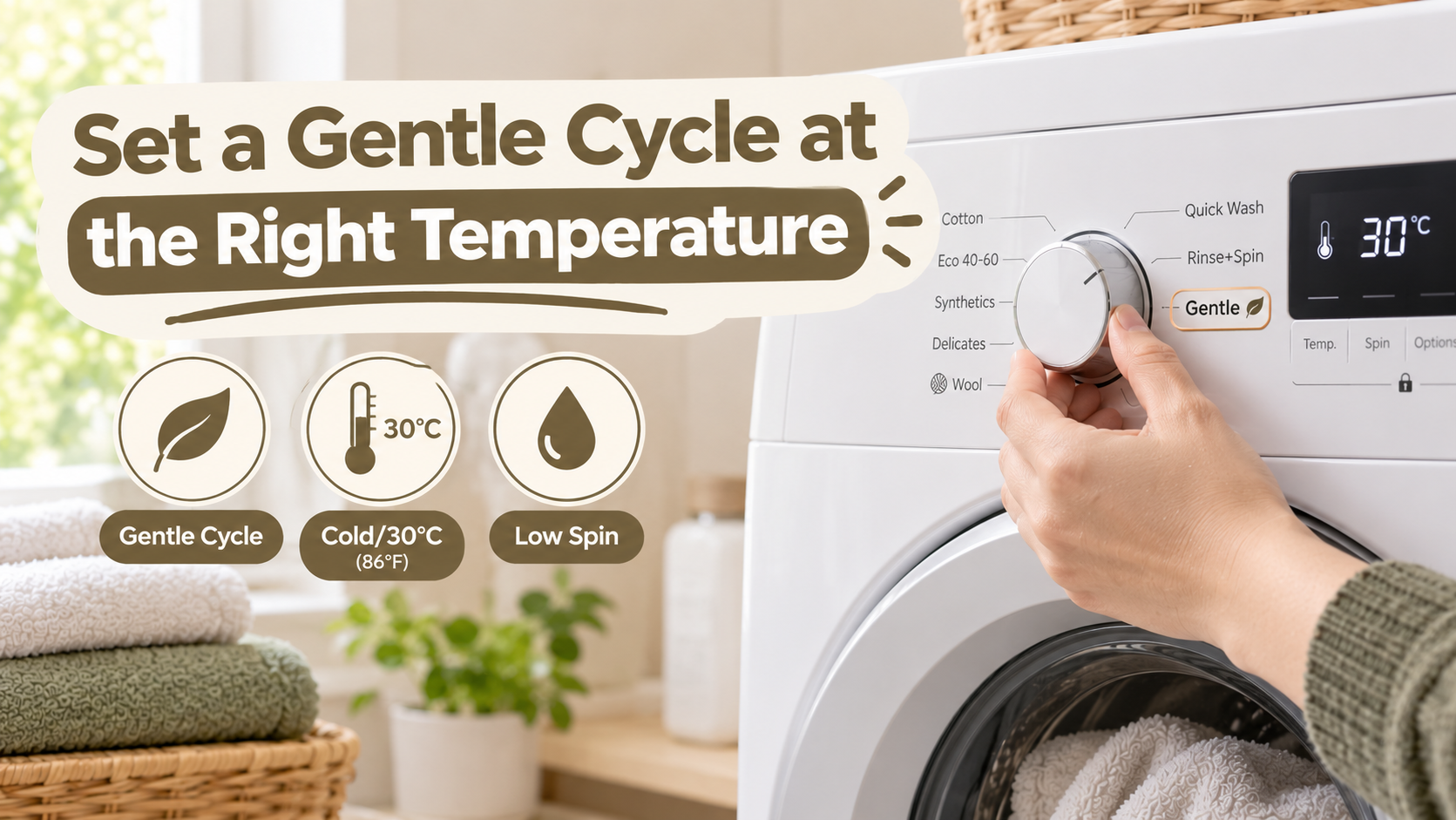
For delicate fabrics, wash at 30°C. For fabrics that can handle heat, wash at 40°C. Only use 60°C if the care label allows this. Avoid using hot water as this can cause your curtains to shrink or become misshapen.
Step 5: Add Vinegar to the Rinse
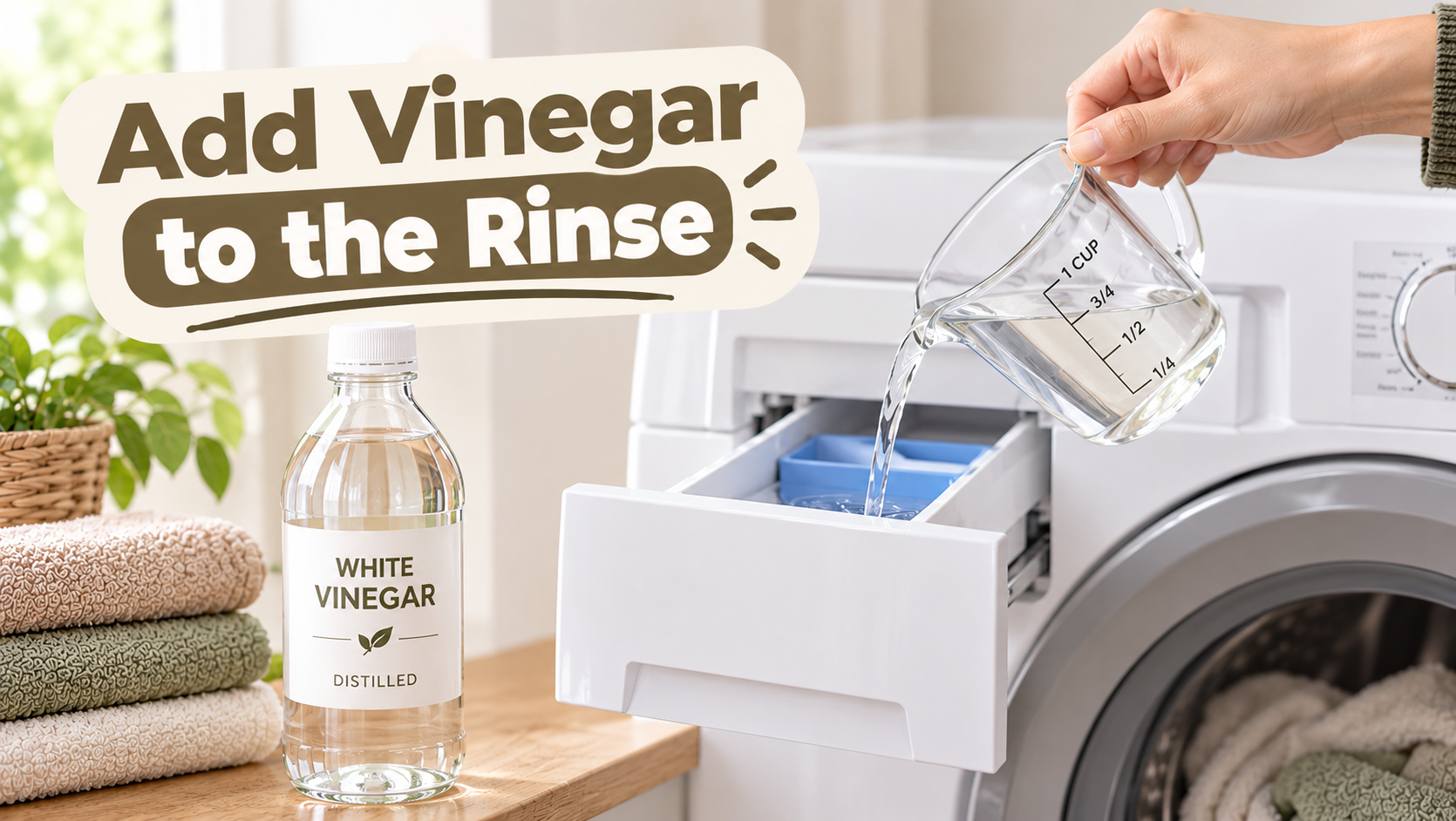
To remove leftover washing powder, add a cup of vinegar in the rinse cycle.
Step 6: Skip the Spin Cycle for Plastic or Vinyl
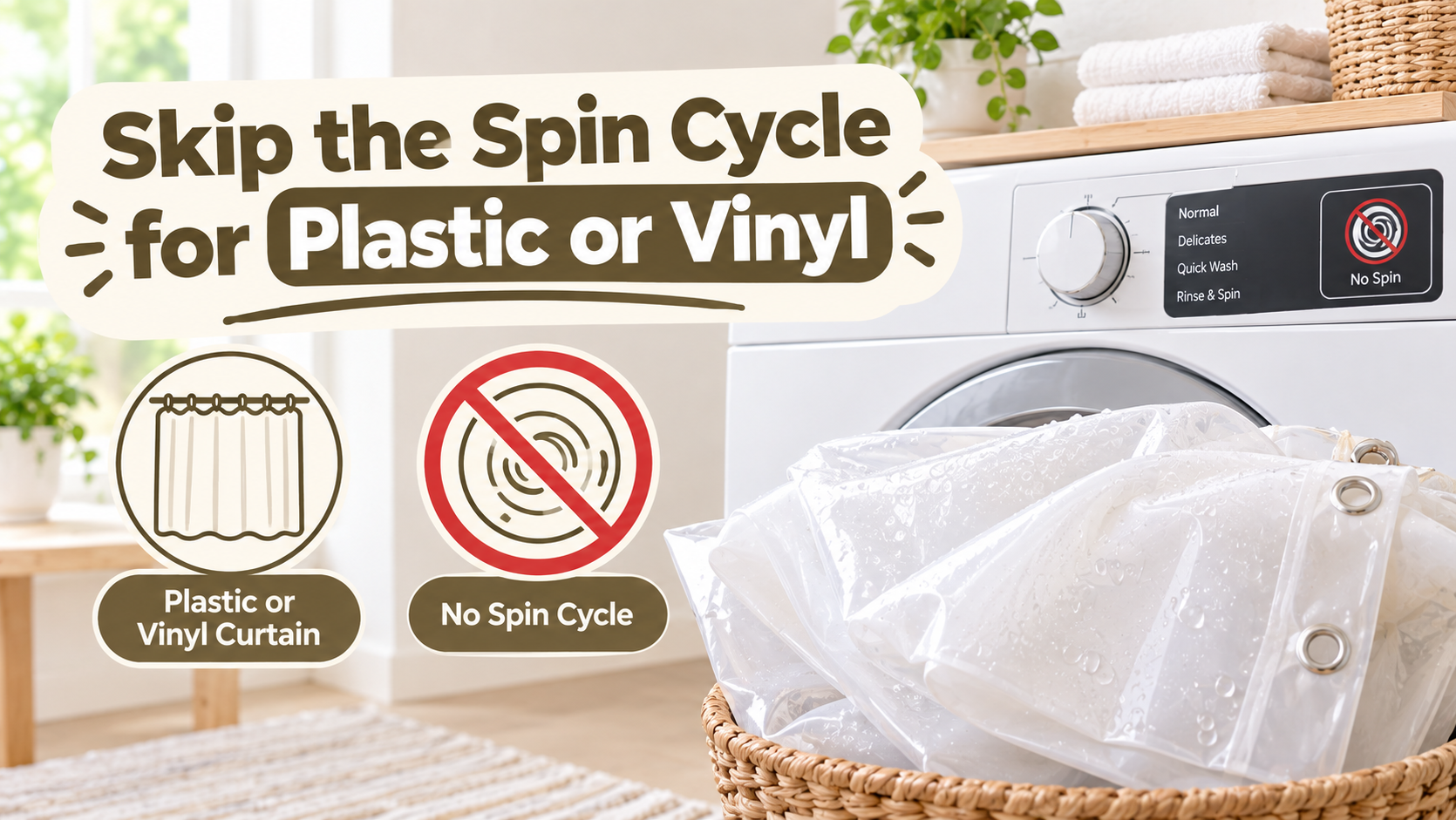
Vinyl or plastic curtains will most likely become cracked and creased from the wringing action. It is best just to let them drip dry.
Step 7: Hang It Back Up Immediately
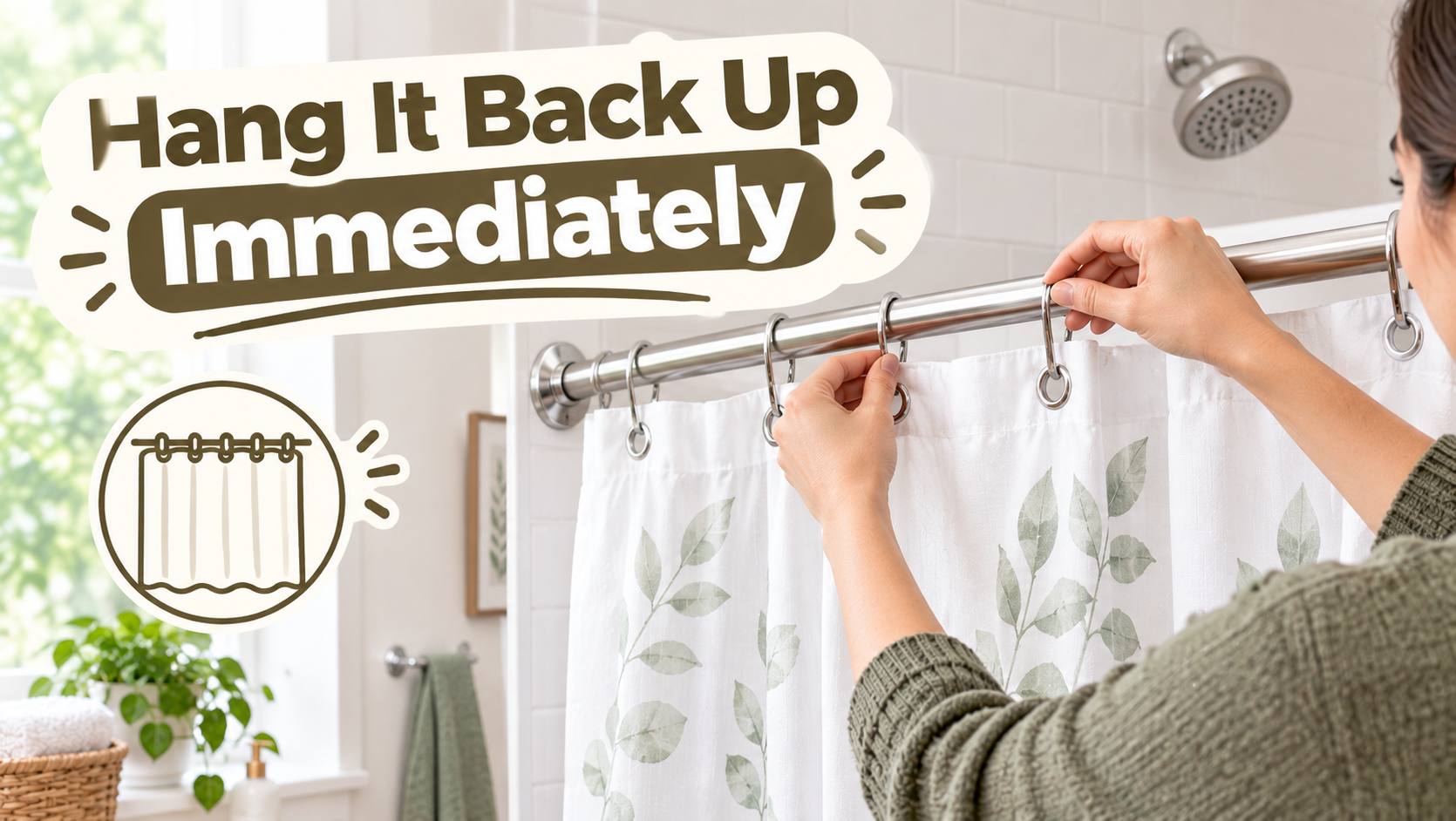
Open the curtain fully so it dries flat.
Limescale is the hardest to remove. The washing machine only removes surface-level soap scum and mildew. If you have limescale that has turned muddy and mold that has stained your curtains, then after washing you can use the vinegar or bleach method as described below.
Chlorine bleach will damage colored curtains. For all colored or patterned curtains, use either 1 cup of white vinegar or hydrogen peroxide.
How Do I Hand Wash a Shower Curtain or Liner?
It is safer to use the hand washing method to clean both plastic and vinyl curtains. This prevents the unwanted warping that occurs from machine washing.
Lay your curtains flat in the bathtub, fill the tub with warm water and a gentle detergent, and if the mold is visible and the curtains are white or clear, you can add 1/4 cup bleach per gallon of water to the mix. Soak the curtains for 15 to 30 minutes, then scrub the hem and any visible stains with a soft brush, making sure to scrub the seams in the curtain as soiled grime tends to collect in the seams. Rinse the curtains thoroughly until there is no soap residue left, then let them hang while opening them fully to dry.
Hand washing is a method that slows down the cleaning process for most people, but as long as the material cannot safely handle the agitation and heat of the dryer, it is the better option.
How Do I Clean a Shower Curtain With Vinegar?
Vinegar is the closest substitute to a fix-all that is listed here, because the acetic acid found in vinegar can help dissolve limescale as well as the fatty layer found in soap scum.
To use vinegar for cleaning, combine one cup of white vinegar with three cups of lukewarm water, then apply to the stained areas of your curtains to help break down soap scum and limescale, or to apply to the entire curtain as a full cleaning. Leave the vinegar solution on the curtains for 20 to 30 minutes for the vinegar to do its work. Once done, rinse thoroughly with clean water, then hang the curtains to dry, fully opened, with a window or exhaust fan.
Vinegar will help eliminate the buildup of scum and help with removing limescale, but will not help with mold issues or stains caused by pink bacteria. For either of those, you need the bleach or hydrogen peroxide method further down.
How Do I Remove Mold and Mildew From a Shower Curtain?
Bleach and hydrogen peroxide actually kill mold spores. Bleach and hydrogen peroxide oxidize mold and break down mold spore structures. Bleach and hydrogen peroxide are the only mold removers that are effective against mold spores, since the other products just cover the growth.
To make this mold cleaner, mix 4 parts water with 1 part bleach, or just use hydrogen peroxide. Directly spray mold or mildew cleaners and let them sit on the stain for 15 minutes. After that, scrub with a soft-bristle brush and thoroughly rinse with clean water. Repeat the process on stubborn mold spots.
Avoid mixing bleach and vinegar because they release poisonous chlorine gas and will be very harmful to you. Call a mold expert if you have respiratory problems.
Only the cleaners on this list with hydrogen peroxide and bleach will remove active mold and mildew. Always do a spot check on a small, hidden area to test hydrogen peroxide, and it may even lighten colored, dyed fabrics.
Bleach and hydrogen peroxide are the only mold removers that are effective against mold spores, since the other products just cover the growth.
Why Does My Shower Curtain Turn Pink, and How Do I Get Rid of It?
Serratia marcescens is the bacterium that produces the pigment prodigiosin that creates pink or reddish-orange stains in the hem. It feeds on the soap scum and shampoo residue. Researchers describe it as abundant in damp environments and frequently found in bathrooms, including shower corners, where it appears as that characteristic pink-orange discoloration (As documented in the CDC’s Emerging Infectious Diseases Journal).
For most of us, it is mostly a beліtіng problem and a hygiene issue. However, it can be irritating for people who have weak immune systems. As such, it should be treated immediately. To clean, follow your procedure for mold cleaning: spray the curtain with a bleach solution dissolved in water or hydrogen peroxide, wait at least 10 minutes, and wash the whole curtain. These bacteria thrive in moisture and fatty substances, so the best thing you can do is keep the curtain dry between showers and hang it after every use.
When it comes to pink stains, they should be treated the same way as mold, with bleach or peroxide, but they are a different organism altogether. Ignoring it as “just a stain” also allows it to grow unchecked.
Can I Clean a Shower Curtain Without Taking It Down?
Yes, for everyday soap film and early mildew, this is a helpful habit you can do between full washes.
Make a solution of 4 parts water and 1 part white vinegar. Put it in a spray bottle. Spray the curtain from top to bottom, still hanging, working in sections, and paying special attention to the bottom where the most grime occurs. Let it sit for 2 to 3 minutes, and either rinse with the handheld shower set on a gentle stream, or wipe with a damp, microfiber cloth. Hang it fully open to dry. To treat an actual spot or early mildew, dampen the area and gently rub baking soda into it. Hydrogen peroxide can also be lightly sprayed in the area as a spot treatment.
When it comes to stains that have been ground in and set, spot cleaning will not fix musty-smelling curtains or shift limescale that has had months to settle. Like a full wash, spot cleaning should be treated more like preventative maintenance weekly rather than a substitute.
How Do I Clean a Plastic or Vinyl Shower Curtain Liner Specifically?
Because water exposure affects the liners more than it affects the decorative curtain, the cleaning schedule of the liners needs to be individual, not as a group with decorative fabric curtains.
Hand wash liners, instead of machine washing, with vinegar to dissolve soap scum and lime scale build up. Pink stains and mold can be treated with bleach or hydrogen peroxide. Because liners are simple and inexpensive textiles compared to decorative curtains, I replace them every six to twelve months with heavy use.
Since liners are an important barrier to the floor, preventing water from contacting the floor, they deserve more than an afterthought in your monthly cleaning routine.
How Do I Clean Shower Curtain Rings and Hooks?
Hooks and rings, if metal, collect their own grime and rust. Soak them in a bowl of water with a splash of vinegar for about 30 minutes, then dry with a microfiber towel before rehanging. If yourcurtain hooks are corroded past what a soak can fix, replacing the hardware outright is usually cheaper and faster than fighting rust stains on a freshly cleaned curtain every month.
A rusty ring undoes a lot of the work you just put into cleaning the curtain itself, so don’t skip this step even though it’s easy to forget.
How Often Should I Wash My Shower Curtain?
Once a month is the general baseline. If you’re seeing buildup faster than that, or you have particularly hard water, don’t wait for the calendar date. A quick check while cleaning the rest of the bathroom is usually enough to tell you it’s time.
| Signal | What it usually means |
| Filmy or slightly sticky texture | Soap scum |
| Chalky white patches near the hem | Hard water limescale |
| Small dark specks in the folds | Mold or mildew |
| Pink or reddish tinge near the bottom | Serratia marcescens |
| Musty smell that lingers | Trapped moisture, likely early mold |
If you’re seeing more than one of these at once, wash the whole curtain rather than spot-treating, since overlapping problems tend to need the stronger bleach or vinegar treatment across the full surface anyway.
Why Do Shower Curtains Get Dirty Faster in Dubai’s Climate?
I clean curtains in Dubai apartments differently than I would somewhere with softer water and lower humidity, because the local conditions genuinely change the timeline. Tap water here runs hard, so limescale builds along the hem and rings within weeks rather than months. Bathrooms sealed for air conditioning cut down the natural airflow that would otherwise help a curtain dry between uses, and indoor humidity climbs even with the AC running through the summer months.
None of this means anything is being done wrong. It means the vinegar and citric acid methods above earn a permanent place in the monthly routine here, and drying habits matter more than they would in a drier climate. If your curtain is too long and pools water along the tub floor as a result, getting itprofessionally altered to the right length removes one more thing feeding the moisture problem.
Hard water and sealed, humid bathrooms are the two factors that push Dubai households toward more frequent cleaning than a generic guide written for a drier climate would suggest.
What Mistakes Make Shower Curtain Cleaning Worse?
I see the same handful of mistakes repeatedly, on my own early attempts as much as anyone else’s. Using hot water on plastic or PEVA curtains warps and clouds the material permanently. Mixing bleach and vinegar releases chlorine gas in an enclosed bathroom, so use one or the other, never both. Fabric softener coats the fibers and breaks down the water-repellent finish. Leaving a curtain bunched up wet traps moisture and creates the exact conditions mold and pink bacteria need to establish themselves, so always hang curtains pulled fully open to dry. And treating pink staining as “just mold” without addressing it properly lets it spread further before you get around to it.
Every one of these traces back to skipping the material check or the drying step, not to using the wrong cleaning product outright.
When Should I Replace Instead of Clean My Shower Curtain?
Cleaning extends a curtain’s life significantly, but not indefinitely. I replace rather than keep treating a curtain when mold or mildew keeps returning within days of a wash, even after bleach treatment; when a musty smell survives a full clean; when plastic or vinyl liners show visible tears or brittleness, or when fabric has faded or thinned enough that the water-repellent finish no longer holds.
As a rough guide, plastic liners typically need replacing every six to twelve months with regular use, while a well-made fabric curtain lasts considerably longer with proper cleaning and drying.
Keeping It Clean Long-Term
The methods above solve the problem you already have. What actually keeps a shower curtain clean is a short list of habits repeated without much thought: pull the curtain fully open after every shower, run the extractor fan or crack a window for 20 to 30 minutes afterwards, wipe down leftover soap splashes while they’re still wet, and run a quick vinegar spray once a week between full washes. The curtain that stays cleanest long-term isn’t the one that gets the most elaborate treatment once a year. It’s the one that gets the small, boring maintenance every week.
Frequently Asked Questions
How often should I wash my shower curtain?
At least once a month, more often with hard water or visible buildup. I check mine every time I clean the rest of the bathroom rather than relying purely on the calendar, since limescale in Dubai’s water builds up faster than a fixed monthly schedule accounts for.
Can I put a plastic shower curtain in the washing machine?
It depends on the specific plastic. PEVA and EVA are safer hand-washed, since machine heat and agitation crack and cloud them, while PVC and polyester liners can usually handle a gentle machine cycle. I’ve had a PEVA curtain come out of a hot wash cycle permanently clouded, which is why I default to hand washing anything I’m not sure about.
What removes mold from a shower curtain fastest?
A bleach and water solution, one part bleach to four parts water, works quickest on white or clear curtains. Hydrogen peroxide is the non-toxic alternative for colored curtains, though it takes slightly longer to show results. I keep both on hand and pick based on the curtain’s colour rather than defaulting to bleach every time.
Why does my shower curtain turn pink?
Pink or reddish staining comes from Serratia marcescens, a bacterium that feeds on soap and shampoo residue in damp conditions, not mold. I clean it with the same bleach or peroxide method as mold, and the curtains that stay pink-free longest in my experience are the ones that get pulled fully open to dry after every shower rather than left bunched against the tub wall.
Can I use fabric softener on a shower curtain?
I’d avoid it entirely. It coats the fibres and weakens the water-repellent finish the curtain depends on to keep water off the floor. I made this mistake once early on and noticed the curtain started letting water through at the hem within a couple of washes.
Is it safe to mix bleach and vinegar to clean a shower curtain?
No, never. Combined, they produce chlorine gas, which is genuinely hazardous in an enclosed bathroom. I treat this as a hard rule rather than a suggestion: pick one or the other for a given cleaning session, and rinse thoroughly before switching methods if you need to use both across separate passes.
Do I need to take the liner and the outer curtain down separately, or can I wash them together?
I wash them separately whenever possible. A plastic liner and a fabric curtain often need different water temperatures and cycles, and washing them together usually means compromising on one to accommodate the other. If your liner is due for a wash and the outer curtain isn’t, there’s no reason to run a full cycle on both.
How long does a shower curtain take to dry after washing?
A fabric curtain dries within a few hours if hung fully open with decent airflow. Plastic and vinyl dry faster, often within an hour, since the material doesn’t absorb water the way fabric does. In a sealed, air-conditioned bathroom, I run the extractor fan for the first 20 to 30 minutes to speed this up, since that’s the window where a damp curtain is most likely to pick up mildew again.