
A sliding glass door is both a window and a passageway, and that dual function is exactly why standard curtain advice tends to fall short on it. The curtain has to stack back cleanly without blocking the opening, glide without catching on the track, and still provide full coverage when closed. Getting that combination right depends more on the track and mounting choice than on the fabric alone.
- Wave curtains on a ceiling-mounted track give the cleanest look for wide sliding doors.
- A layered sheer-plus-blackout setup on a double track offers the most flexibility for daily use.
- Eyelet curtains suit smaller, less frequently used doors but resist tracking smoothly on wide openings.
Measurement, mounting height, and stacking space determine whether any of these actually function well, not the fabric choice on its own.
What Are the Best Curtain Options for Sliding Glass Doors?
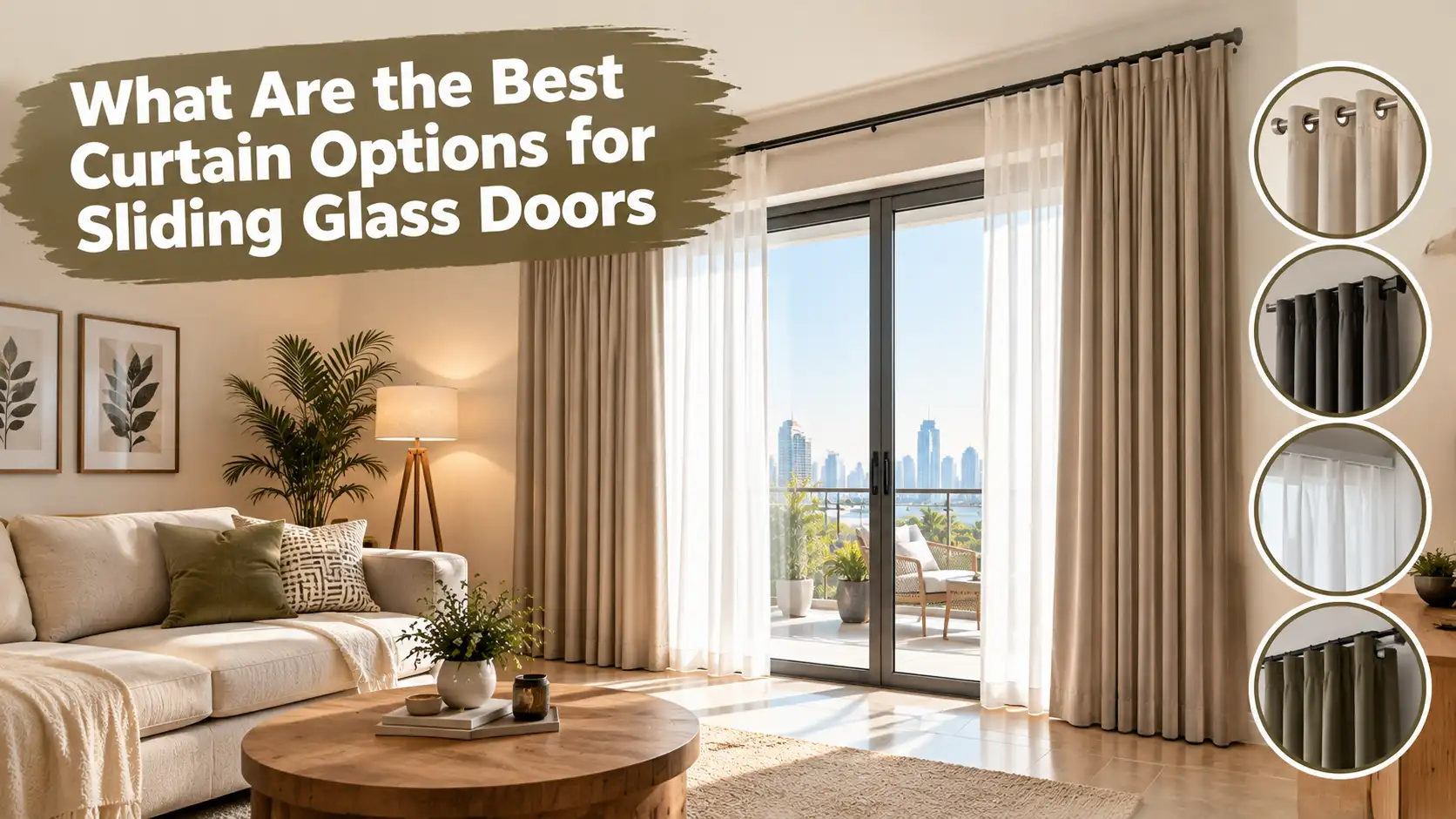
Five real options cover most sliding door situations:
- Wave curtains on a track
- Layered sheer-and-blackout panels
- Eyelet curtains
- Panel or vertical blinds
- Roman shades mounted above the frame
Each solves a different combination of coverage, daily use, and room style, and none of them is universally correct.
A door used daily, like a balcony or patio exit, needs smooth tracking and enough stacking room at the side so the curtain doesn’t block the path. A decorative door that stays closed most of the time can carry fuller, heavier fabric without the same daily-use constraint. Starting from how the door actually gets used, not just how the room should look, is what narrows this list down to one or two realistic choices.
Why Are Sliding Doors Harder to Dress Than a Standard Window?
A standard window curtain only needs to hang and open. A sliding door curtain needs to hang, open, close, and stay clear of a moving glass panel and a walking path, several times a day in most households.
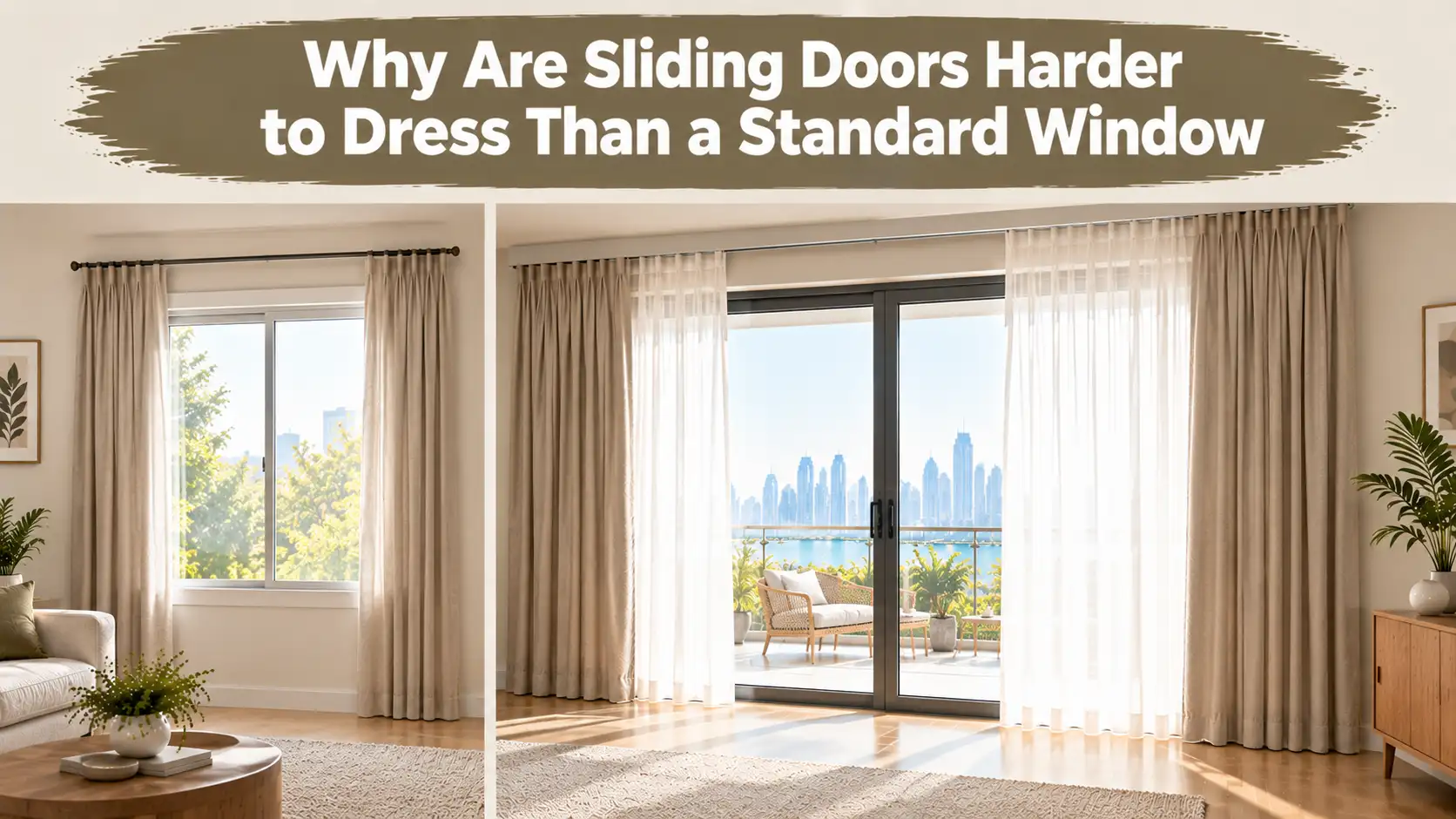
That adds three requirements a regular window never has. The curtain needs enough width to fully cover a wide opening without looking sparse when closed. It needs a track, rod, or heading style that glides smoothly rather than catching, since a door used daily wears out a poor mechanism fast. And it needs enough stacking space at the side, so an open curtain doesn’t sit bunched in front of the door handle or block the path through.
What Track System Actually Works for a Sliding Door?
Track choice affects daily function more than fabric choice does, which is why it’s worth deciding before picking a curtain style at all.
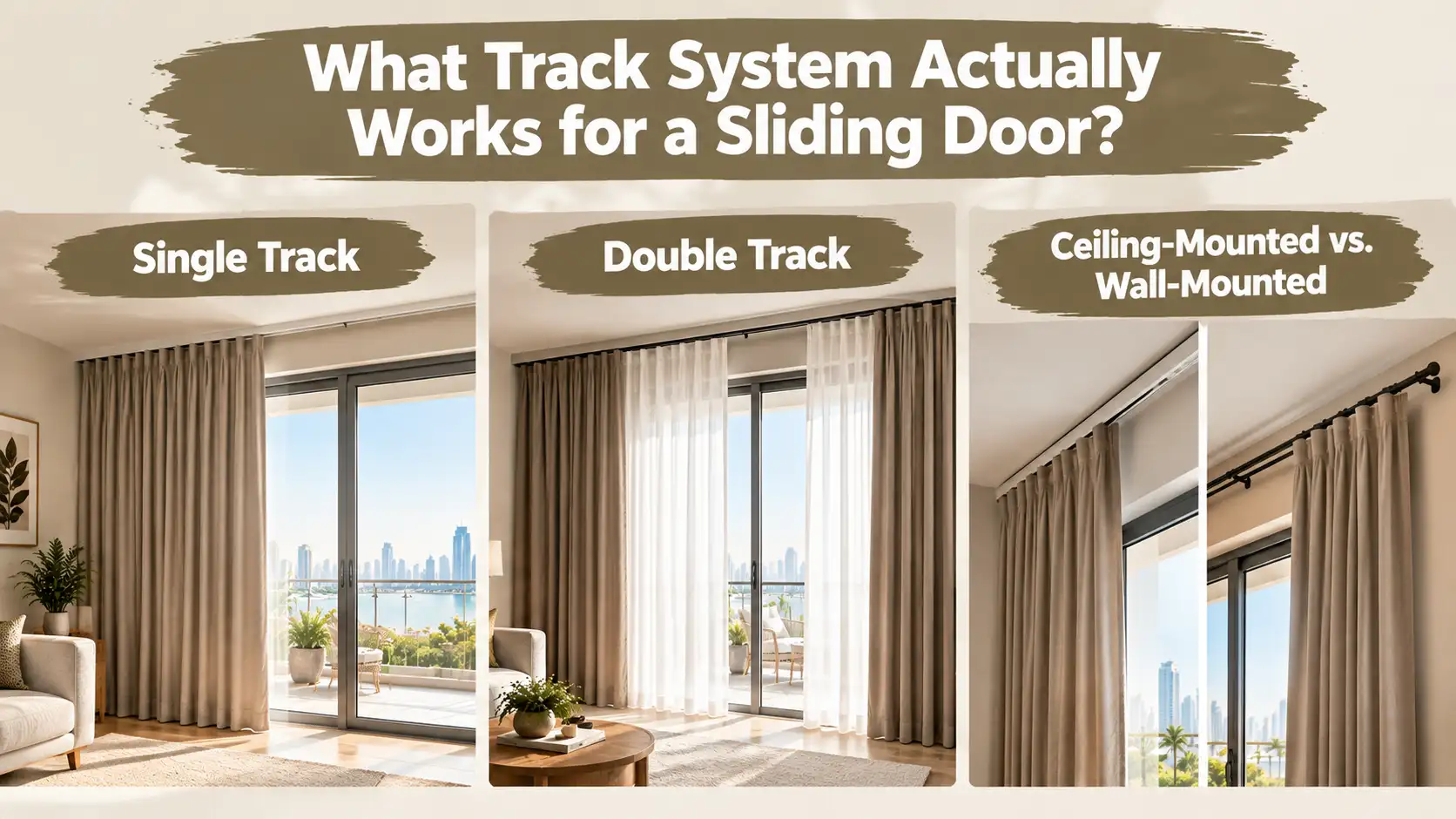
Single Track
A single track works for one curtain layer, sheer or blackout, but not both moving independently. It’s the simpler and cheaper option, suited to doors that only need one type of coverage.
Double Track
A double track runs two independent curtain layers, typically a sheer for daytime and a blackout or dimout panel for night, each gliding on its own channel. This is the setup that supports layering properly, since forcing two curtain types onto a single track tends to cause bunching where the layers meet.
Ceiling-Mounted vs. Wall-Mounted
Ceiling-mounted tracks sit closer to the ceiling line, which reduces the light gap at the top and gives the room a taller, more finished look. Wall-mounted rods or tracks sit lower, on the wall above the frame, which is simpler to install but leaves more of a gap unless the curtain is chosen and hung carefully.
Are Wave Curtains a Good Fit for Sliding Glass Doors?
Yes, particularly on wide, modern sliding doors where a clean line matters more than a traditional gathered look.Wave curtains use evenly spaced folds along a specialized track, creating a continuous, soft wave from ceiling to floor rather than the bunched folds a standard rod produces.
The style suits open-plan living rooms and contemporary interiors where the sliding door is a major architectural feature rather than an afterthought. Wave curtains work across sheer, dimout, and blackout fabrics, so the same clean finish can be adapted to different light-control needs without changing the overall look.
The trade-off is planning. Wave curtains need the track depth, fullness ratio, and stacking width calculated correctly before ordering, since a miscalculated wave curtain either covers less glass than intended when open or falls short of full coverage when closed.
The heading style also affects how the fabric drapes once closed. A wave track spaces the folds mechanically through the track glider itself rather than relying on the fabric’s own weight to form even pleats, which is part of why the finish stays consistent across a wide opening in a way a gathered heading sometimes doesn’t, particularly on heavier fabrics that tend to fold unevenly under their own weight.
Should Sheer and Blackout Be Layered on the Same Door?
Yes, for most bedrooms and media rooms with a sliding door. A layered setup uses a sheer panel for daytime privacy and glare control, with a separate blackout curtain drawn at night for full darkness and privacy. This combination gives more flexibility across the day than either layer used alone.
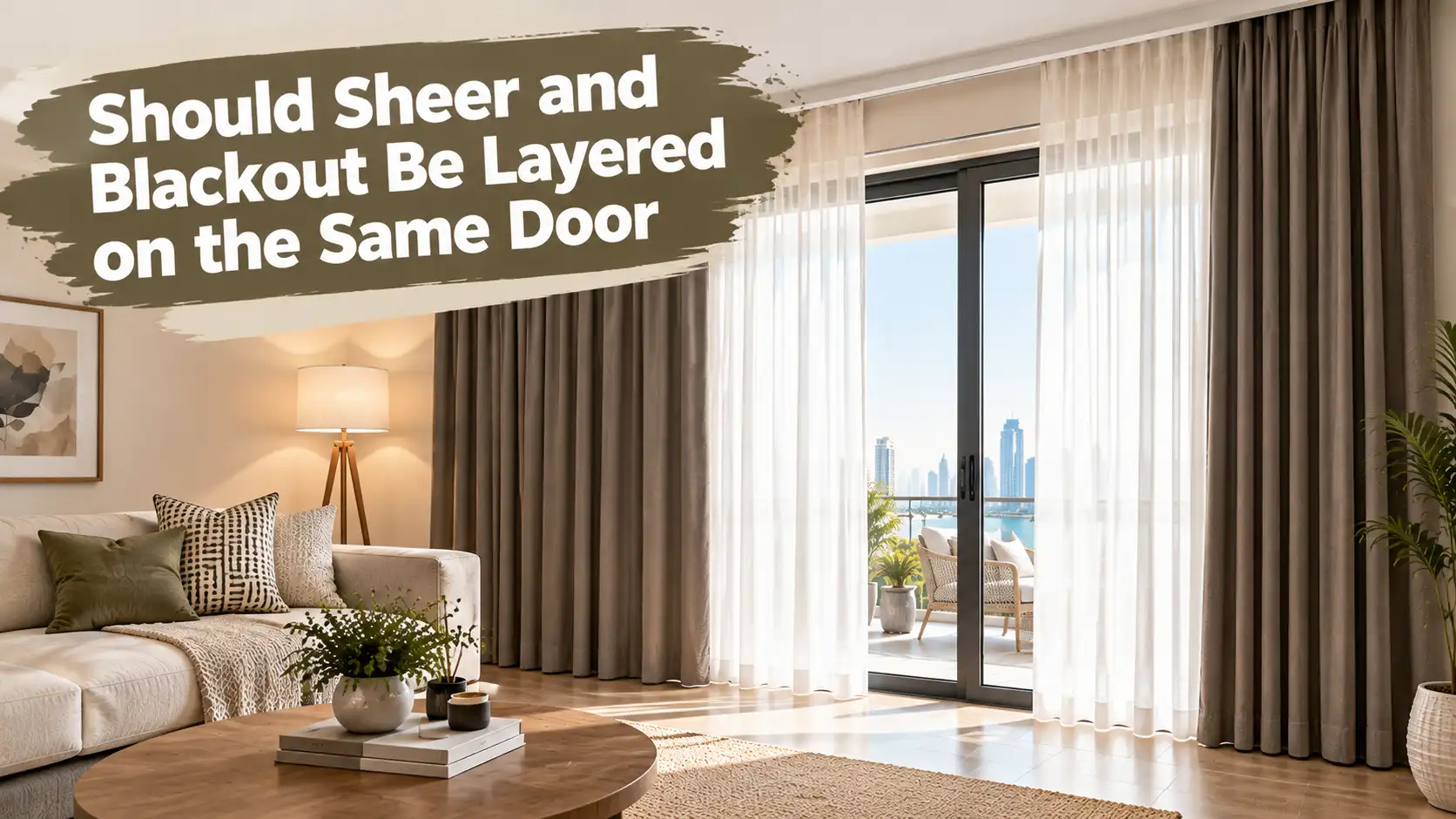
It also adds visual depth that a single heavy curtain doesn’t provide, since the sheer softens the light during the day while the blackout layer stays open and out of view until needed. A double track, covered above, is what makes this work smoothly rather than tangling the two layers together.
Choosing colors for a layered setup usually works best with a lighter, neutral sheer close to the glass and a heavier outer drape that ties into the room’s existing furniture or wall tones, rather than two competing statement fabrics.
Do Eyelet Curtains Work on Sliding Doors?
For smaller or less frequently used sliding doors, yes, and they’re a straightforward, budget-conscious option.Eyelet curtains use metal or reinforced rings fitted directly into the fabric, sliding along a standard rod rather than a specialized track.
For a wide or daily-use sliding door, they’re a weaker choice than a proper track system. The rings create more friction against a rod than a track glider does, which matters more the wider and heavier the curtain gets, and eyelet headings typically need more clearance above the frame than a track-mounted style, sometimes leaving a visible light gap at the top.
What About Roman Shades, Panel Blinds, and Shutters?
These solve the coverage problem differently than a curtain does, and each fits a specific situation better than the others.

- Roman shades mount above the door and stack upward rather than sideways, which works well when floor space or side clearance is limited.
- Panel or vertical blinds slide horizontally on a track, similar in movement to the door itself, and suit a more minimal, modern look than fabric curtains provide.
- Shutters, less common on sliding doors specifically, can be fitted into the door frame itself on some designs, offering precise light control through adjustable louvers rather than full open-or-closed coverage.
None of these three is a direct substitute for a curtain in every case. They’re worth considering specifically when floor clearance, a minimal aesthetic, or very frequent door use makes a fabric curtain less practical than a stacking or sliding hard-panel system.
A hybrid approach works in some rooms too. Panel blinds handle the functional, daily-use side of a busy balcony door, while a decorative curtain layer sits further back purely for softness and framing rather than as the primary coverage. This splits the two jobs- structure and daily function on one side, style on the other- rather than asking a single treatment to do both well.
How Should Fabric Be Chosen for a Sliding Door Specifically?
Fabric weight and color both affect a sliding door curtain differently than they would on a regular window, mainly because of the sheer scale of glass involved.
| Fabric | Behavior on a sliding door | Best paired with |
| Sheer, voile | Filters light, minimal privacy at night | A blackout layer behind it on a double track |
| Linen | Relaxed texture, moderate coverage | A liner if stronger light control is needed |
| Velvet | Dense, insulated, visually heavy | Wider, well-lit rooms rather than compact spaces |
| Blackout-lind | Strong light and privacy control | Ceiling-mounted track for maximum coverage |
Color matters more on a sliding door than on a standard window simply because of the scale involved. A pale, light-reflecting fabric keeps a room feeling open when the curtain is closed across a large glass expanse, while a darker fabric visually occupies more of the wall once drawn, which reads as dramatic in a large room and heavy in a small one.
How Do You Measure Curtains for a Sliding Glass Door?

Accuracy here determines whether a curtain actually functions, not just whether it looks right in the showroom. The process has a few more variables than a standard window.
-
Width
Measure the total width to be covered, including any additional wall space the curtain should stack against when open. Multiply that width by a fullness ratio, typically 2 to 2.5 times for a gathered look or a specific fullness percentage for wave curtains, to determine total fabric width needed.
-
Length
Measure from the intended mounting point down to roughly half an inch above the floor for a standard finish, or fully to the floor for a more tailored, formal look. Mounting higher above the frame, where wall space allows, adds visual height and reduces the light gap at the top.
-
Stacking Space
This is the measurement most standard window guides skip, and it’s the one that matters most on a sliding door specifically. The curtain needs enough wall space beside the frame to stack fully open without covering the door handle or blocking the walking path. Underestimating stacking space is one of the most common reasons a finished curtain looks correct but functions poorly day to day.
A Worked Example
A 3-meter-wide sliding door, common on a balcony opening, with a 2.5x fullness ratio needs 7.5 meters of total fabric width across both panels combined. If the wall space on each side only allows for 0.6 meters of stacking room per side, that fabric needs to compress into a stack roughly a fifth of its flat width when fully open, which is achievable with the right heading style but tight enough that it’s worth confirming against the actual fabric and heading combination before ordering, not assumed to work by default.
Where Should the Track Be Mounted?
Mounting height and position affect both appearance and function on a sliding door more than on a regular window, since the visual gap at the top is more noticeable across a wide glass expanse.
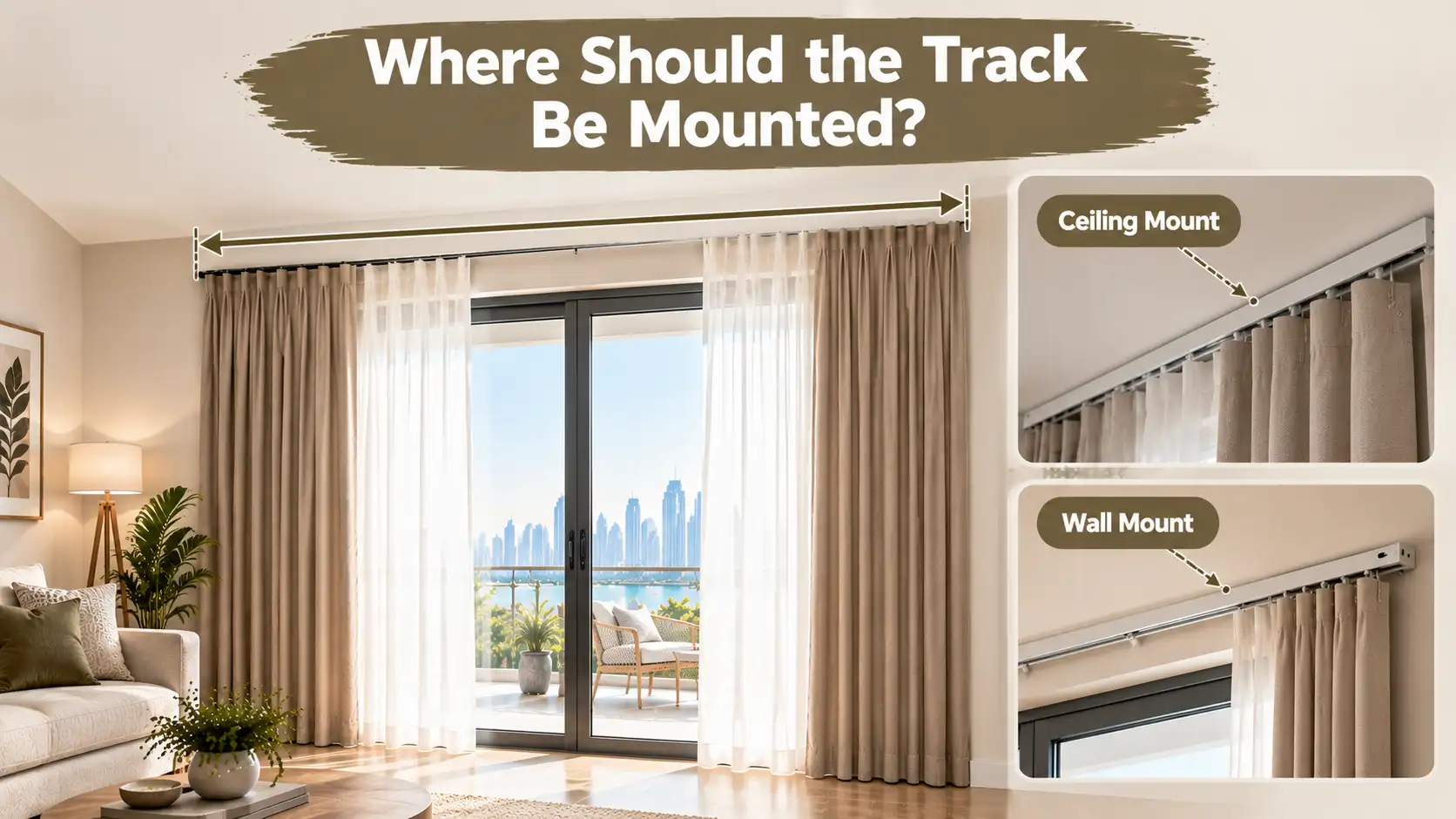
Mounting close to the ceiling generally gives the most polished result, adding height and reducing the light gap at the top of the curtain. The exact position depends on ceiling details specific to the room, including air-conditioning vents, cornices, and any structural elements that limit how close to the ceiling a track can actually sit.
For doors with limited wall space on one or both sides, a split draw, where the curtain opens from the center outward in two directions, or a one-way draw stacking entirely to one side, changes how much usable opening space is left once the curtain is fully open. Deciding between the two upfront avoids a curtain that technically covers the door but crowds the actual walkway.
Are Motorized Curtains Worth It for Sliding Doors?
For wide, tall, or frequently used sliding doors, motorization solves a genuine daily friction point rather than being a pure convenience add-on.Motorized curtains open and close via remote, wall switch, or app control, which matters more on a sliding door than a standard window given how often the curtain gets moved through daily use.
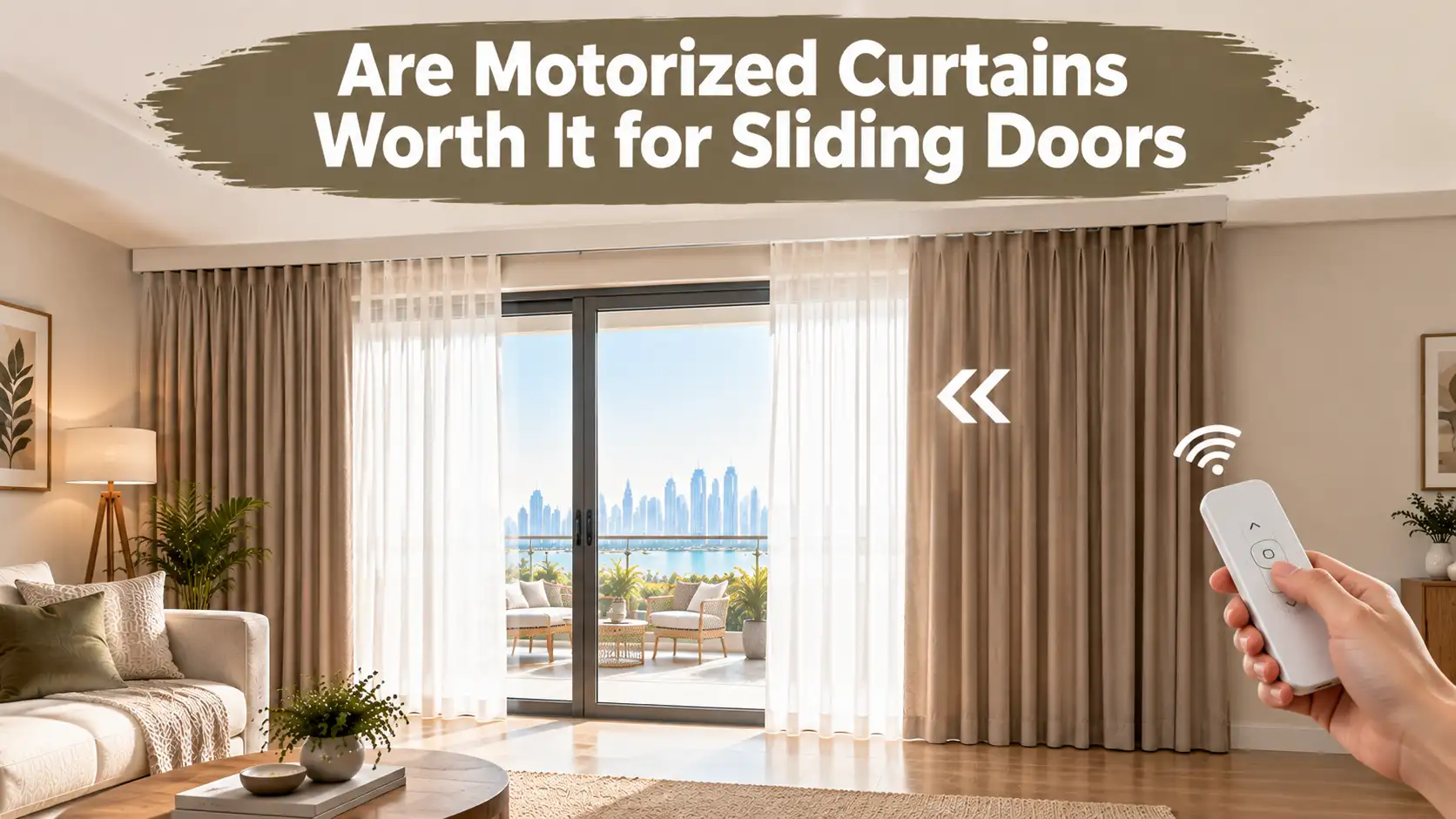
It’s a setup best planned from the start rather than added later, since curtain weight, track length, and power access all need to be accounted for before installation rather than retrofitted afterward. Done correctly, a motorized track operates quietly and avoids the wear that comes from pulling heavier fabric by hand multiple times a day.
What Mistakes Ruin a Sliding Door Curtain Setup?
Don’t make these mistakes during sliding door curtain setup:
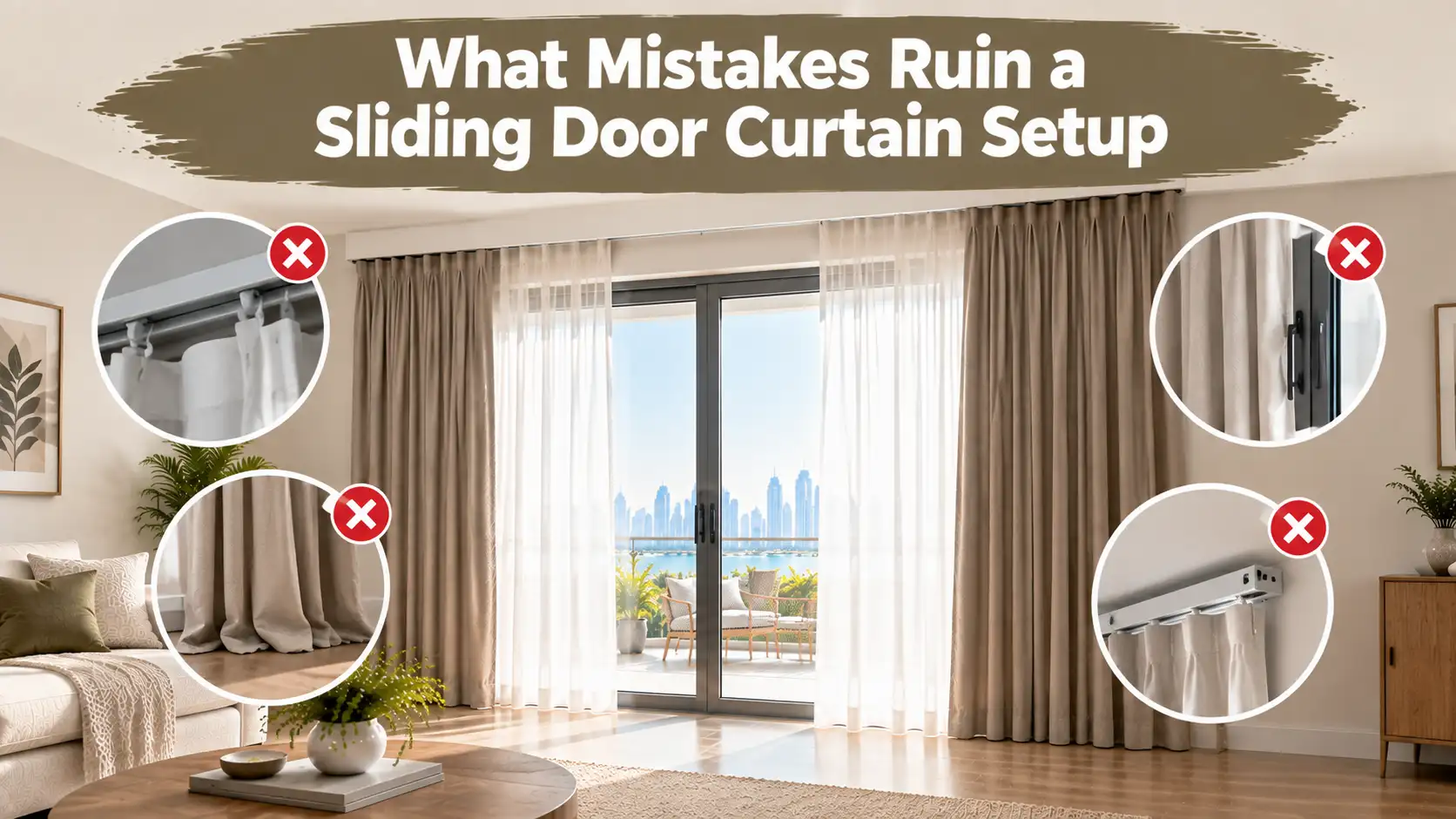
- Underestimating stacking space tops the list, since it’s the mistake that isn’t visible until the curtain is actually in daily use and blocking the door handle or walking path.
- Forcing a layered sheer-and-blackout setup onto a single track is a close second, since the two fabrics bunch together at the point where they’d otherwise glide independently.
- Choosing eyelet curtains for a wide, heavy, daily-use door is another common one, since the friction against the rod becomes a real problem at that scale even though the same heading style works fine on a smaller, less-used door.
- Mounting the track too close to the frame rather than toward the ceiling leaves a visible light gap that a curtain, even if well-chosen, still can’t fully close.
- A less obvious mistake is choosing fabric purely on how it looks in a showroom sample, disconnected from the room’s actual sun exposure and orientation. A fabric that looks perfect under indoor showroom lighting can behave very differently against direct afternoon sun through a full-height glass door, which is why checking fade resistance and lining options against the door’s actual orientation matters more here than on a smaller, less exposed window.
Which Style Suits Which Room?
| Room type | Best fit | Why |
| Bedroom with sliding door | Layered sheer + blackout, double track | Daytime light control, full darkness at night |
| Open-plan living room | Wave curtains, ceiling-mounted track | Clean architectural line across a wide opening |
| Balcony or patio, daily use | Wave or panel blinds, wide stacking space | Smooth daily movement, minimal wear |
| Guest room, occasional use | Eyelet curtains | Lower cost, simpler hardware, acceptable for lighter use |
| Home office or media room | Blackout, ceiling-mounted track | Glare control and privacy for screen use |
What It Actually Comes Down To
The fabric matters, but it’s the track, the mounting height, and the stacking space that decide whether a sliding door curtain actually works day to day. A wave curtain on a well-planned ceiling track suits a wide, modern opening. A layered sheer-and-blackout setup on a double track gives a bedroom or media room the most flexibility across the day. Getting the measurements and hardware right first is what makes the fabric choice actually deliver the result it’s supposed to.
Frequently Asked Questions
Can you put curtains directly on a sliding glass door?
Not on the door itself. Since the door moves, curtains are mounted above the frame on a track or rod rather than attached to the glass panel. Panel blinds and some shutter systems are the exception, since they’re designed to slide or fit within the frame directly.
What size curtain do I need for a sliding door?
Multiply the total width to be covered by the fullness ratio for the heading style chosen, typically around 2 to 2.5 times for a gathered look. Length runs from the mounting point to just above the floor. Stacking space on either side needs to be added on top of the glass width itself, not calculated separately after the fact.
Why does my sliding door feel drafty even with curtains?
Worn door seals are the more likely cause than the curtain itself. Curtains reduce heat transfer and glare but don’t fix a seal that’s degraded over time. A heavier, lined curtain helps somewhat with drafts, but a genuinely drafty door needs the seal itself addressed alongside any window treatment.
Are wave curtains more expensive than standard curtains for a sliding door?
Generally yes, given the specialized track and the precise fullness calculation required. The trade-off is a cleaner, more tailored finish across a wide opening than a standard rod-and-eyelet setup typically achieves.
Do I need a professional to measure a sliding door for curtains?
For a standard-size door, a careful DIY measurement can work. For a wide, tall, or non-standard opening, or where AC vents, cornices, or limited stacking space complicate the mounting position,professional measurement and fitting avoids the common problems that only show up once the curtain is actually installed.
Can I motorize curtains I already have installed on a sliding door?
Sometimes, if the existing track can be swapped for a motorized version without replacing the curtain fabric itself. This depends on the current hardware and curtain weight, and is worth checking before assuming a full replacement is necessary.
What’s the difference between panel blinds and curtains for a sliding door?
Panel blinds are rigid fabric panels that slide horizontally on a track, similar in movement to the door itself, suited to a minimal aesthetic. Curtains are soft fabric that gathers or waves when open, offering a warmer, more traditional look. Neither is universally better; the choice depends on the room’s overall style and how much softness versus structure the space needs.
How much stacking space should be left beside a sliding door?
As a general guide, roughly 15 to 20% of the total curtain width per side is a reasonable starting point for a gathered curtain, though wave curtains and heavier fabrics can need more. Confirming the exact figure against the specific fabric and heading style avoids a curtain that technically fits the width calculation but crowds the wall space once actually open.