Layering sheer and blackout curtains is one of the most practical ways to improve both function and design in a room. On their own, each curtain type solves only part of the problem. Sheer curtains soften light but lack full privacy. Blackout curtains block light completely, but can make a space feel heavy during the day.
When combined correctly, they create a flexible system. You get soft daylight when needed and complete darkness when required. The challenge is not the idea of layering, but the execution. Poor combinations, wrong sizing, or incorrect placement can make the setup look cluttered instead of refined.
To get it right, you need to treat layering as a structured process rather than a decorative add-on. Each decision, from fabric to installation, affects the final result.
1. Understand the Purpose Before You Start
Before choosing fabrics or styles, define what you actually need. Many people jump straight into design decisions without thinking about function.
If the room gets strong sunlight, the blackout layer becomes essential. If privacy is the main concern, layering helps control visibility throughout the day. In bedrooms, the focus is usually on light control and sleep quality. In living rooms, the goal is often a balance between brightness and privacy.
Without clarity, it is easy to choose the wrong combination. Layering should solve a problem, not just add complexity.
2. Decide the Order of Layers Carefully
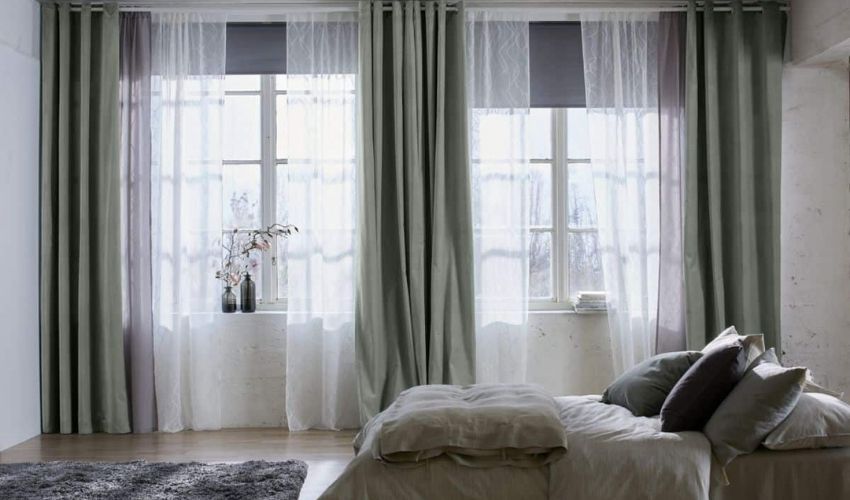
The first major decision is the arrangement of layers. This affects both appearance and usability. The most common and practical setup is placing sheer curtains closer to the window and blackout curtains in front. During the day, blackout curtains remain open while sheers filter the light. At night, blackout curtains close to block light and provide privacy. This arrangement keeps the system intuitive and functional.
An alternative approach places sheers in front and blackout curtains behind. This is more decorative and less common. It creates a softer outer look but reduces the ease of light control. In most cases, it is not as practical for daily use.
Choosing the wrong order can make the setup inconvenient. The goal is to keep movement simple and purposeful.
3. Select Fabrics That Work Together

Fabric choice is not just about appearance. It affects how the layers behave together. Sheer curtains should remain lightweight and breathable. Voile, linen blends, and soft polyester are common choices. They allow light to pass through while creating gentle folds.
Blackout curtains should be dense enough to block light effectively. Heavier fabrics with proper lining perform better. Thin blackout materials often fail to deliver full darkness, which defeats their purpose.
The mistake many people make is choosing both layers with equal visual weight. This creates competition instead of balance. The sheer layer should stay subtle, while the blackout layer can carry more presence.
4. Balance Colors Instead of Forcing Contrast
Color coordination is one of the most critical parts of layering. A poor color match can ruin the entire setup, even if everything else is correct.
Sheer curtains usually work best in neutral tones. White, off-white, or soft beige help maintain brightness and blend easily with most interiors. Blackout curtains can introduce deeper shades, but they should still connect with the room’s overall palette.
High contrast combinations can work, but only if the rest of the room supports it. In most cases, subtle contrast is more effective. The goal is harmony, not attention.
Light interaction should also be considered. Sheer curtains will look different when sunlight passes through them, so testing colors in actual lighting conditions helps avoid mistakes.
5. Choose the Right Heading Style for Both Layers
The heading style affects how the curtains hang and how well they function. For blackout curtains, structured styles like pencil pleat or pinch pleat work best. They create tight folds, which reduce light leakage from the top. Eyelet styles look modern but may allow more light to pass through.
Sheer curtains can be more flexible. They can use softer heading styles that allow smooth movement and natural draping. If both layers are visible together, keeping some consistency in style helps maintain a clean look.
Ignoring heading style often leads to uneven folds or poor light control. It is a small detail, but it has a strong impact.
6. Install Curtains at the Correct Height and Width
Installation is where many setups fail. Even high-quality curtains will look wrong if they are placed incorrectly.
Mount the curtain rod or track higher than the window frame. This improves the perceived height of the room and prevents light from leaking through the top. A common approach is to install the rod several inches above the window.
Width is equally important. Curtains should extend beyond the window frame on both sides. This ensures full coverage when closed and allows maximum light when open.
Insufficient width leads to gaps, while incorrect height reduces the overall visual impact. Both layers should follow the same alignment to maintain consistency.
7. Get the Length Right for Both Layers

Length plays both a visual and functional role. Curtains that are too short break the flow of the room.
In most modern setups, both sheer and blackout curtains should reach the floor. This creates a clean and continuous look. Slight pooling can be used for a more relaxed style, but it should be intentional.
Some variations can work, such as having sheers slightly longer for a softer effect. However, large differences in length often look unbalanced. Consistency is usually the safer and more effective approach.
8. Use Double Rods or Track Systems
Layering requires proper hardware. Using a single rod for both layers leads to tangling and poor movement.
Double rods allow each curtain layer to move independently. This makes daily use easier and keeps the setup organized. Tracks offer an even cleaner solution, especially in modern interiors. They provide smooth movement and can be hidden for a minimal look.
Choosing the wrong hardware limits functionality. The system should support how the curtains will be used every day.
9. Add Tiebacks for Better Control
Tiebacks are not just decorative. They improve usability.
During the day, blackout curtains can be pulled back neatly using tiebacks. This allows full exposure of the sheer layer without blocking light. It also keeps the curtains from looking bulky when open.
Tiebacks should match the overall style of the room. Simple designs usually work better than overly decorative ones in modern setups.
Avoid Common Layering Mistakes
Most layering issues come from a few repeated mistakes.
- Overcomplicating the design is one of them. Too many colours, patterns, or textures create visual confusion.
- Another mistake is ignoring the function. A setup that looks good but does not block light properly will quickly become frustrating. Similarly, poor measurements lead to gaps and uneven coverage.
- Trying to make both layers equally dominant is also a problem. One layer should lead visually, while the other supports it.
Being aware of these issues helps avoid unnecessary adjustments later.
Final Thoughts
Layering sheer and blackout curtains is not complicated, but it requires attention to detail. Each decision, from fabric to installation, contributes to the final result.
When done correctly, this combination offers flexibility, comfort, and a balanced look. It allows a room to adapt to different times of the day without constant changes.
Instead of treating layering as a decorative trend, it should be seen as a functional system. A well-planned setup improves both how a room looks and how it works, which is ultimately the goal of any interior choice.