Living with a cat brings a unique kind of joy. Their playful nature, curiosity, and energy make them wonderful companions. At the same time, these very traits can create challenges when it comes to maintaining your home’s interior.
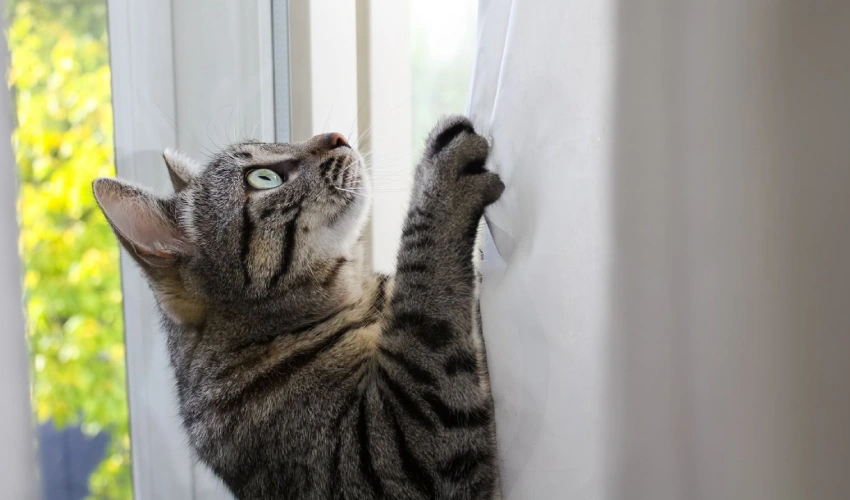
One of the most common issues cat owners face is damage to curtains. Cats are naturally drawn to hanging fabrics. They scratch, climb, and play with them, often leaving visible damage, such as loose threads, tears, and worn patches.
Curtains are particularly vulnerable because they move easily and resemble prey-like objects to cats. Over time, even high-quality window treatments can lose their appeal if the wrong material is chosen. The solution is not to avoid curtains altogether, but to choose the right ones. Cat-proof curtains are designed to resist scratching, reduce damage, and maintain their appearance for longer periods.
What Makes Curtains Cat-Proof?
Before selecting the best option, it is important to understand what makes a curtain resistant to cat damage.
- The first factor is fabric density. Tightly woven materials are harder for claws to penetrate, which reduces snagging and tearing.
- The second factor is surface texture. Smooth fabrics offer less grip, making them less attractive for climbing or scratching.
- Durability is equally important. A strong fabric can withstand repeated use without showing visible wear. Easy maintenance is another advantage, especially in homes where pet hair and occasional stains are common.
8 Best Curtain Options for Homes with Cats
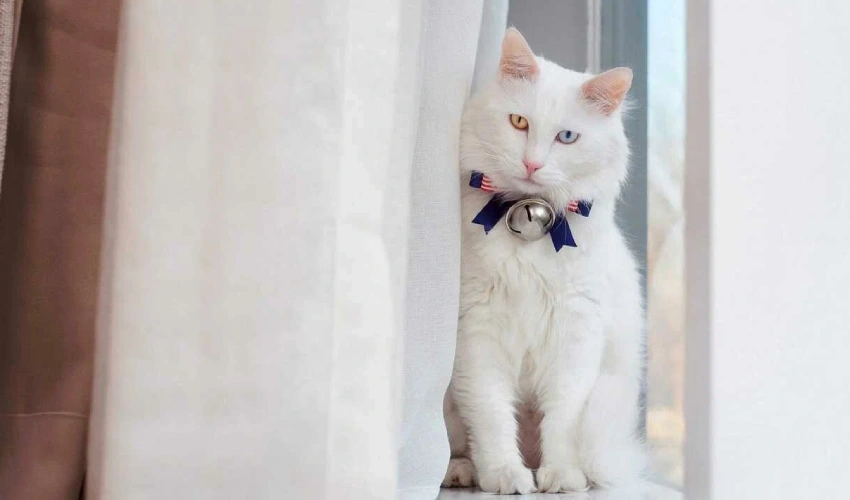
Below are some of the curtain options that you can use for homes with pets.
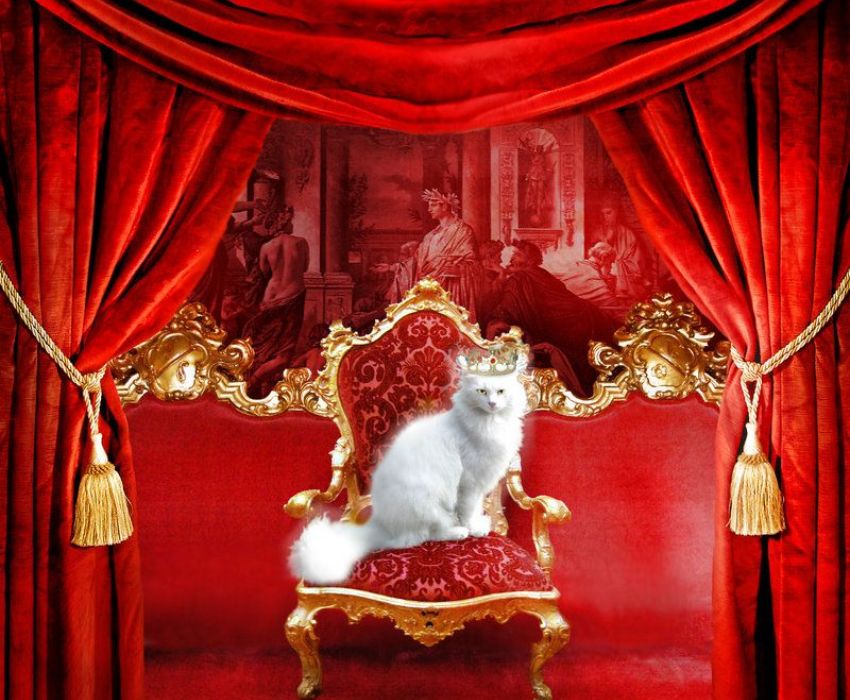
1. Velvet Curtains
Velvet is often associated with luxury, but it is also surprisingly practical for pet owners. Its dense, smooth surface makes it difficult for claws to catch on the fabric.
Cats may still attempt to scratch it, but the damage is usually minimal compared to lighter materials. The fabric tends to maintain its structure even after repeated use. Velvet curtains also adds a rich and elegant look to interiors. If you want durability without sacrificing style, this is a strong option. Synthetic velvet is usually more resistant and easier to maintain than natural varieties.
2. Microfiber Curtains
Microfiber is one of the most reliable choices for pet-friendly homes. It is made from tightly woven fibers, creating a dense structure that resists scratching. Another advantage is its ability to repel pet hair. Unlike textured fabrics, microfiber does not trap fur easily, which keeps curtains looking clean.
It is also resistant to odors and easy to wash. For busy households, this combination of durability and low maintenance makes microfiber a highly practical option.
3. Canvas Curtains
Canvas is known for its strength and durability. It is a heavy-duty fabric that can handle rough use, including scratching and pulling. While it may not have the softness of velvet, it performs exceptionally well in terms of resistance. The tightly woven fibers make it difficult for claws to cause visible damage.
Canvas curtains are ideal for casual or modern interiors. They are also easy to clean and maintain, which adds to their practicality.
4. Sunbrella Fabric Curtains
Sunbrella is a high-performance fabric originally designed for outdoor use. Its durability makes it an excellent choice for homes with pets. It is resistant to scratches, fading, and stains. The fabric is tightly constructed, which limits the impact of claws.
Another advantage is its longevity. Sunbrella curtains can maintain their color and structure for years, even with regular use. This makes them a long-term investment rather than a temporary solution.
5. Polyester Curtains
Polyester is one of the most commonly used synthetic fabrics for curtains. It offers a good balance between affordability and durability.
The fibers are strong and resistant to stretching, which helps prevent damage from scratching. Polyester curtains are also available in a wide variety of designs, making them easy to match with any interior style. They are simple to clean and maintain, which makes them suitable for everyday use in pet-friendly homes.
6. Nylon Curtains
Nylon is another synthetic option known for its strength and elasticity. It can withstand pulling and scratching better than many natural fabrics. Its smooth surface reduces the chances of snagging, while its durability ensures long-term use. Nylon curtains are particularly useful in areas where pets are highly active. Although they may not be as visually rich as velvet, they perform well in terms of functionality.
7. Outdoor Performance Curtains
Outdoor curtains are designed to withstand extreme conditions, making them naturally resistant to pet damage. They are made from durable, tightly woven materials that can withstand scratching and wear.
These curtains are also resistant to moisture and stains, making them easy to maintain. They are a good option for both indoor and outdoor spaces where pets spend a lot of time. Their practical design makes them less appealing to cats, reducing the likelihood of climbing and further reducing damage.
8. Sheer Layered Curtains (With Protective Backing)
Sheer curtains alone are not suitable for homes with cats, as they are delicate and easy to damage. However, when paired with a durable backing layer, they can still be used safely.
The outer sheer layer maintains the aesthetic appeal, while the inner layer provides protection. This combination allows you to enjoy a soft and elegant look without compromising durability. It is a balanced solution for those who want both style and functionality.
Why Choosing the Right Curtain Matters
Many homeowners focus only on how curtains look. While appearance is important, it should not be the only factor in a home with pets. Delicate fabrics may look attractive at first, but often require frequent replacement. This increases long-term costs and maintenance effort.
On the other hand, durable materials may seem simple but offer better performance over time. They maintain their appearance, require less care, and reduce frustration caused by repeated damage.
Curtains Alone Will Not Stop Cat Behavior
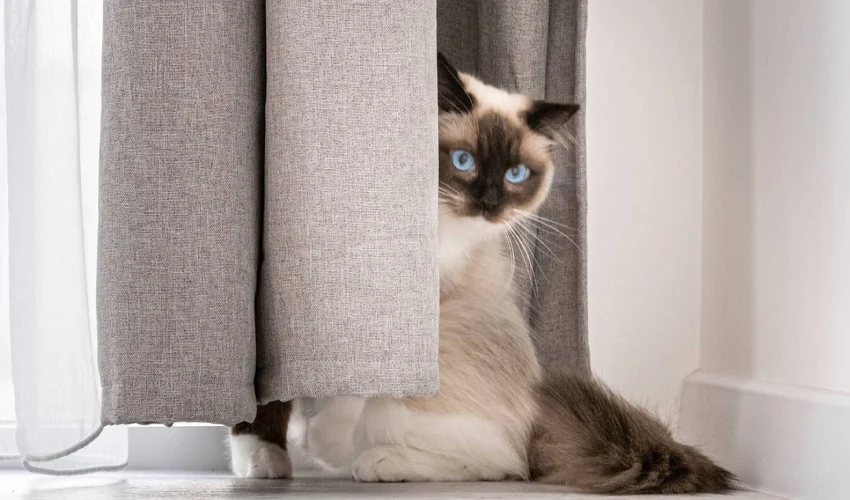
It is important to understand that no curtain is completely immune to cat behavior. Scratching and climbing are natural instincts, not habits that can be easily removed.
If a cat does not find a proper outlet for its energy, it will look for alternatives. Curtains often become an easy target. This means that choosing the right curtain is only part of the solution. Managing your cat’s behavior is equally important.
Practical Ways to Protect Your Curtains Further
Providing a scratching post or cat tree is one of the most effective ways to redirect your cat’s energy. Cats need a designated space where they can scratch freely.
- Regular nail trimming also helps reduce damage. Shorter claws are less likely to cause deep scratches.
- Nail caps can be used as an additional measure. They cover the claws and minimize the impact of scratching.
- You can also adjust curtain placement. Keeping them slightly out of reach or using tie-backs can discourage climbing, especially for younger cats.
Final Thoughts
Cats are naturally curious and playful, and their behavior is part of what makes them unique. Instead of trying to completely stop these instincts, it is more practical to adapt your home accordingly.
Choosing cat-proof curtains is a smart step toward protecting your interior. Materials like velvet, microfiber, canvas, Sunbrella, polyester, nylon, outdoor fabrics, and layered options offer a strong balance between durability and style.
However, the best results come from combining the right materials with proper pet care strategies. When both are in place, you can maintain a clean, stylish home without constantly worrying about damage.