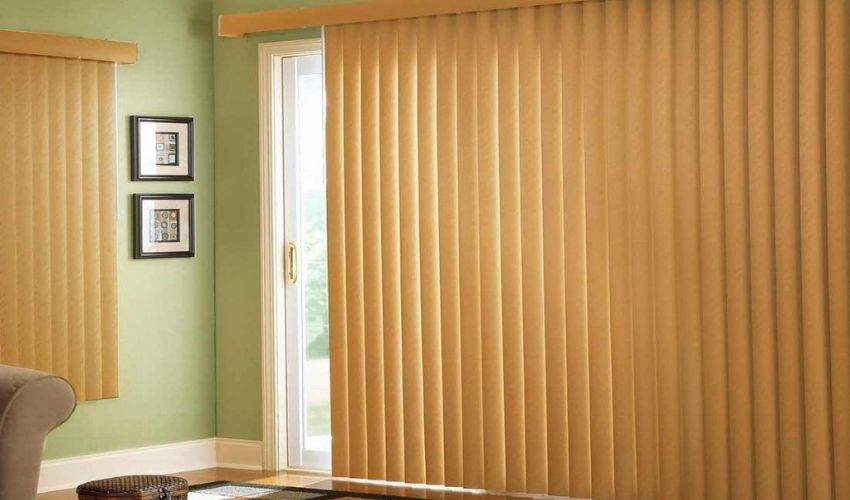
Sliding doors bring in light, openness, and a strong connection to the outdoors. But they also create a design challenge. Covering a wide glass surface while keeping it functional is not as simple as treating a standard window. The choice between curtains and blinds becomes important because it directly affects comfort, usability, and overall aesthetics.
Both options offer insulation and privacy, which are essential in modern homes. However, in 2026, the expectations have changed. Homeowners are now more focused on energy efficiency, ease of operation, and clean visual lines. It is no longer just about covering a door. It is about how that covering performs every single day.
Blinds are often seen as the more practical solution for sliding doors. They are structured, easier to control, and designed to handle wide openings.Window Curtains, on the other hand, bring softness and warmth but may require more space and maintenance. The better option depends on how you use your space, not just how you want it to look.
Difference Between Curtains and Blinds
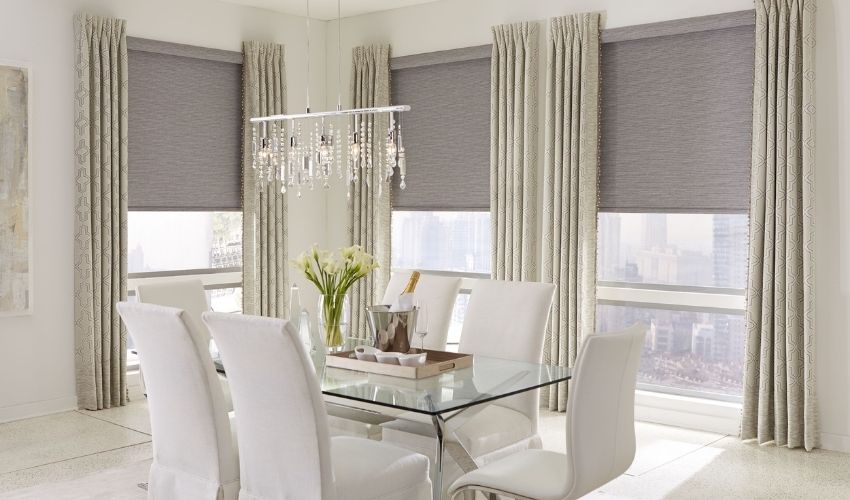
Curtains and blinds serve the same purpose, but they function very differently. Curtains are fabric panels that you draw open or closed. They create a soft and layered look, which works well in bedrooms and living rooms where comfort matters. However, they offer limited control over light unless paired with sheers or additional layers.
Blinds are more structured. They are designed for precise control. You can tilt, slide, or lift them depending on the type. This flexibility becomes important for sliding doors that are used frequently throughout the day. Instead of fully opening or closing the covering, you can adjust it to suit your needs.
Another key difference is how they interact with space. Curtains require extra room on the sides to stack when opened. This can block wall space or interfere with furniture placement.Window Blinds stay within the frame, which makes them more suitable for compact or modern interiors.
In recent interior trends, many homeowners combine both. Blinds handle the function, while curtains add visual softness. This layered approach offers the best of both worlds without compromising usability.
Why Blinds Are Often the Better Choice for Sliding Doors
Sliding doors are high-traffic areas. They are opened and closed multiple times a day. This is where blinds outperform curtains in a noticeable way.
Blinds are designed for movement. They glide smoothly along tracks or operate within a fixed frame. They do not drag on the floor, and they are less likely to get caught or tangled. This makes them more reliable for everyday use.
Another advantage is space efficiency. Curtains need room to gather when opened. In smaller rooms, this can feel bulky or cluttered. Blinds, however, stay neatly aligned and do not take up extra space.
Modern innovations have also pushed blinds ahead. Motorized blinds are becoming common in 2026, especially for large glass doors. With a remote or mobile app, you can adjust them without effort. This is particularly useful for tall or hard-to-reach installations.
Blinds also tend to be easier to maintain. They collect less dust compared to heavy curtains, and many materials are designed to resist moisture and fading. For homes that prioritize low maintenance, this is a clear advantage.
Best Types of Blinds for Sliding Doors
Not all blinds work well for sliding doors. The right type makes a significant difference in both function and appearance.
Veri Shades
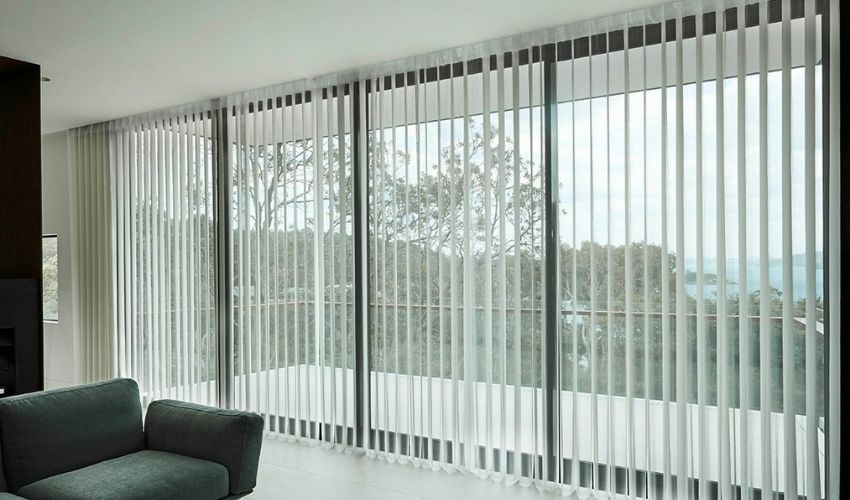
Veri Shades are one of the most innovative options available today. They combine the softness of curtains with the structure of roman blinds. The panels hang like fabric, but they behave like blinds when it comes to control.
One of their biggest advantages is walk-through convenience. You can pass through them without adjusting anything, and they naturally fall back into place. This makes them ideal for spaces where the sliding door is used frequently.
They also allow flexible light control. By simply rotating the panels, you can adjust how much light enters the room. This balance between softness and practicality is why Veri Shades are gaining popularity in modern homes.
Vertical Blinds
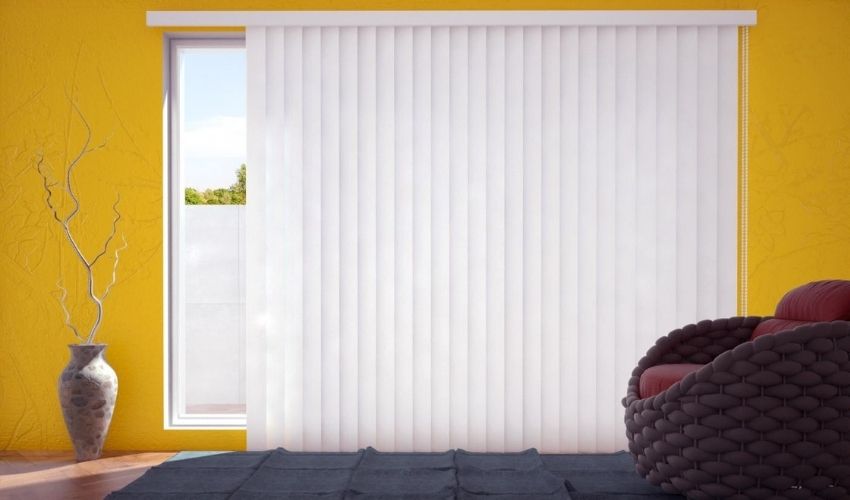
Vertical blinds remain a classic choice for sliding doors, and for good reason. They are specifically designed for wide openings and offer smooth side-to-side operation.
The vertical slats can be tilted to control light or fully drawn to open the space. This makes them highly versatile for different times of the day. You can let in soft light during the morning and block it completely when needed.
In recent years, the design of vertical blinds has improved. Fabric options now replace the older plastic styles, giving them a softer and more residential look. This shift has made them suitable not just for offices but also for modern homes.
Roller Blinds
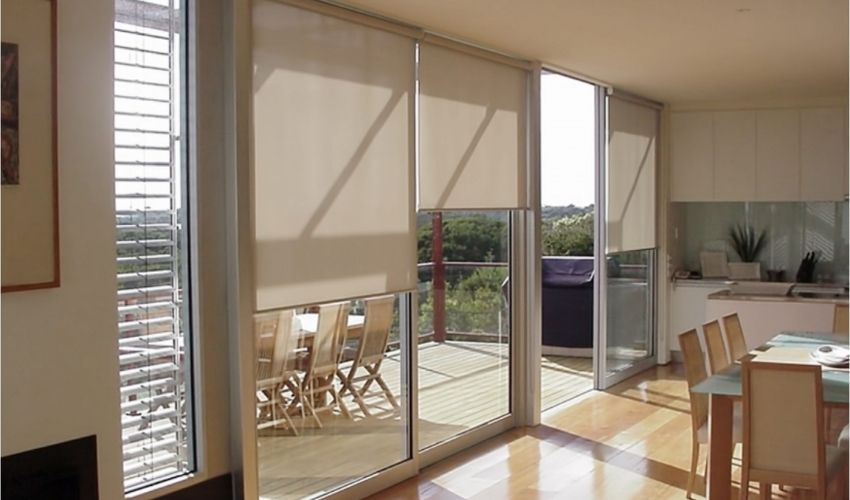
Roller blinds offer a clean and minimal appearance, which suits contemporary interiors. However, they need careful planning when used on sliding doors.
Since sliding doors are wide, roller blinds are usually installed in multiple panels. Each section covers a part of the door. While this maintains the aesthetic, it can reduce convenience because you need to operate each panel separately.
They are best suited for areas where the door is not used frequently. For example, a balcony door that remains closed most of the time. In such cases, roller blinds provide excellent light control and a sleek finish.
Other Options Worth Considering
Some alternatives can also work, but they come with limitations.
Roman blinds add elegance with their soft folds, but they require enough space above the door to function properly. Without that space, they can look bulky and interfere with the door’s usability.
Venetian blinds offer strong control over light, but they are not ideal for large sliding doors. Their horizontal slats can become difficult to manage on a wide scale, and they tend to move with air or motion.
Shutters provide a premium and solid look. They improve insulation and add a layer of security. However, they are expensive and require precise installation. Sliding shutters are becoming more common, but they still represent a higher investment.
Honeycomb blinds stand out for their insulation properties. Their cellular structure traps air, which helps maintain indoor temperature. As energy efficiency becomes a priority in 2026, these blinds are gaining attention. They work best when installed in large, well-fitted panels.
Modern Curtain Trends for Sliding Doors
Curtains are not outdated. They are evolving to match modern needs.
Wave curtains are one of the biggest trends right now. They create smooth and uniform folds, which give a clean and structured look. This makes them suitable even for minimalist interiors.
Sheer curtains are also widely used. They allow natural light to enter while maintaining a level of privacy. When layered with blackout curtains, they offer flexibility for both day and night use.
Motorized curtain tracks are another major development. They make it easier to manage large curtain panels, especially for wide sliding doors. With a simple control system, you can open or close them effortlessly.
These updates show that curtains are adapting. While they may not replace blinds in functionality, they remain relevant for style and comfort.
Practical Tips for Installing Curtains on Sliding Doors
Proper installation can solve many common problems associated with curtains.
- The height should be carefully measured. Curtains should sit just above the floor without dragging. This keeps them clean and ensures smooth movement.
- The rod choice also matters. Traverse rods are more suitable than standard rods because they allow curtains to slide easily without getting stuck.
- Splitting the curtains into two panels improves usability. You can open them from the center, which aligns naturally with how sliding doors operate.
- It is also important to extend the rod beyond the door frame. This allows the curtains to stack fully on the sides, keeping the doorway clear when open.
Final Thoughts
Blinds are generally the more practical choice for sliding doors. They are easier to manage, require less space, and align well with modern living needs. Their ability to provide precise control makes them highly functional for everyday use.
Curtains, however, should not be dismissed. They add warmth, texture, and a sense of completeness to a room. In many cases, the best solution is not choosing one over the other but combining both.
The real decision depends on how the sliding door is used. A door that is opened frequently demands functionality. A door that is mostly decorative allows more freedom in design.
Ignoring this distinction often leads to poor choices. That is where most setups fail, not in the product itself but in how it is selected.