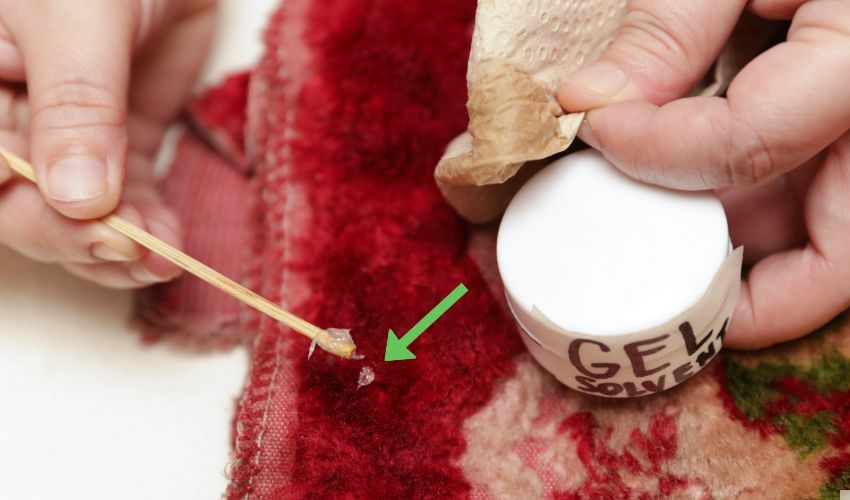
Glue on a carpet is not just a stain. It changes the texture of the fibers and creates a sticky patch that attracts dust and dirt. If ignored, it becomes harder to remove over time. Many people either panic and scrub aggressively or use the wrong product, which spreads the damage instead of fixing it.
The reality is simple. Glue can be removed, but the method depends on its condition. Fresh glue behaves very differently from dried adhesive. The carpet material also matters because delicate fibers can be damaged by harsh chemicals. Check out the best way to remove glue from the carpets.
1. Start with Basic Removal Before Using Chemicals
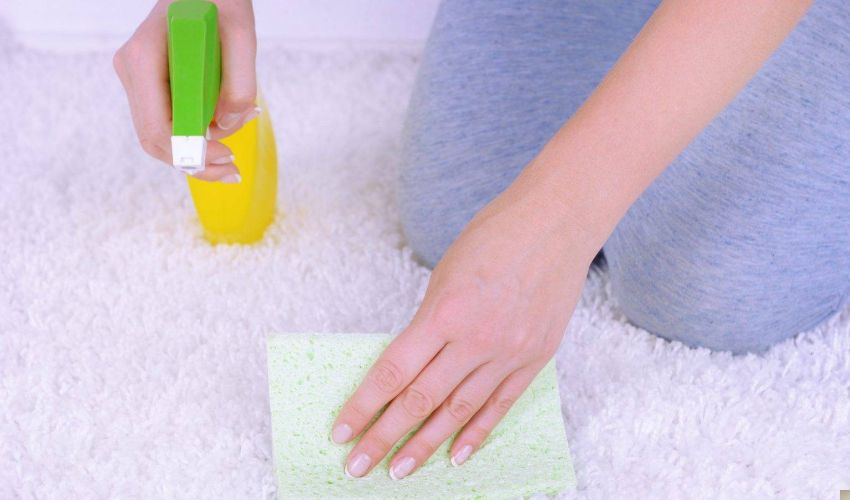
Before using any product, manually remove as much glue as possible. This step is often skipped, but it makes every other method more effective.
If the glue is still wet, blot it gently with a dry cloth or paper towel. Do not rub. Rubbing pushes the glue deeper into the fibres. Keep dabbing until no more glue transfers onto the cloth.
If the glue has dried, use a blunt knife or spoon to scrape it off. Work slowly to avoid damaging the carpet fibers. This step reduces the amount of adhesive you need to treat later.
2. Use Heat (Iron Method) for Hardened Glue
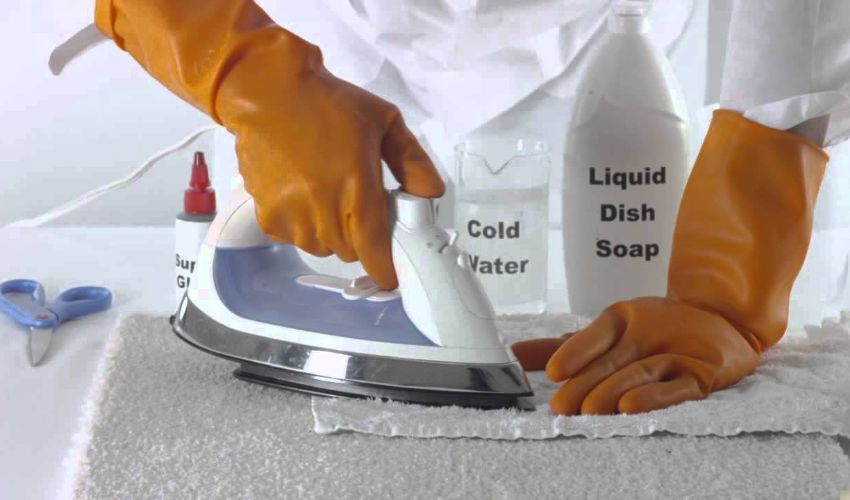
Heat helps soften dried glue, making it easier to lift. Place a thin cloth over the affected area. Use a warm iron over the cloth for a few seconds. The heat will loosen the glue and transfer part of it onto the cloth.
Lift the cloth and check the progress. Repeat the process if needed. Avoid using high heat because it can damage synthetic carpet fibers. This method works best on thick carpets where glue has hardened on the surface.
3. Apply Vinegar and Dish Soap Solution
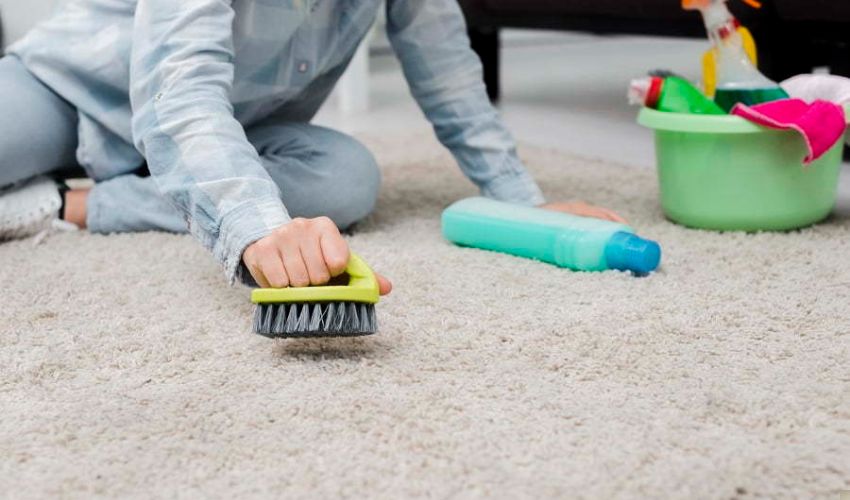
This is one of the safest and most effective home methods. Soak a cloth in white vinegar and press it onto the glue spot. Let it sit for 10–15 minutes. The vinegar helps break down the adhesive.
After that, mix a small amount of dish soap with warm water. Dab the area with this solution and gently blot until the glue starts lifting. Finish by wiping the area with a clean, damp cloth and drying it. This method works well for both mild and slightly stubborn glue stains.
4. Use Warm Water for Water-Based Glue
Not all glue requires strong chemicals. Water-based adhesives can often be removed with simple warm water. Dampen a cloth with warm water and press it onto the glue. Let it sit for a few minutes to soften the residue. Then blot gently.
Repeat this process until the glue breaks down. This method is safe for living room carpets and should be your first choice if you are unsure about the glue type.
5. Try Ammonia for Stubborn Residue
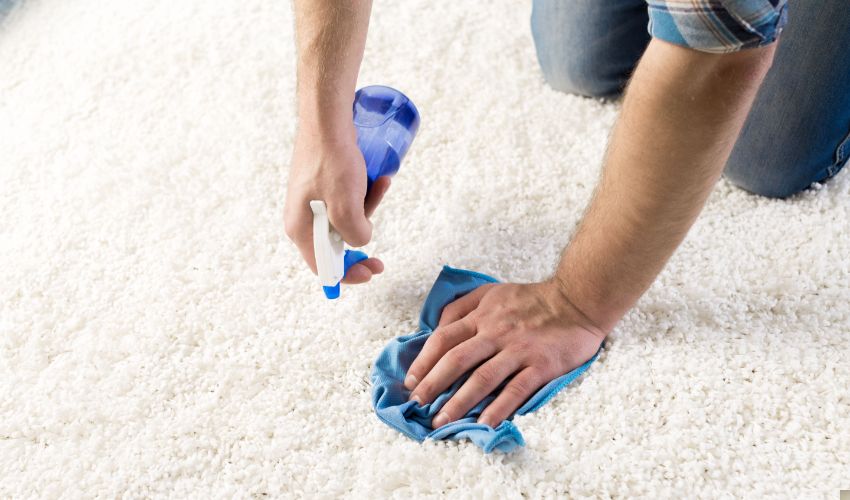
Ammonia is a stronger solution and should be used carefully. Mix a small amount of ammonia with water. Dip a clean cloth into the solution and blot the glue stain. Wear gloves and ensure proper ventilation.
Continue blotting until the glue transfers to the cloth. Do not pour the solution directly onto the carpet. This method is effective for older and more stubborn glue stains that do not respond to mild treatments.
6. Use Acetone for Strong Adhesives
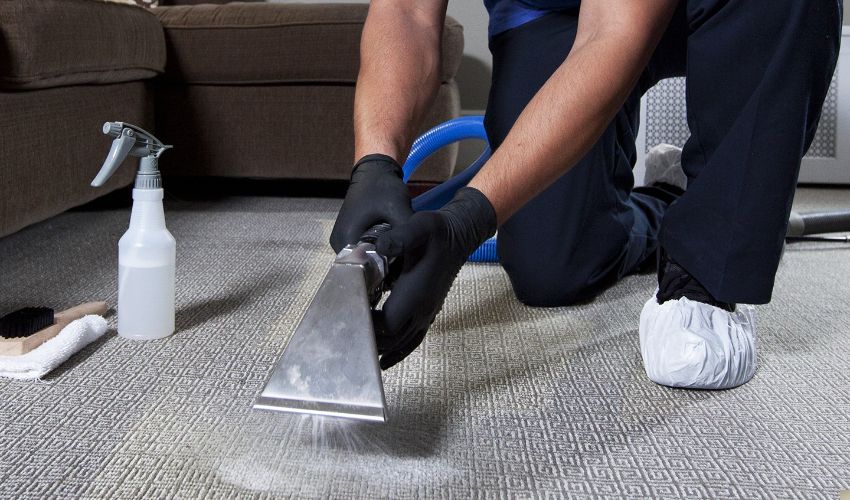
Acetone works well on tough adhesives like super glue. Apply a small amount of acetone to a cotton ball. Dab it gently onto the glue spot. The adhesive will start to break down.
Keep blotting with a clean cloth as the glue loosens. Avoid overusing acetone, as it can affect carpet color. Always test on a hidden area first to prevent discoloration.
7. Freeze the Glue for Easy Removal
Cold treatment is useful for certain types of glue. Place ice cubes in a plastic bag and press it onto the glue. This hardens the adhesive, making it brittle. Once hardened, gently scrape it off using a blunt tool. This method reduces the risk of spreading the glue deeper into the fibers.It works best for sticky or rubber-based adhesives.
8. Use Commercial Glue Removers
Specialized products are designed for this exact problem. Apply a small amount of a glue remover to a clean cloth. Dab the affected area gently until the glue starts to dissolve. Follow up with a mild soap and water solution to remove any residue from the product. These products are effective but should be used carefully according to instructions.
9. Trim Fibers as a Last Resort
If a small amount of glue remains stuck to the tips of carpet fibers, trimming can help. Use small scissors to cut only the affected fibres. Do not cut too deeply, or it will create a visible patch. This method is not ideal, but it can be useful when the glue cannot be removed completely.
10. Repeat the Process Instead of Overusing Chemicals
One common mistake is using too much product at once. This can damage the carpet and spread the stain. It is better to repeat a mild method multiple times than to apply a strong chemical aggressively. Gradual removal is safer and more effective. Patience is important when dealing with adhesive stains.
11. Clean and Restore the Area After Removal
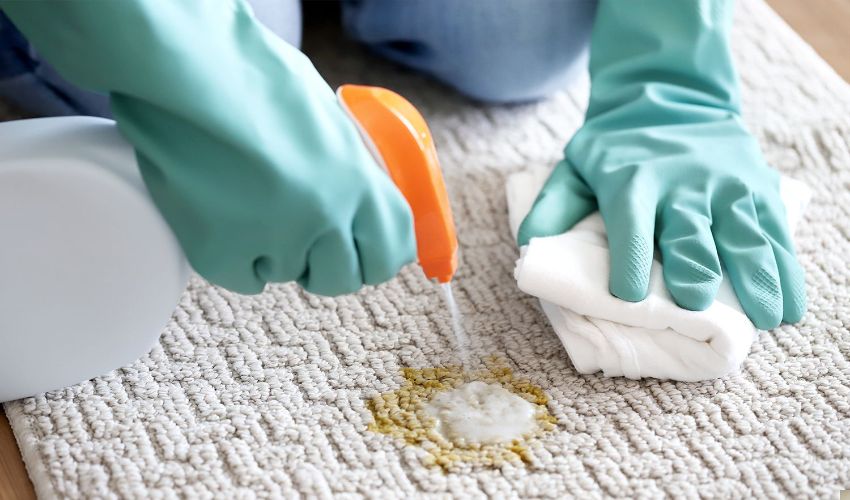
Removing the glue is not the final step. The treated area needs to be cleaned properly. Use a mild soap solution to remove any leftover residue from cleaning products. Then rinse with a damp cloth and blot dry.
Fluff the carpet fibers with your fingers or a soft brush to restore their natural look. This step ensures the carpet does not look flattened or damaged.
Final Thoughts
Glue stains are frustrating because they affect both appearance and texture. However, they are manageable if approached correctly.
The key is to identify the condition of the glue and choose the right method. Starting with gentle techniques and moving toward stronger solutions prevents unnecessary damage.
Rushing the process or using harsh chemicals without control often creates bigger problems. A careful and structured approach gives better results and helps restore the carpet without harming it.