A customer asked us this after her west-facing bedroom stayed warm all evening despite new blackout curtains she’d just paid for. She wasn’t wrong to be annoyed, and she also wasn’t wrong that blackout curtains should have helped.
Blackout curtains can block a meaningful amount of heat, but blocking light and blocking heat are two different jobs, and a curtain built only for one doesn’t automatically do the other. The fabric backing, the weight, and how tightly it seals the window matter more than the word “blackout” on the label.
Do Blackout Curtains Actually Keep Heat Out?
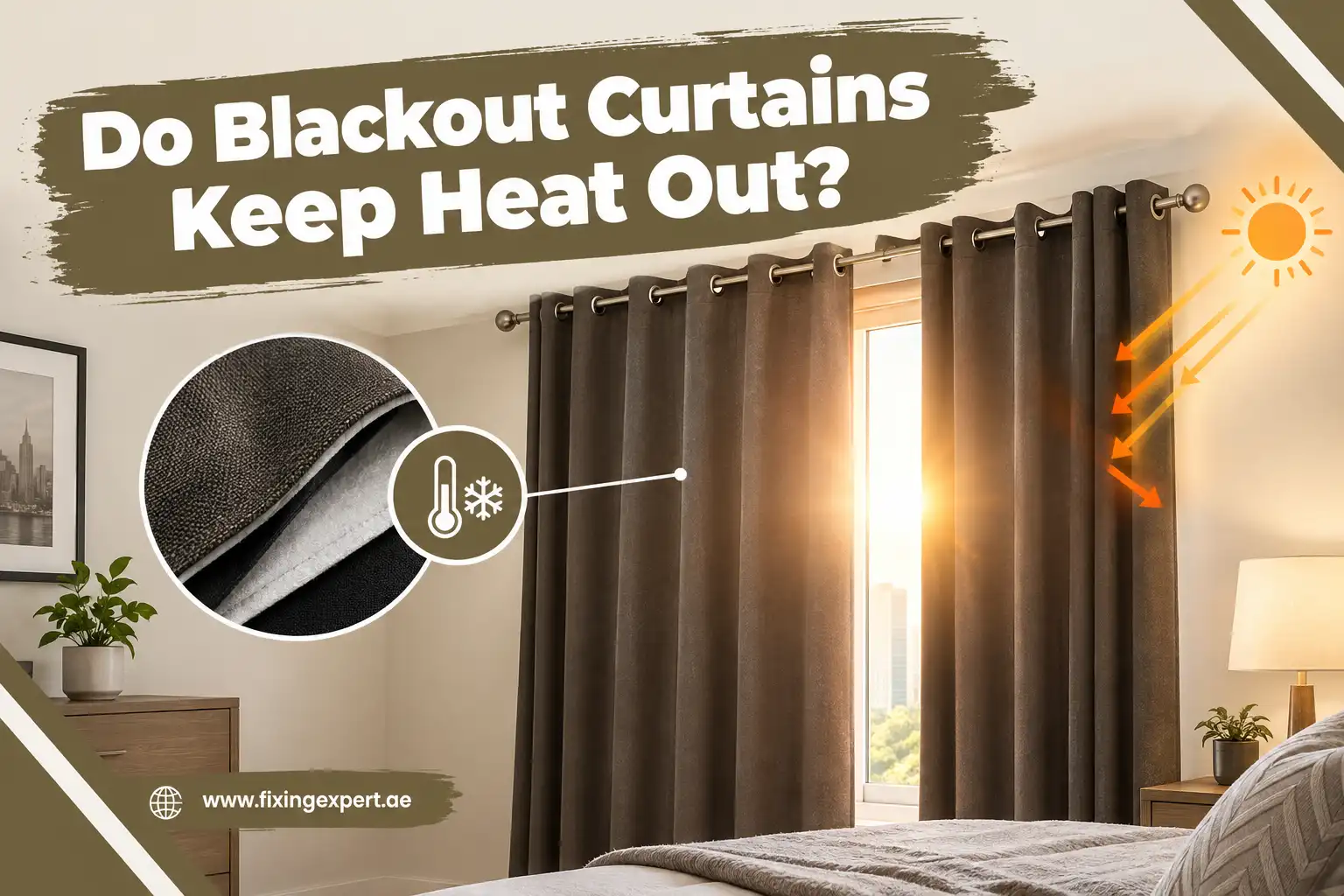
Yes, blackout curtains reduce heat, typically in the 24 to 45% range depending on fabric, lining, and fit, but a thin dark panel with no reflective backing can actually absorb heat and radiate it back into the room. Light or reflective backing facing the window, real fabric weight, and full coverage with minimal gaps determine the result, not the blackout claim on the packaging.
Where it gets more complicated: not every blackout curtain does this well. A dense dark fabric with no lining stops light effectively but absorbs the sun’s energy directly into the fabric itself, which then radiates back into the room as heat, sometimes reaching surface temperatures well above 40°C in direct sun. That’s the gap between “blocks light” and “blocks heat,” and it’s the exact complaint our customer had.
How Do Curtains Block Heat in the First Place?
1. The Three Mechanisms
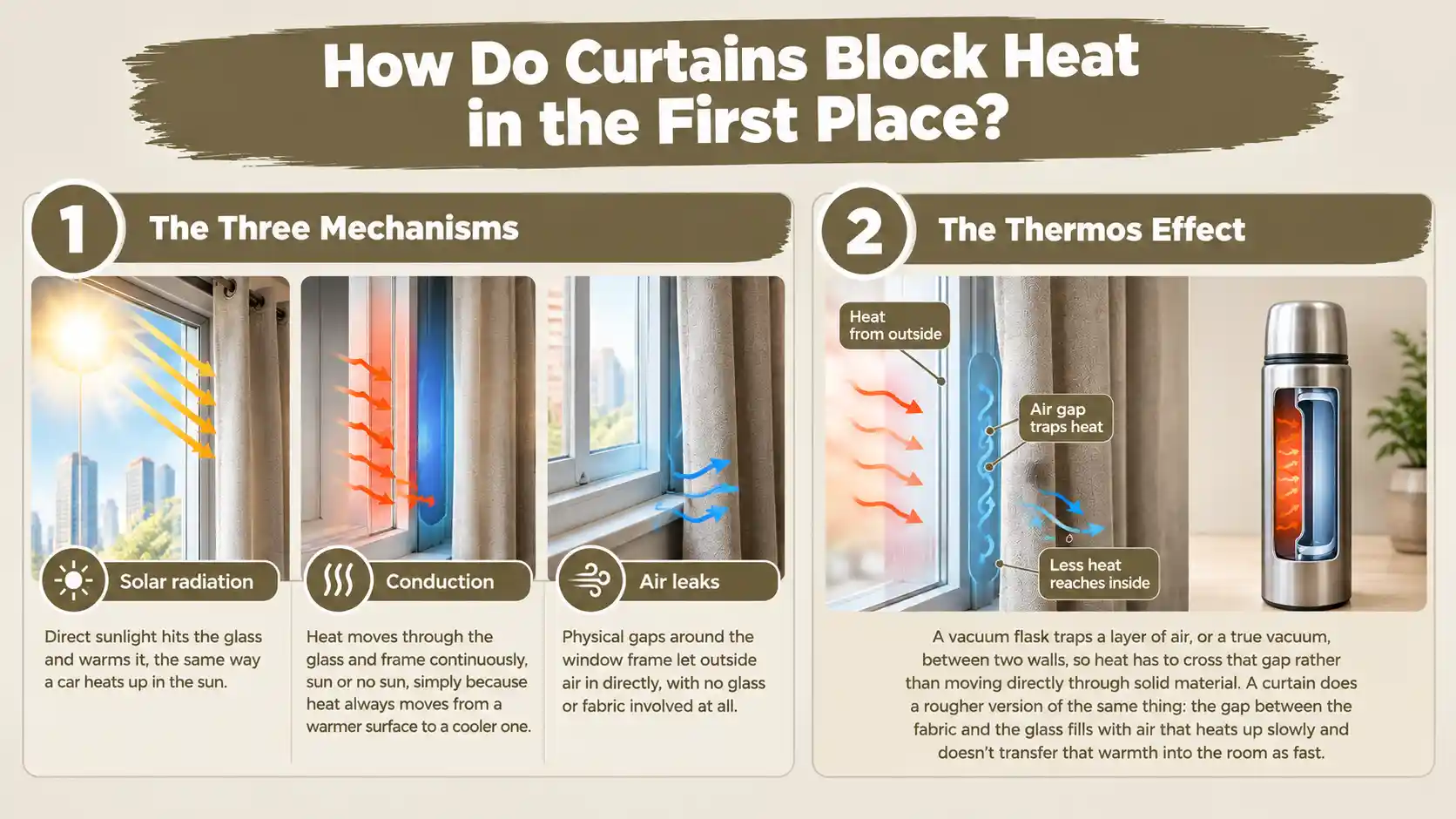
Heat gets into a room through a window in three distinct ways, and knowing which one you’re actually dealing with is what determines whether a curtain will help at all.
-
Solar radiation
It is direct sunlight hitting the glass and warming it, the same way a car left in the sun heats up regardless of the outside air temperature.
-
Conduction
It is heat moving through the glass and frame continuously, sun or no sun, simply because heat always moves from a warmer surface to a cooler one.
-
Air leaks
These are physical gaps around the window frame letting outside air in directly, with no glass or fabric involved at all.
A curtain genuinely helps with the first two. It does close to nothing for the third, since blocking light or adding insulation doesn’t seal a gap in the frame. That distinction is why a “good” curtain can still leave a room feeling hot: the heat coming in isn’t always the kind a curtain was ever built to stop.
2. The Thermos Effect
A vacuum flask traps a layer of air, or a true vacuum in better models, between two walls, so heat has to cross that gap rather than moving directly through solid material. A curtain does a rougher version of the same thing: the gap between the fabric and the glass fills with air that heats up slowly and doesn’t transfer that warmth into the room as fast as bare glass would radiate it directly. It’s a meaningfully weaker effect than an actual vacuum flask, but the physics driving it is the same.
Why Do Some Blackout Curtains Fail to Keep Heat Out?
Three specific reasons, and once you know them, it’s obvious why some households see a real difference and others don’t.
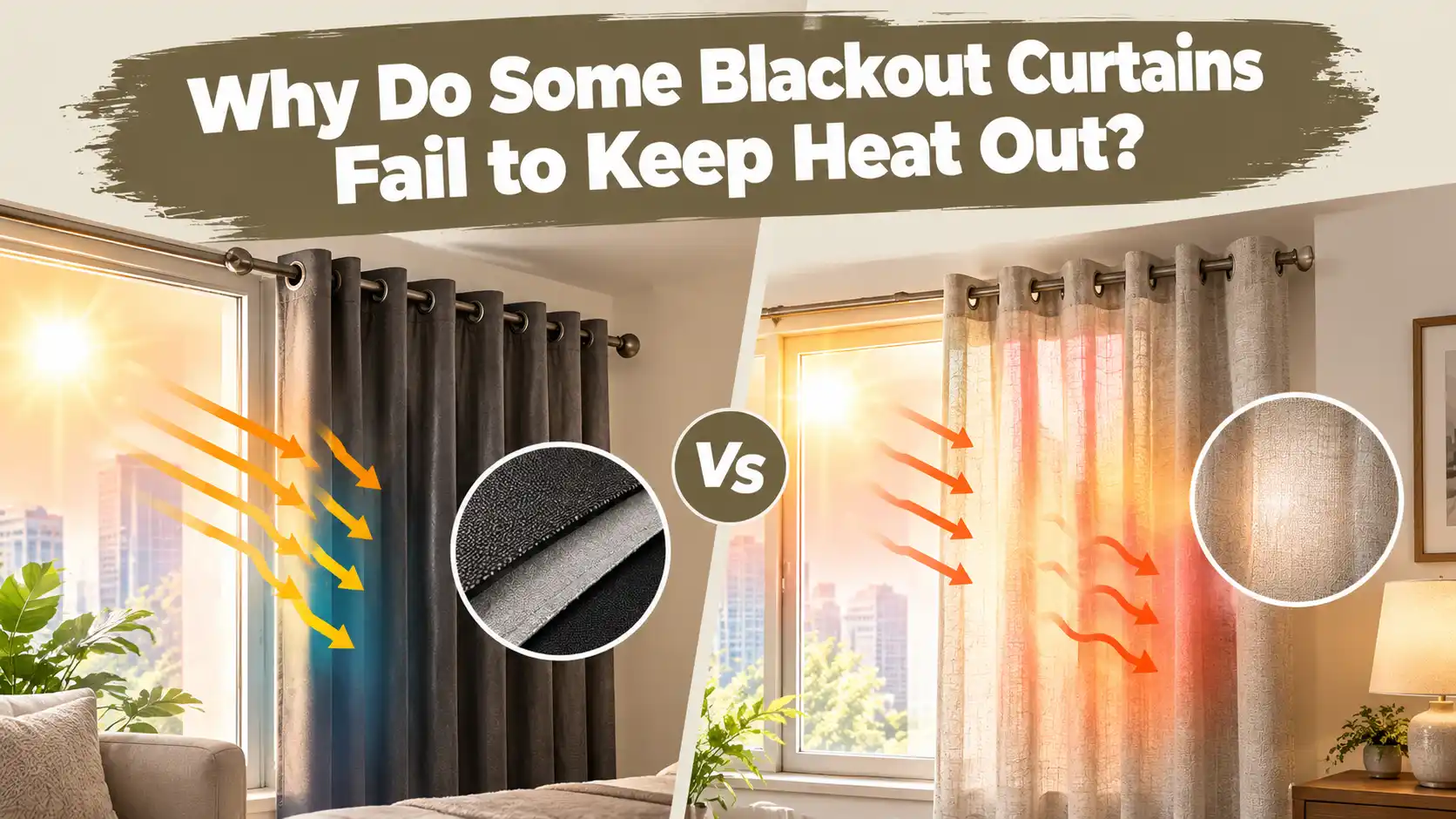
- The fabric is thin and unlined, so it stops light but heats up fast in direct sun and radiates that warmth straight into the room instead of blocking it.
- The panels don’t fully cover the window, leaving side gaps where warm air circulates behind the curtain by convection, undoing most of the benefit even with a great fabric.
- The windows themselves are single-pane or poorly sealed, and that’s a frame problem, not a fabric one. Sealing the gaps first is what actually fixes it, and doing that before adding a curtain makes whatever fabric you choose noticeably more effective afterward.
Is There a Real Difference Between Blackout and Thermal Curtains?
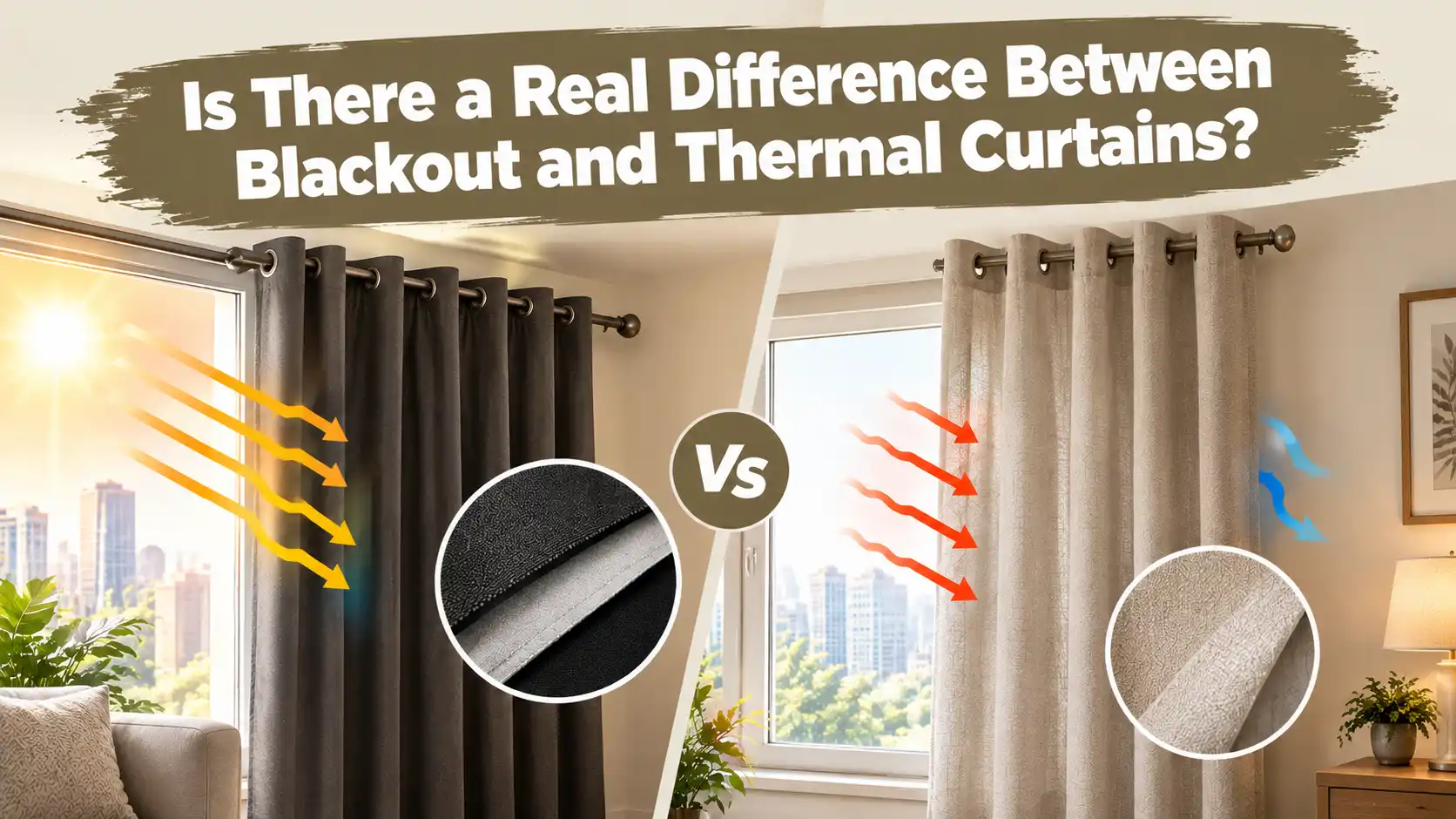
Yes, and the two labels get used almost interchangeably in stores despite meaning different things. Blackout refers specifically to light blocking. Thermal refers to insulation performance. Plenty of curtains do both well, since a dense enough fabric with the right lining handles both jobs at once, but plenty of blackout curtains are optimized for darkness alone, with a thin single layer that does very little for temperature.
If heat control is your actual priority and darkness is secondary, check for a stated thermal or insulated lining specifically, not just the word blackout on the packaging.
Does Curtain Color Affect Heat Blocking?
Enormously, and this is the part most people get backwards. The side facing the room can be any color you like without much thermal consequence. The side facing the window is what matters. White or light-colored, reflective backing bounces solar radiation away before it’s absorbed. Dark backing, even on a curtain that’s technically blackout-rated, absorbs that same radiation directly into the fabric.
A black velvet curtain with no lining and no reflective backing can reach genuinely high surface temperatures in direct Gulf sun, hot enough that the fabric itself becomes a mild radiator facing into the room. This is the single biggest reason a “blackout” curtain sometimes underperforms on heat specifically. The darkness that blocks light is also what absorbs heat, unless there’s a reflective layer stopping that absorption before it happens.
Does Fabric Weight Matter?
Yes, measurably. Heavier fabric, generally described by GSM grams per square meter, creates a denser insulating barrier than a thin panel does. Independent comparisons between lightweight blackout fabric (roughly 150 to 300 GSM) and heavier multi-layer thermal blackout fabric (500 GSM and above) show a real difference in the temperature gradient maintained between the window and the room, often several degrees Celsius apart between the two categories.
Heavier isn’t automatically better for every room, though. A living room that only needs moderate heat control doesn’t need the heaviest fabric on the market, and heavier fabric costs more and hangs differently than a lighter panel. Match the weight to how much the room actually needs, not to the assumption that heaviest always wins.
How Do Different Curtain Fabrics Compare for Heat Specifically?
Fabric choice affects heat performance well beyond just the blackout coating, and this is where a lot of buyers only think about look and feel rather than thermal behavior.
| Fabric | Natural heat performance | Best paired with |
| Velvet | Dense, good natural insulation | A light-colored blackout lining, since velvet alone still needs backing to reflect rather than absorb |
| Linen | Breathable, moderate on its own | A separate thermal liner if heat control matters, since linen alone isn’t dense enough |
| Silk | Light, minimal insulation alone | Layering behind a heavier drape rather than relying on silk for heat control |
| Sheer | Very little heat blocking by design | Paired with a heavier curtain behind it, since sheers are built for light diffusion, not heat control |
None of this means silk or sheer curtains are a bad choice. They’re just not the fabric to reach for if heat is the primary goal, and layering a heavier, lined curtain behind a sheer is a common and effective setup that gives you both the light, airy look and genuine heat performance when the heavier layer is closed.
How Much Heat Can Blackout Curtains Actually Block?
Depending on fabric, lining, fit, and installation quality, independent testing and product comparisons generally put well-installed blackout curtains in the 24 to 45% heat gain reduction range through the treated window. That’s a wide range on purpose, because the variables genuinely matter that much.
| Curtain type | Approximate heat gain reduction | What drives the result |
| Thin, unlined blackout panel | Low, sometimes minimal | Blocks light, but fabric absorbs and re-radiates heat |
| Standard blackout with basic lining | Moderate | Decent light block, some insulation, gaps still leak heat |
| Heavy thermal-lined blackout, full coverage | High end of the range | Reflective backing, dense fabric, minimal side gaps |
The honest takeaway from that table: the fabric label gets you into a range, but fit and installation decide where in that range you actually land.
How to Install Blackout Curtains for Maximum Heat Blocking?
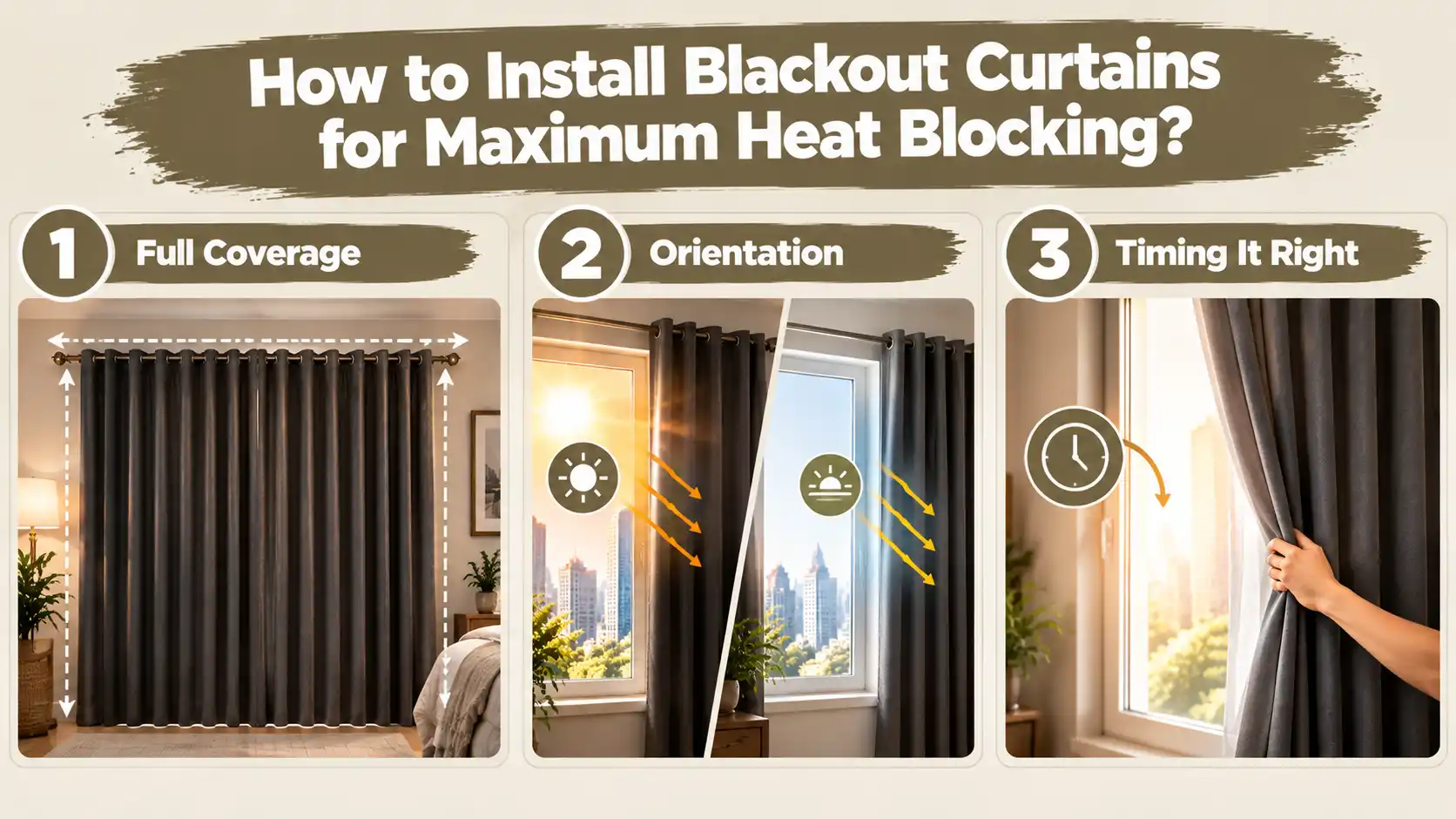
Focus on these important figures before installing the blackout curtains for heat blocking:
Full Coverage
Coverage matters as much as the fabric itself, and this is the part people skip most often. Mount the rod wider than the window frame, not just the width of the glass, so the curtain covers the full opening with overlap on each side rather than gapping at the edges. Floor-length panels close the bottom gap, one of the main places convection sneaks warm air behind the curtain, though keep floor-length fabric away from any radiator or heater if one sits below the window.
Orientation
A west-facing window in Dubai takes the brunt of the afternoon sun, so closing it by early afternoon rather than waiting until the room already feels hot makes a genuinely bigger difference than the same habit on an east-facing window, which has usually finished its worst sun exposure by mid-morning. Knowing which walls in a home take the hardest sun is worth five minutes of thought before deciding a room-by-room closing schedule.
Timing It Right
Close curtains before the sun hits that specific wall, not after the room has already warmed up. Once heat is inside, a curtain traps it as much as it blocks it, which cuts both ways. If you’re installing yourself rather than booking professional curtain fixing and installation, a wraparound or side-channel track closes the light and heat gaps a standard rod-hung curtain leaves along the wall.
Do Blackout Curtains Actually Lower AC Bills in Dubai?
Realistically, yes, though the size of the savings depends on how much sun-exposed glass a home actually has. With cooling representing a large share of residential electricity use in the UAE and window heat gain feeding directly into that load, reducing solar gain through the glass means the AC cycles less to hold the same temperature.
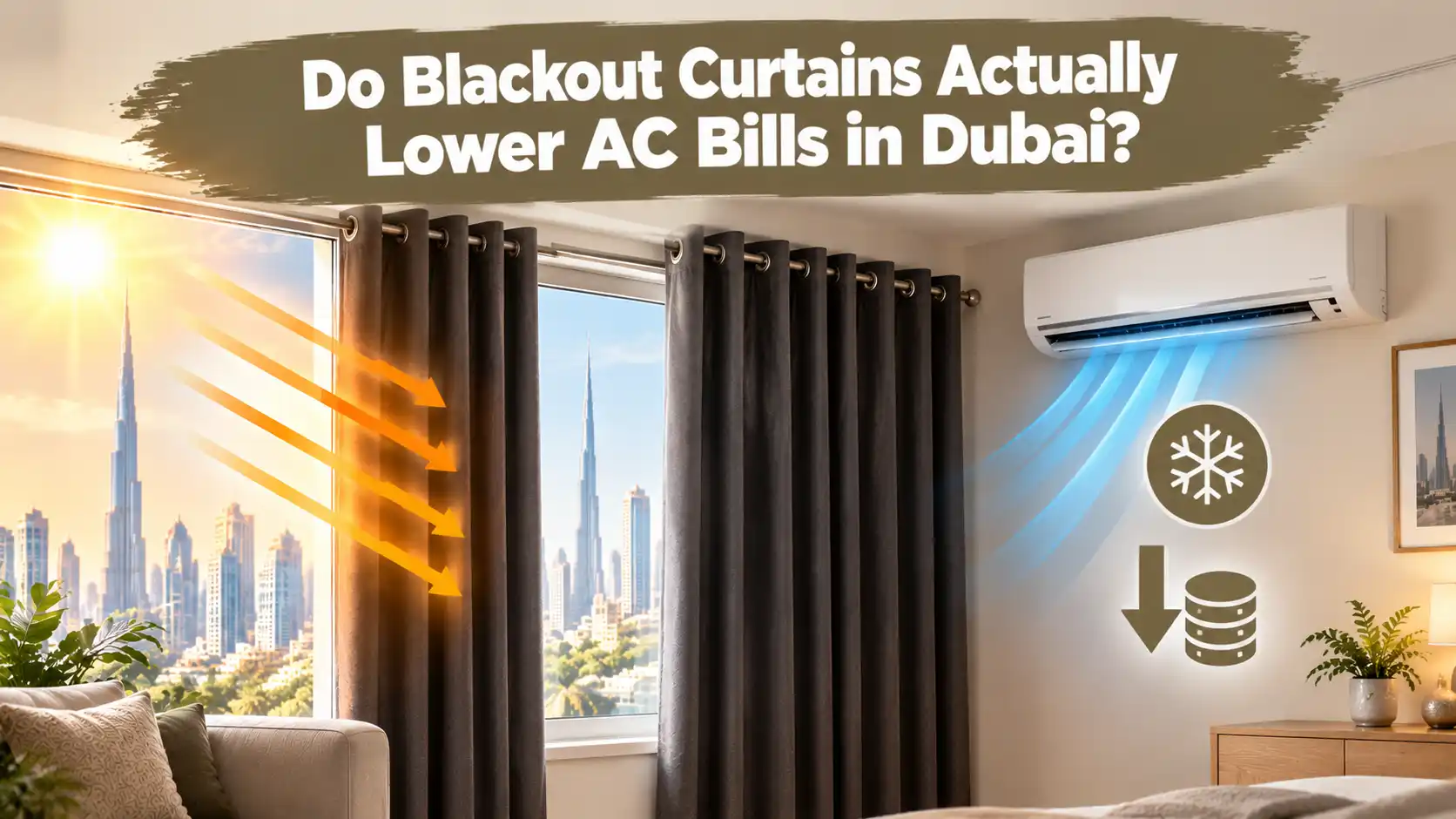
We wouldn’t promise a specific amount figure, since it depends on unit size, orientation, and how much glass a given apartment has, but the direction is consistent across every source we checked: less heat entering through the windows means less work for the AC, which means a lower bill, even if the exact percentage varies household to household.
Blackout Curtains vs. Blinds vs. Window Film, Which Wins on Heat?
Each solves the problem slightly differently, and none of them is strictly better across every situation.
| Option | Heat performance | Trade-off |
| Blackout curtains, thermal-lined | Strong, especially combined with full coverage | Softer, more decorative, needs correct fit to perform |
| Blackout or reflective blinds | Strong, especially reflective finishes | More rigid look, less acoustic benefit than heavy fabric |
| UV reflection window film | Strong, applied directly to glass | Permanent-ish, doesn’t offer darkness or privacy control |
Curtains hold one real advantage the other two don’t: they’re adjustable by the hour. Closed during peak sun, opened once the sun’s off that wall, which neither a film nor most blinds do without motorization. If you want that adjustability automated rather than manual, motorized curtains handle the timing without you needing to remember to close them before the room’s already warmed up.
Which Blackout Curtains Should You Choose for Heat Control?
If heat is the actual priority, not just darkness, we’d point you toward a heavier, thermal-lined fabric with a white or light-colored backing facing the window, not just anything labeled blackout.
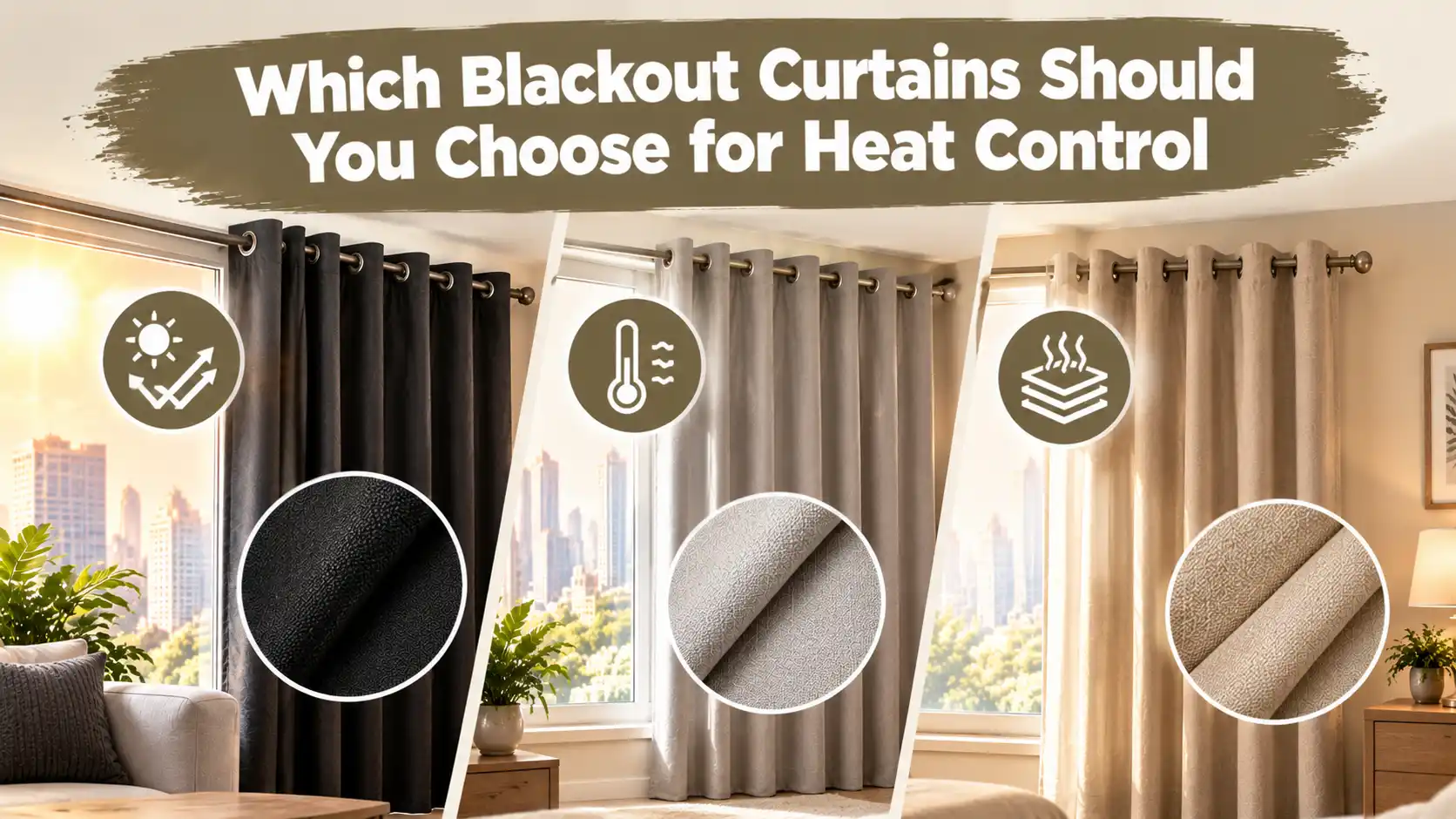
Velvet performs well here too, given its natural density, provided it’s paired with the right lining rather than hung bare, which is the exact mistake that turns a heavy dark fabric into a radiator instead of a shield.
What Mistakes Undo the Heat-Blocking Effect?
Buying based on the word “blackout” alone, without checking for a thermal or reflective lining, is the most common one. Hanging a dark, unlined curtain and expecting heat performance equal to a properly lined one is the second, and it’s the exact scenario that started this whole article.
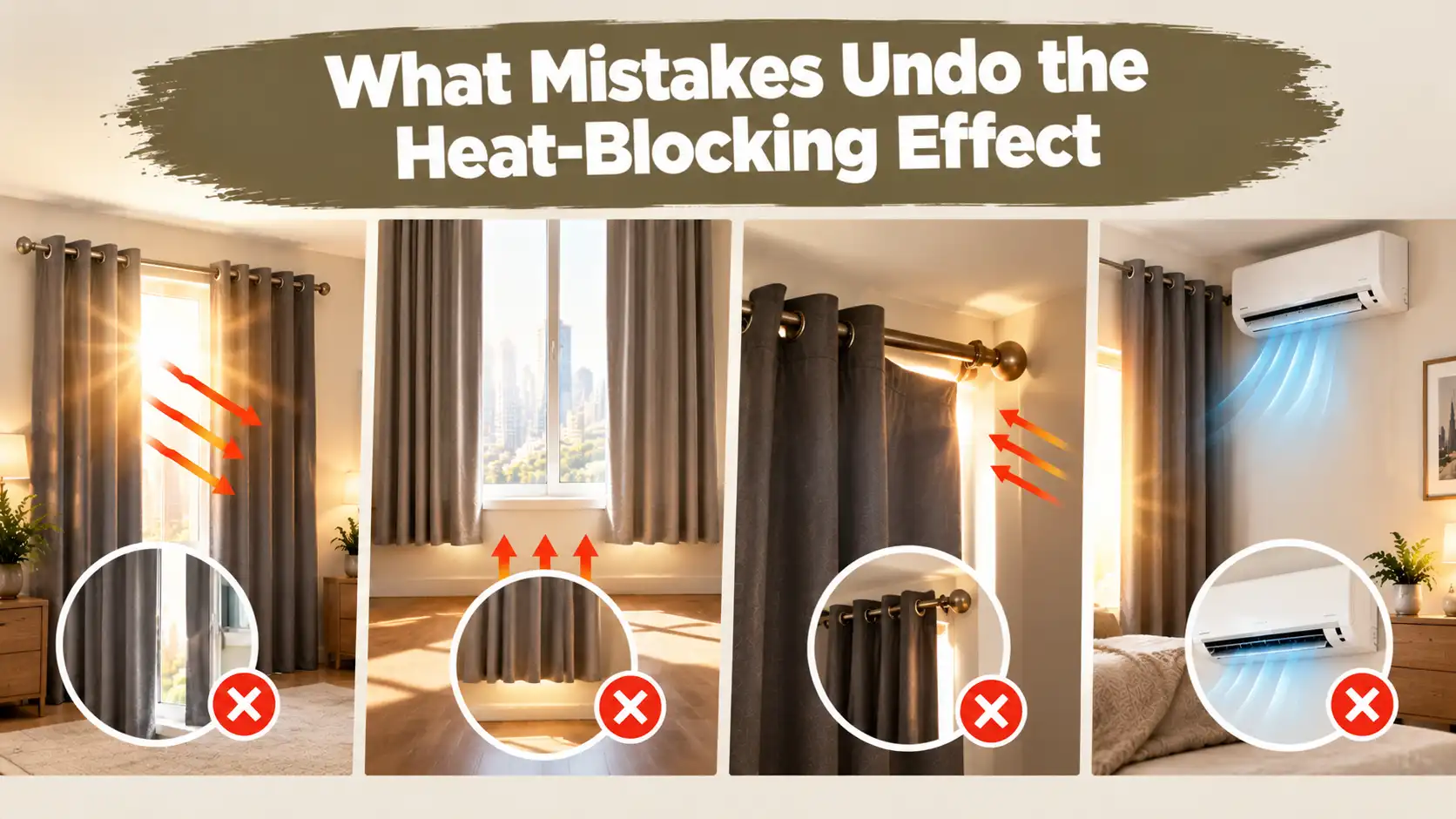
Undersized panels that leave gaps at the sides are another big one, since even excellent fabric loses most of its benefit if warm air can circulate around it freely. And leaving curtains open through peak sun hours defeats the entire purpose regardless of fabric quality. The curtain has to actually be closed at the right time to do anything at all.
What Goes Wrong on Real Installations
Most heat complaints about blackout curtains trace back to one of two things: a thin panel bought purely for the price, or a correctly chosen fabric hung with gaps wide enough to let warm air circulate behind it anyway. Swapping an unlined dark curtain for a thermal-lined panel with a light backing, same room, same window, typically makes a noticeable difference within days, which is usually the first thing worth trying if the fabric itself is suspect.
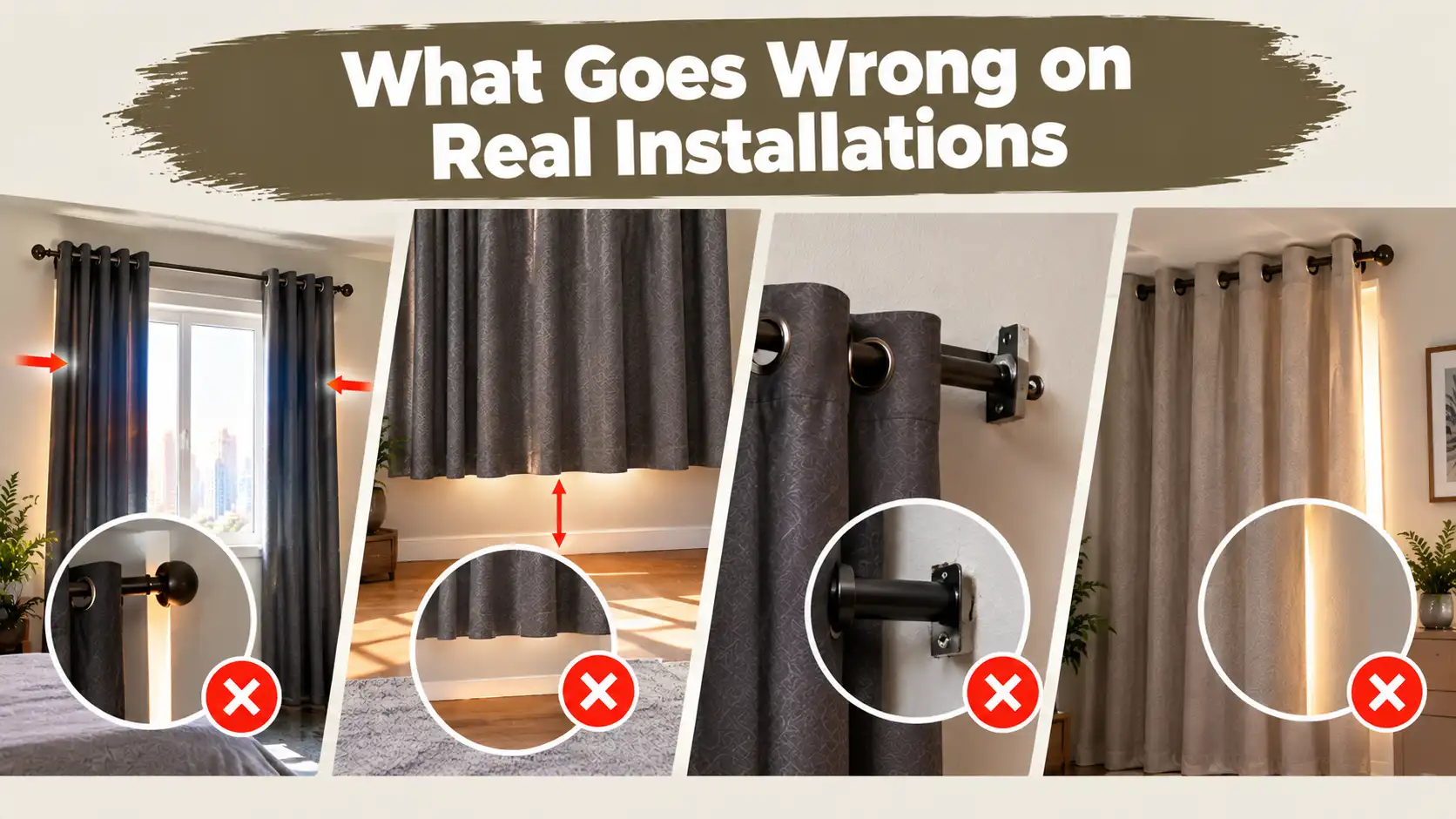
The reverse happens just as often. A room can feel just as hot with curtains that are genuinely doing their job, because the actual issue is a window that isn’t sealing properly at the frame, something no curtain fabric fixes regardless of lining or weight. It’s worth ruling that out before assuming the curtain itself is the problem.
Frequently Asked Questions
Do blackout curtains really block heat, or just light?
Both, but not automatically. Light blocking is guaranteed by the blackout label. Heat blocking depends on the lining, backing color, and fabric weight, which is a separate spec worth checking rather than assuming.
Should the reflective side of a curtain face the window or the room?
The window. A white or light-colored backing facing outward reflects solar radiation before it’s absorbed into the fabric. The room-facing side can be whatever color fits your decor without affecting heat performance.
Can a dark curtain make a room hotter instead of cooler?
Yes, if it’s unlined. Dark, unlined fabric absorbs solar energy directly and can reach high surface temperatures in direct sun, radiating that heat into the room rather than blocking it. This is exactly why lining and backing color matter as much as the blackout claim itself.
Do I need thermal curtains specifically, or will regular blackout curtains work?
Depends on your priority. If darkness matters more than temperature, standard blackout is fine. If heat control is the actual goal, look specifically for a thermal or insulated lining, since not every blackout curtain includes one.
Are blackout blinds better than blackout curtains for heat?
Both perform well with the right finish. Blinds with reflective slats block heat effectively and suit a more minimal look. Curtains offer the advantage of easy hourly adjustment and generally better sound dampening due to fabric weight. Neither is universally better; it depends on the room and your priorities.
Do blackout curtains work on their own, or do I need to fix window leaks too?
Curtains help with solar radiation and add some insulation, but they don’t fix air leaks around a poorly sealed frame. For a genuinely drafty or single-pane window, sealing the frame alongside adding a good curtain gives a far better result than either step alone.
Do blackout curtains help in winter too, or only for summer heat?
Both, through the same still-air-pocket mechanism working in reverse. In summer, the fabric and lining block solar heat from entering. In winter, that same insulating layer slows warmth from escaping through the glass. It’s a smaller factor in Dubai given the shorter, milder winter, but the effect isn’t purely a summer one.
How long before I’d notice a difference after switching to thermal-lined blackout curtains?
Usually within a few days of consistent use, based on what we’ve seen on installations. The room won’t hit a dramatically different number on a thermostat, but the AC visibly cycles less often, and the space near the window stops feeling like it’s radiating heat by late afternoon.