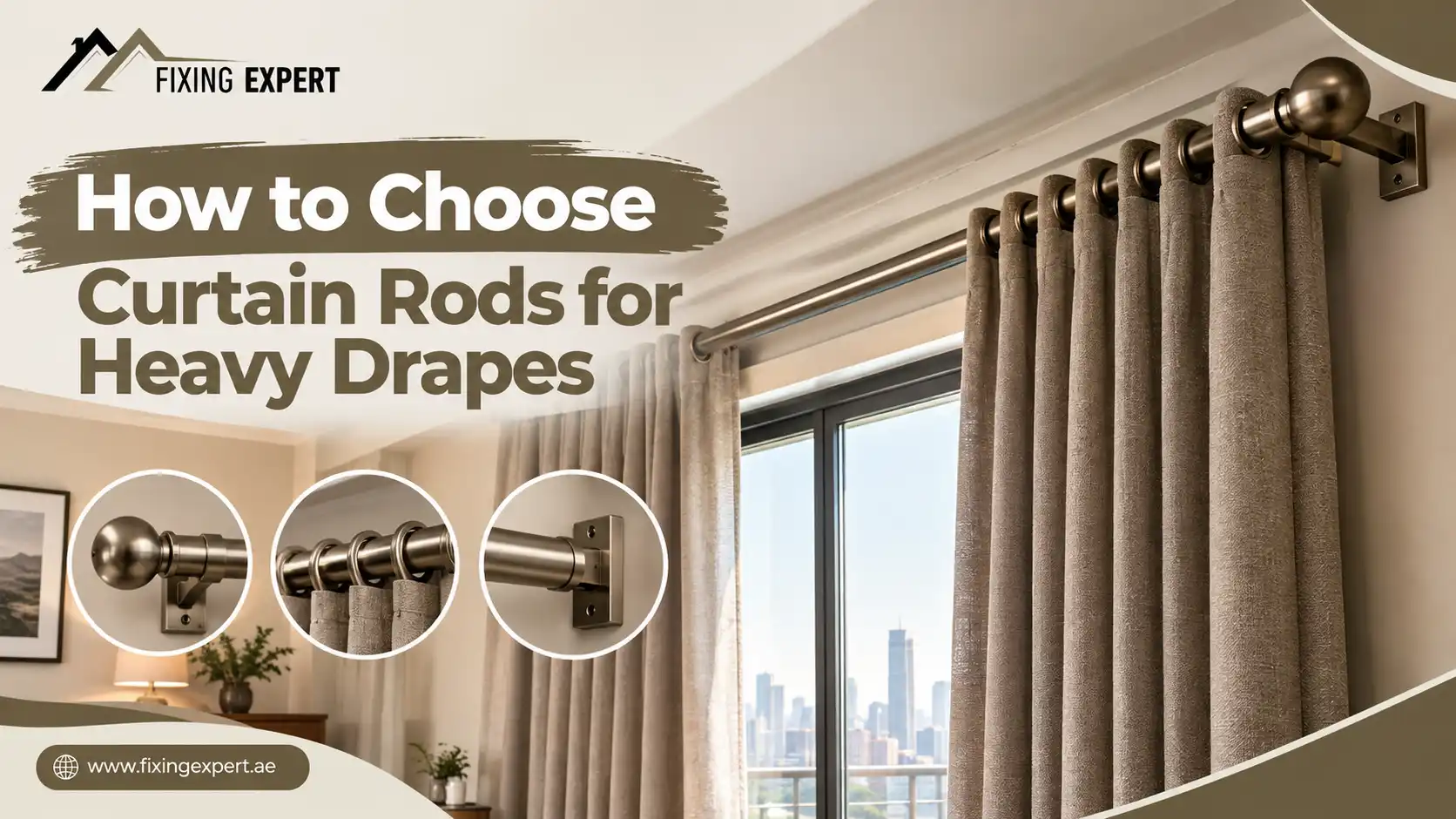
A rod that looks sturdy in a product photo and a rod that actually holds heavy fabric for years without bending are frequently not the same product.
Diameter, wall thickness, and material determine whether a rod supports heavy drapes long-term, and none of those three specs show up clearly in most product listings, which is exactly why so many heavy curtain setups start sagging within the first year.
Style matters last, not first, when the fabric involved is genuinely heavy.
What Makes a Curtain Rod Strong Enough for Heavy Drapes?
Three specifications determine a rod’s real-world capacity, and diameter alone is the one most buyers check, while the other two go unmentioned.
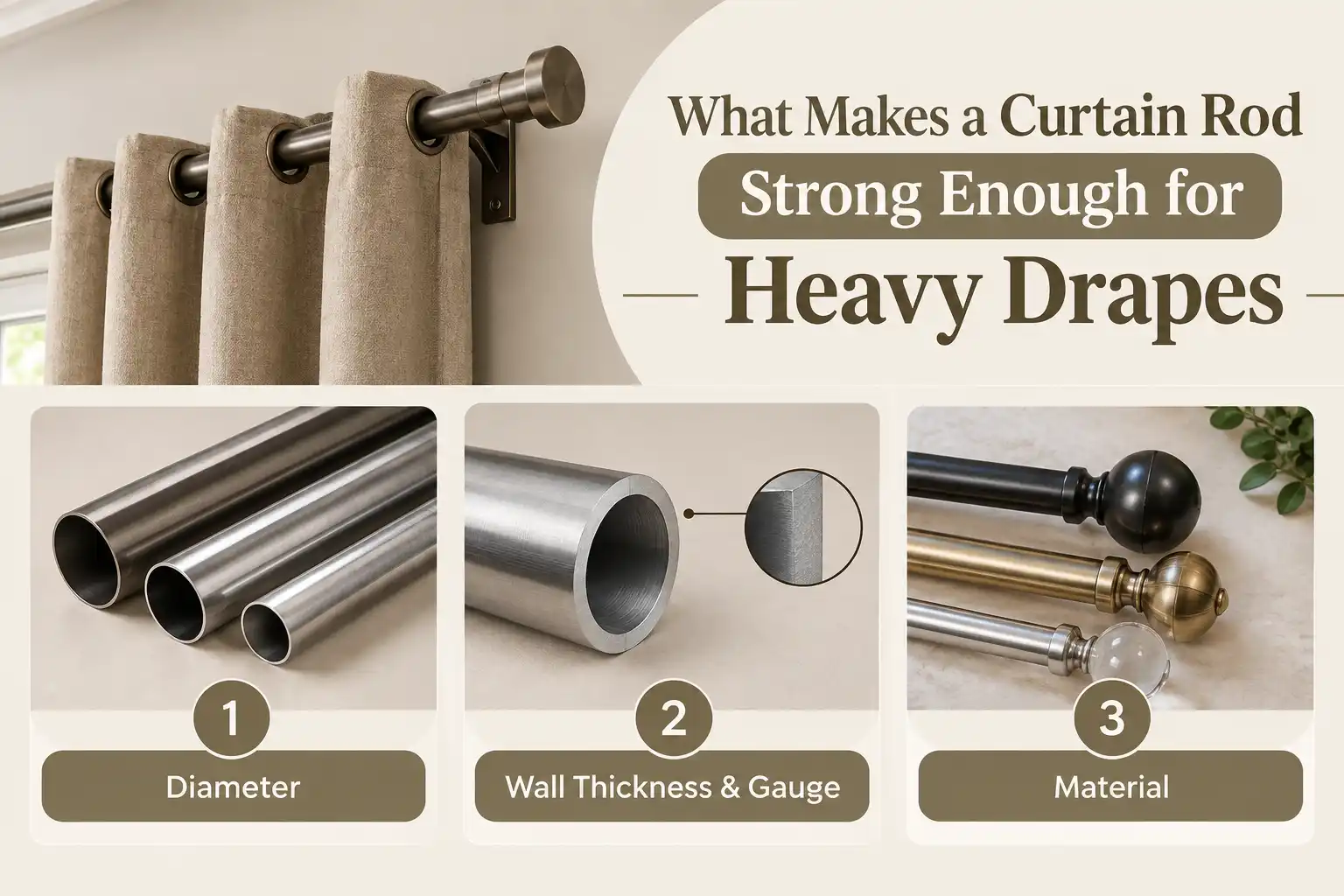
- Diameter affects rigidity, since a thicker tube resists bending more than a thin one under the same load.
- Wall thickness and the gauge of the metal itself affect how much that tube flexes before it reaches its diameter’s theoretical strength, and two rods of identical diameter can perform very differently if one uses a thin-walled tube and the other a thicker one.
- Material affects both strength and how the rod ages under sustained weight, since some metals hold their shape under long-term load better than others.
A rod that gets all three right- adequate diameter, solid wall thickness, and a material suited to sustained weight- holds heavy drapes flat and level for years. A rod that only gets diameter right, the spec most visible on a product label, often still sags, because wall thickness was the actual limiting factor.
How Heavy Are Heavy Drapes, Really?
Fabric weight varies more than most buyers expect, and knowing roughly where a curtain falls on this range is the starting point for every other decision in this guide.
| Fabric type | Approximate weight | Category |
| Sheer, voile | Very light | Standard rod sufficient |
| Standard cotton orlinen | Light to moderate | Standard to medium rod |
| Lined orblackout curtain | Moderate to heavy | Heavy-duty rod recommended |
| Velvet, double-lined, or layered drapes | Heavy | Heavy-duty rod required, center support likely |
Density-rated technical curtain fabric, the kind used in acoustic or high-performance thermal curtains, can weigh three to four times more than a standard decorative panel of the same size. A single heavy panel at that density can reach several kilograms on its own, which is well beyond what a basic rod or a low-capacity telescoping pole is built to carry over a wide span.
A Worked Example
A pair of heavy lined panels covering a 250 cm wide window at a dense technical fabric weight can land in the 3 to 4 kilogram range combined, roughly 6.5 to 9 pounds. That number alone sounds manageable against a rod rated for 20 or 25 pounds, but the same fabric on a wider window, say 300 cm, can climb toward 5 kilograms, around 11 pounds, and a basic telescoping rod’s practical capacity, typically 3 to 8 kilograms depending on diameter and build quality, starts running close to its actual limit rather than sitting comfortably under it.
This is exactly why checking the rod’s rated capacity against the real, estimated fabric weight for the specific window matters more than assuming a “heavy-duty” label covers any curtain automatically.
What Rod Diameter Do Heavy Drapes Need?
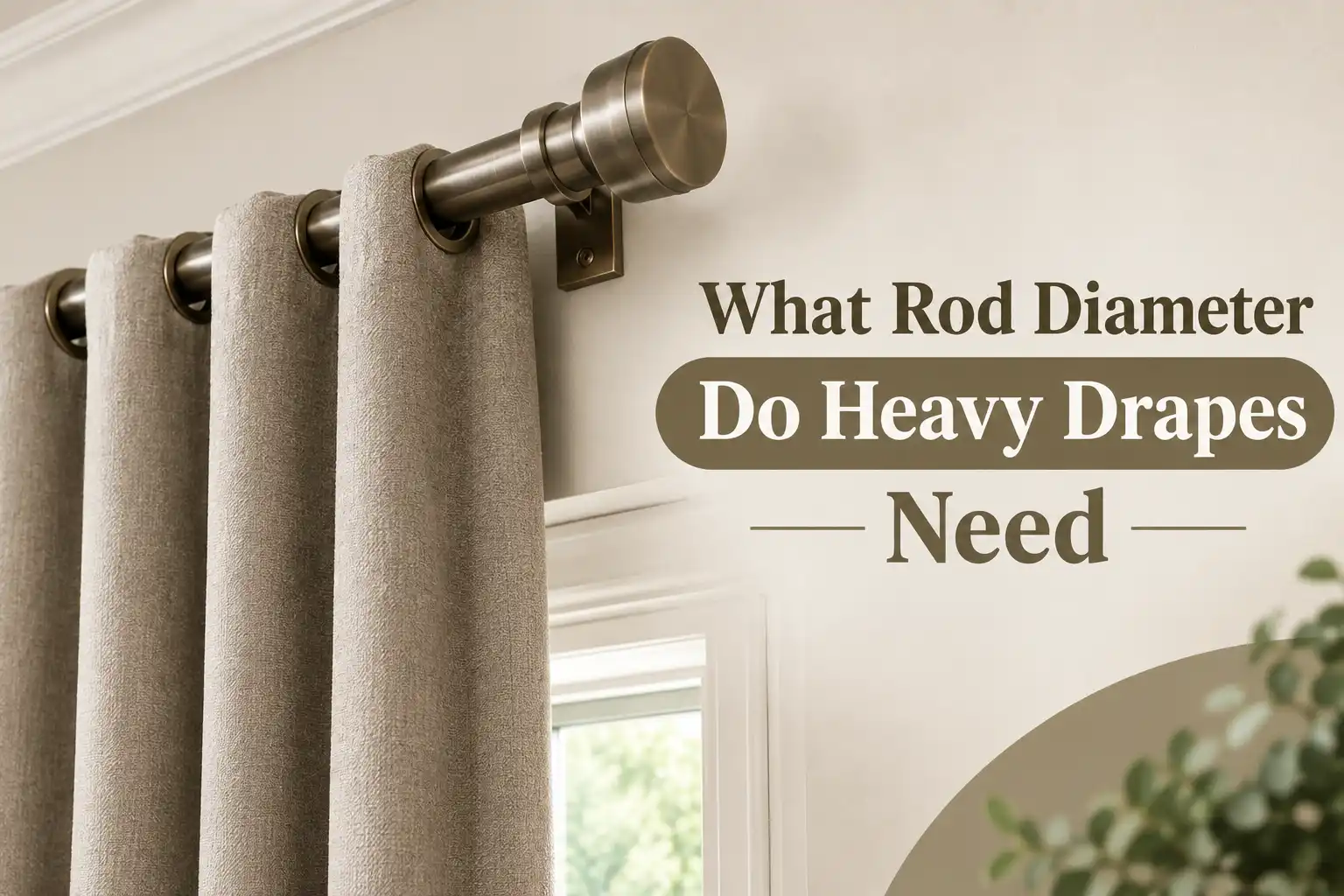
Diameter is the first spec worth checking, and the general guidance is consistent across most manufacturers. A 3/4-inch rod suits light curtains and sheers only. A 1-inch rod is the standard baseline for medium-weight fabric and handles most everyday curtains without issue. Heavy drapes, meaning lined, blackout, or velvet fabric, generally need 11/8 to 11/4 inches, and very wide windows carrying heavy fabric benefit from the top end of that range or beyond.
The relationship isn’t subtle. A seemingly small increase in diameter meaningfully increases a rod’s resistance to bending, which is why the jump from a 3/4-inch to a 1-inch rod, or from 1-inch to 1 1/4-inch, matters more than it might appear on a spec sheet.
Does Wall Thickness Matter as Much as Diameter?
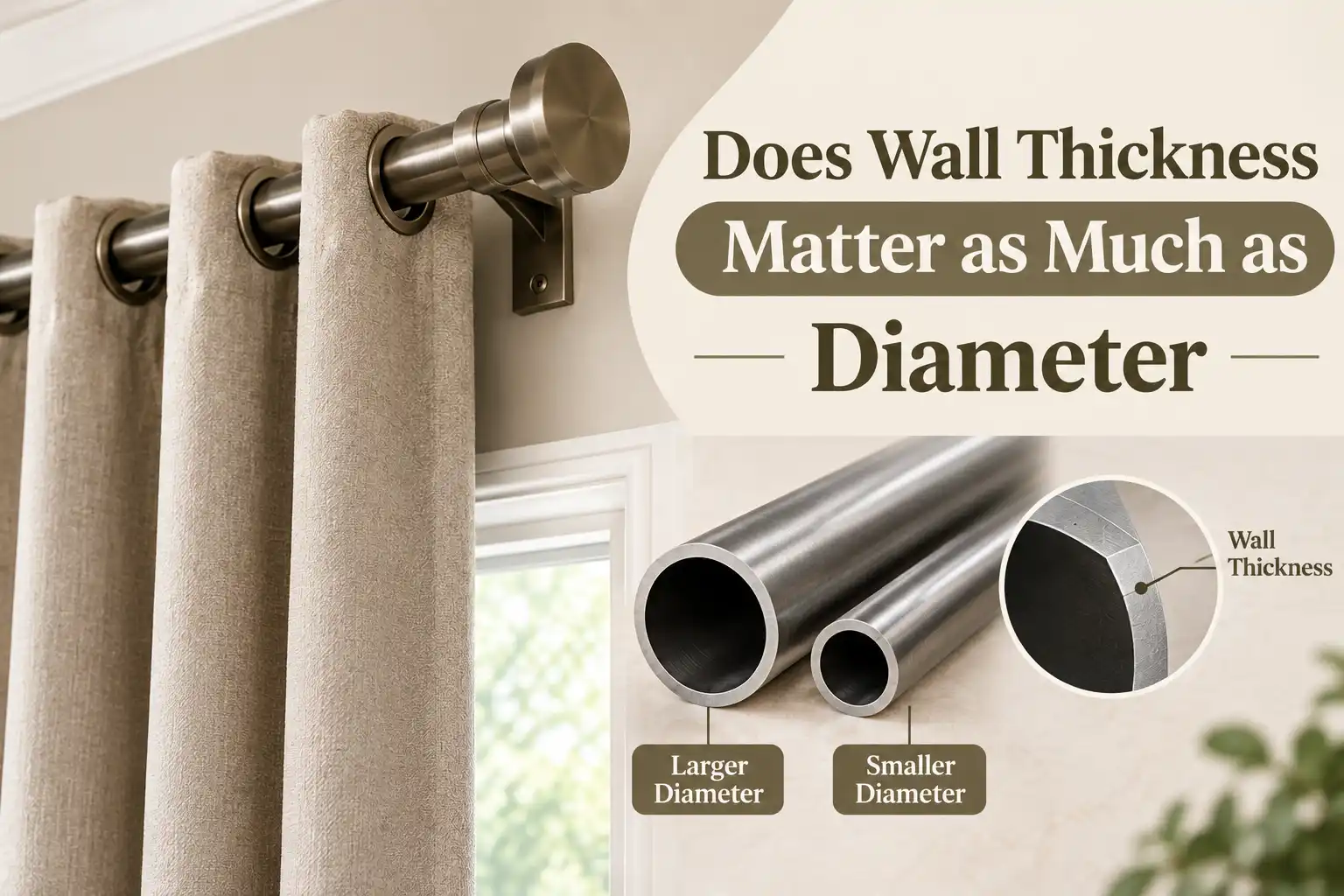
Yes, and it’s the specification most buyers never think to check. Wall thickness, typically listed in millimeters for metal rods, describes how thick the actual metal is, independent of the tube’s outer diameter.
A rod with a 0.6mm wall flexes noticeably more under the same load than a rod of identical diameter with a 0.8mm wall, since the thinner wall simply has less material resisting the bend.
This is why two rods advertised at the same diameter and even the same weight rating can perform differently once a genuinely heavy curtain is hung. For heavy blackout or layered curtains specifically, a minimum wall thickness of around 0.7mm alongside the 1-inch-plus diameter is a reasonable target, and premium heavy-duty rods often specify this figure directly where budget options tend to omit it entirely.
Which Material Holds Up Best?
Material affects both raw strength and how the rod behaves over years of sustained weight, and the options aren’t equal despite often looking similar in a showroom.
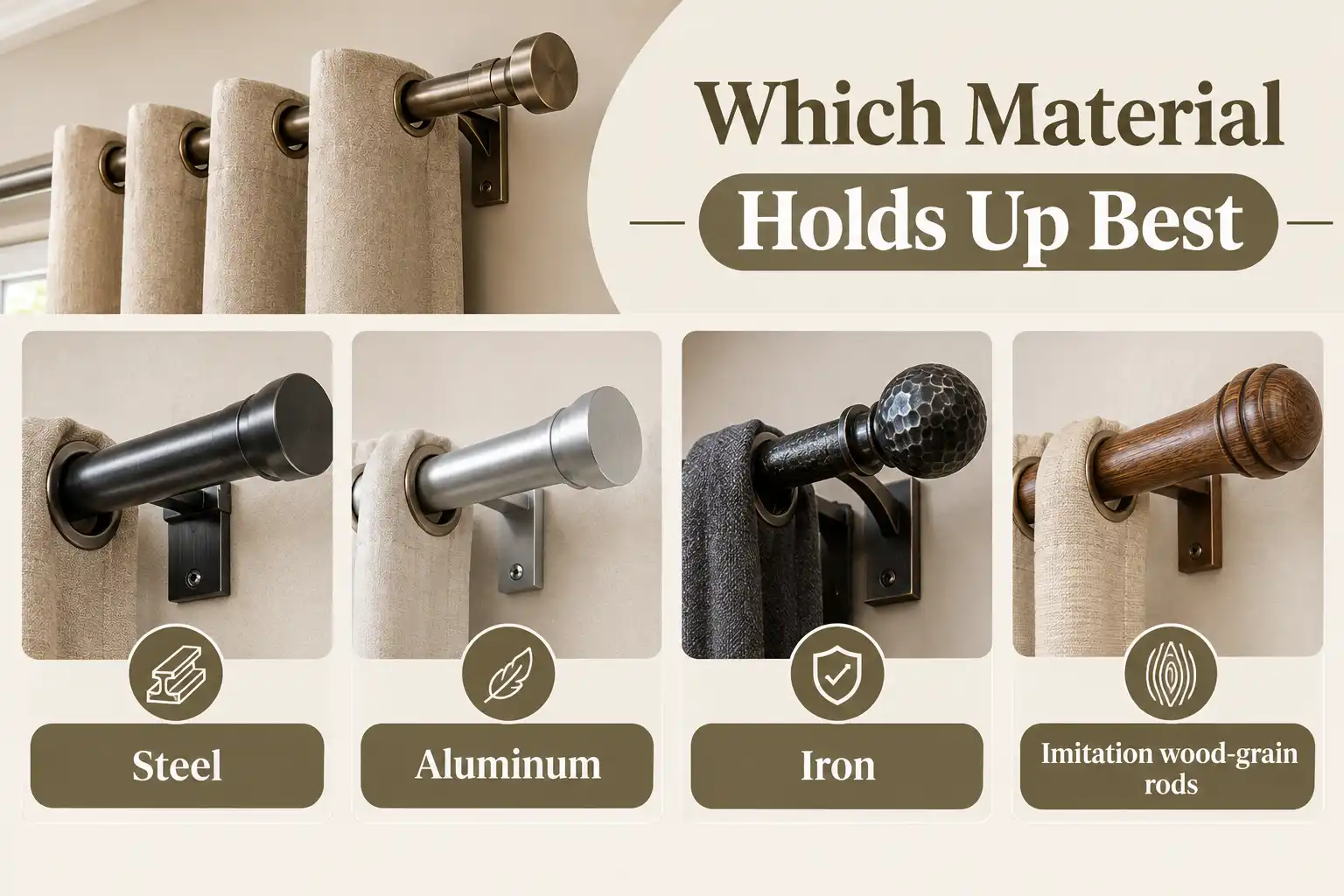
-
Steel
Steel with a baked enamel finish, generally offers the strongest weight-to-cost ratio for heavy curtains, holding its shape reliably under sustained load.
-
Aluminum
It is lighter and easier to handle during installation but flexes more readily over long spans, which makes it a weaker choice specifically for wide windows carrying heavy fabric rather than for heavy fabric on a narrower window.
-
Iron
Iron is often used in more decorative or traditional rod designs, carries genuine strength but adds significant weight to the hardware itself, which is worth factoring into the bracket and wall-anchor decision separately.
-
Imitation wood-grain rods
They are built with a metal core under a wood-effect coating, offer a traditional look without the bending risk that genuine solid wood carries under heavy load.
| Material | Strength for heavy loads | Trade-off |
| Steel (baked enamel) | Strongest overall value | Heavier hardware than aluminum |
| Aluminum | Moderate, flexes over long spans | Lighter to install, weaker on wide windows |
| Iron | Strong, decorative | Adds significant hardware weight |
| Solid wood | Moderate | Can bend or warp under sustained heavy load |
| Metal-core wood-effect | Strong with traditional look | Slightly higher cost than plain metal |
How Much Weight Can a Curtain Rod Actually Hold?
Published weight ratings vary considerably by rod, which is exactly why checking the specific rating rather than assuming a standard figure matters. As a general reference range across common heavy-duty options, basic aluminum rods typically handle 15 to 20 pounds, entry-level heavy-duty rods around 25 pounds, mid-range heavy-duty options 33 to 40 pounds, and premium sectional steel rods with proper wall thickness reach up to 50 pounds or more when paired with a center support bracket.
| Rod category | Typical weight capacity |
| Basic aluminum, standard diameter | 15–20 lbs |
| Entry-level heavy-duty | ~25 lbs |
| Mid-range heavy-duty steel | 33–40 lbs |
| Premium sectional steel with center support | Up to 50 lbs or more |
These figures assume correct installation, adequate bracket spacing, and a wall anchor rated for the load. A rod rated for 50 pounds still sags if it’s mounted with only two end brackets across a genuinely wide window, since the rating reflects the rod and bracket system together, not the rod in isolation.
Do Heavy Drapes Need a Center Support?
In most cases, yes, and it’s a near-mandatory addition once a rod crosses roughly 60 inches carrying heavy fabric. A center support bracket adds a third anchor point along the rod’s middle section, which prevents the sag that develops even on a well-rated rod once the unsupported span gets long enough.
Skipping a center support on a wide, heavy-fabric installation is one of the more common reasons a technically well-chosen rod still fails to perform as expected. The rod’s weight rating and the bracket configuration work together, not independently, and a strong rod with insufficient support still bows under sustained heavy weight over time.
Why Spring-Tension Rods Struggle Specifically
Spring-tension rods, which hold themselves in place through pressure between two walls rather than screwed-in brackets, deserve a separate mention here because they fail differently than a bracket-mounted rod does. Their load capacity is generally lower across the board, often in the 3 to 8 kilogram range regardless of diameter, and spring fatigue over time means a tension rod that held a curtain securely on installation day can loosen months later under the same weight. For genuinely heavy drapes, a properly anchored, bracket-mounted rod is the more reliable choice, and a tension rod is better reserved for lighter fabric or temporary setups.
Telescoping or Sectional: Which Is Better for Heavy Drapes?
| Feature | Telescoping Rods | Sectional Rods |
| How it extends | One tube slides inside another | Multiple pieces screw together at threaded joints |
| How it holds length | Friction or a locking mechanism | Fixed, rigid connection |
| Weak point | Sliding joint, relies on friction under load | None, load distributes across overlapping segments |
| Load performance | Weaker under heavy, sustained weight | Meaningfully stronger under heavy, sustained weight |
| Appearance | Smooth, seamless profile | Visible thread lines at joints on some designs |
| Installation | Faster, fewer steps | Slower, more assembly |
| Best suited for | Lighter fabric, narrower windows | Heavy drapes, spans over ~60 inches, paired with a center support |
How Wide Can a Rod Span Before It Sags?
This depends on the combination of diameter, wall thickness, and curtain weight rather than any single fixed number, though general patterns hold across most rods. A well-built rod at 1 inch or more in diameter with adequate wall thickness typically handles spans up to around 60 inches without a center support, provided the curtain weight stays within the rod’s rating. Beyond that width, sagging becomes increasingly likely without additional support, and very wide spans, well over 100 inches, generally need two center supports rather than one, spaced evenly rather than clustered.
Telescoping rods specifically show sagging at narrower spans than sectional rods of the same diameter, since the sliding joint concentrates stress differently than a continuous threaded connection does. A telescoping rod carrying heavy fabric across a wide span is one of the more predictable failure points in this entire category.
What Happens If the Rod Is Too Weak?
The consequences go beyond a simply crooked-looking curtain. A rod that sags in the middle creates a gap between the curtain and the wall at the top of the window, and that gap undermines whatever the curtain was meant to accomplish beyond decoration, whether that’s blocking light, reducing noise, or improving insulation. Reports on this specific failure point suggest a sagging rod’s resulting gap can reduce a curtain’s thermal and sound-blocking performance by a meaningful margin, sometimes cited in the range of 15 to 40 percent depending on the size of the gap created.
Beyond performance loss, a genuinely overloaded rod risks pulling its brackets loose from the wall entirely, particularly on hollow drywall where the anchor point wasn’t rated for sustained heavy load. This is a slower failure than it sounds, since the strain builds gradually rather than failing on day one, which is part of why the problem often isn’t traced back to the rod until months after installation.
How Do You Measure for a Heavy-Duty Rod?
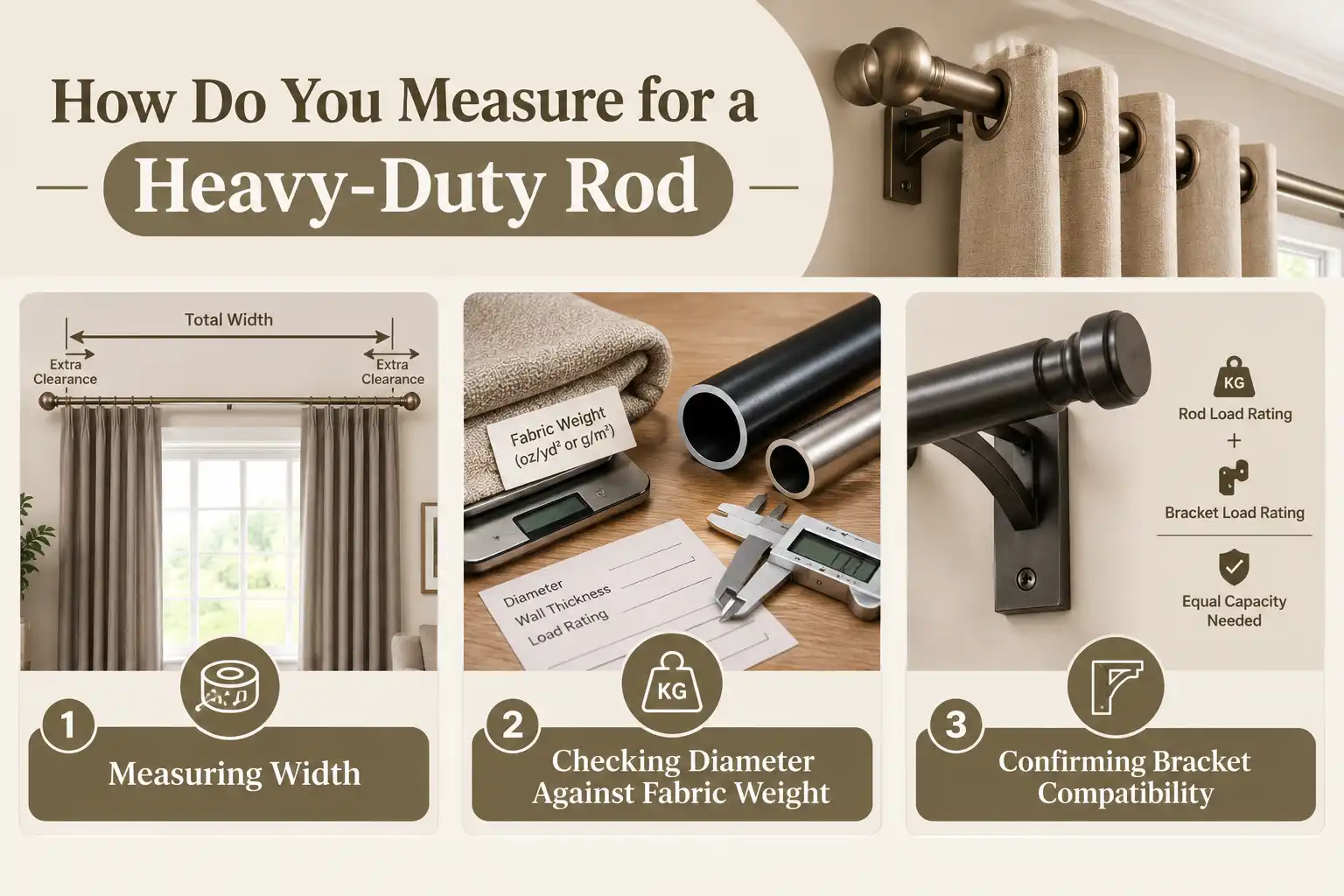
-
Measuring Width
Measure the total width to be covered, then add clearance on each side, generally enough for the curtain to stack fully open without covering the window frame. For heavy drapes specifically, confirm the chosen rod’s rated span against this final width rather than the raw window measurement alone.
-
Checking Diameter Against Fabric Weight
Cross-reference the estimated curtain weight, using the fabric weight table earlier in this guide as a starting point, against the rod’s stated diameter and wall thickness rather than relying on the product category name alone. A rod marketed as “heavy-duty” without a stated wall thickness or weight rating is worth treating cautiously rather than trusting the label at face value.
-
Confirming Bracket Compatibility
Heavy rods need brackets rated for the same load, and mismatched capacity between the rod and its brackets means the weaker component, whichever that turns out to be, determines the actual safe limit for the whole installation.
Which Finish Lasts Longest Under Heavy Use?
Finish affects appearance primarily, but it does interact with durability in a few specific ways worth knowing. Baked enamel coatings on steel rods resist wear and corrosion well over years of use, which matters more for rods that see frequent opening and closing than for a decorative rod left largely static. Stainless steel resists rust more effectively than plain iron, which becomes relevant in humid environments where iron hardware can show surface corrosion over time even under a painted finish. Plain painted finishes on lower-cost rods tend to show wear at contact points, particularly where curtain rings or hooks repeatedly slide across the same section of rod.
None of this changes the rod’s raw weight capacity, but a finish that degrades faster than the rod’s structural lifespan means the hardware looks worn well before it’s actually failed structurally, which is worth factoring in for a rod expected to stay in place for years.
Which Rod Suits Which Heavy Fabric?
| Fabric | Recommended diameter | Recommended construction |
| Lined cotton or heavier linen | 1 inch | Sectional or telescoping, standard wall thickness |
| Blackout curtains | 1 to 1 1/8 inch | Sectional preferred for wide windows |
| Velvet or double-lined drapes | 1 1/8 to 1 1/4 inch | Sectional, minimum 0.7mm wall thickness |
| Layered sheer plus heavy drape | 1 inch minimum per rod | Double rod system, each rod rated independently |
What Mistakes Cause a Sagging or Falling Rod?
Buying based on diameter alone, without checking wall thickness or the rod’s actual weight rating, is the most common mistake and the one this guide has spent the most time addressing, precisely because it’s the specification hidden most often from casual comparison. Choosing a telescoping rod for a wide span carrying heavy fabric, rather than a sectional design, sets up exactly the kind of mid-span sag that becomes visible within months rather than years.
Skipping a center support bracket on any span beyond roughly 60 inches, regardless of how strong the rod itself is rated, ignores that the rod and bracket system work together rather than independently. And mismatching bracket capacity to rod capacity, using standard brackets on a heavy-duty rod because they happened to be included in a bundle, undoes the benefit of choosing strong rod hardware in the first place.
Where This Leaves You
Choosing a curtain rod for heavy drapes comes down to three specifications checked together rather than any one in isolation: diameter, wall thickness, and material, paired with correct bracket spacing for the actual span involved. A rod that gets the diameter right but skips wall thickness, or a strong rod undermined by too few brackets across a wide window, both end up in the same place: a sag that shows up months after installation rather than on day one. For heavier fabric lik evelvet or lined drapes, a sectional steel rod with adequate wall thickness and a properly spaced center support consistently outperforms a lighter telescoping option, even when both carry a similar-looking weight rating on the box. Getting the rod, the bracket hardware, and the wall anchor matched to the actual curtain weight from the start avoids the far more common alternative: a second installation a year later.
Frequently Asked Questions
What diameter curtain rod do I need for heavy curtains?
At least 1 inch for moderately heavy fabric, and 1 1/8 to 1 1/4 inches for genuinely heavy drapes like velvet or double-lined blackout curtains, especially across a wide window. Diameter alone doesn’t guarantee strength, so checking wall thickness alongside it matters just as much.
Is a telescoping rod strong enough for heavy drapes?
For narrower windows and moderately heavy fabric, often yes, provided the diameter and wall thickness are adequate. For wide spans carrying genuinely heavy curtains, a sectional rod with threaded joints generally holds up better, since the telescoping rod’s sliding joint is a structural weak point under sustained heavy load.
How do I know if my curtain rod is too weak for my curtains?
Visible sag in the middle of the span, especially developing gradually over weeks or months, is the clearest sign. Cross-checking the rod’s stated weight rating and wall thickness against the curtain’s actual weight before installation avoids this rather than diagnosing it after the fact.
Does a thicker rod always mean a stronger rod?
Generally yes, but not guaranteed. Wall thickness matters alongside diameter, and two rods of the same outer diameter can perform very differently if one uses noticeably thinner-gauge metal than the other. Checking both specifications together gives a more accurate picture than diameter alone.
Do heavy curtains need a center support bracket?
In most cases, yes, once the span crosses roughly 60 inches. Even a well-rated, strong rod tends to sag across a wide unsupported span carrying heavy fabric, and a center support bracket addresses that directly rather than relying on the rod’s raw strength alone.
What’s the difference between a rod’s weight rating and the total curtain weight it can hold?
The weight rating generally reflects the rod and its bracket system working together under proper installation, not the rod in isolation. A rod rated for 50 pounds still underperforms that rating if it’s installed with insufficient bracket support or spaced incorrectly across a wide window.
Can I use a standard rod for velvet curtains if I add extra brackets?
Adding brackets helps, but a standard rod’s diameter and wall thickness set a ceiling that extra brackets alone can’t fully overcome. For velvet or other genuinely heavy fabric, starting with a rod actually rated for that weight class, rather than reinforcing a lighter rod with more hardware, is the more reliable approach.
Are spring-tension rods strong enough for heavy curtains?
Generally not for genuinely heavy fabric. Tension rods hold through pressure alone rather than a fixed anchor, their load capacity tends to sit lower than bracket-mounted rods, and spring fatigue over time can loosen a rod that held securely when first installed. A properly anchored, bracket-mounted rod is the safer choice once curtain weight moves into heavy territory.