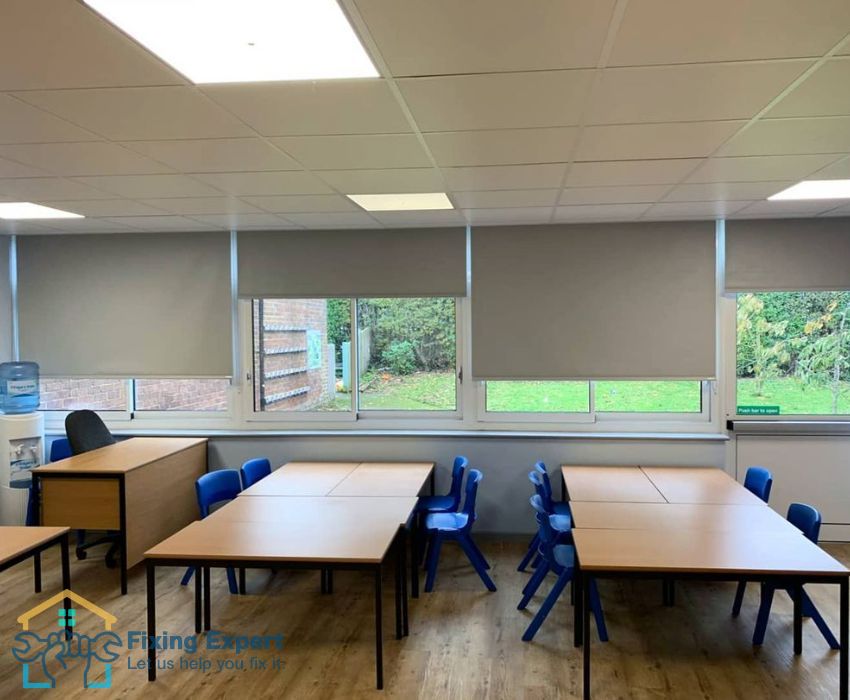
A classroom should support learning, not distractions. Every detail inside the room affects student focus. Lighting is one of the biggest factors. Too much sunlight can make reading difficult. Screen glare can disturb projector lessons. Heat from open windows can also make students uncomfortable. This is why window blinds are important in schools.
Many people think blinds are only decorative. That is not true in educational spaces. In schools, blinds help control sunlight, improve privacy, reduce heat, and create a calmer learning environment. They also help teachers manage classroom brightness according to different activities. But not every blind is suitable for a school setting.
Classrooms are busy areas. Students use them every day. Windows are often opened. Blinds are handled repeatedly. Because of this, school blinds must be durable, safe, and easy to clean. Let us understand which blinds work best and why.
Why Schools Need Proper Window Blinds

Natural light is useful in classrooms. It keeps the room bright and fresh. But uncontrolled sunlight creates many problems.
Students sitting near windows often struggle with direct glare. Teachers may face difficulty while using projectors, smart boards, or computer screens. Bright sunlight can also reduce visibility on digital displays.
Another issue is heat. When sunlight enters for long hours, the classroom becomes warmer. This affects comfort and concentration. Students become distracted more easily in a hot room.
Privacy matters too. Classrooms facing roads, playgrounds, or corridors often get disturbed by outside movement. Children naturally look outside when there is activity. Proper blinds help block these visual distractions. So, blinds are not a small accessory. They are part of classroom functionality.
Important Things to Look for in School Blinds

School blinds should not be selected the same way home blinds are selected. They need to meet practical daily demands.
The first thing is safety. Traditional blinds with hanging cords can be risky. Younger students may pull them during play. Loose chains can also create entanglement hazards. This is why cordless or motorized blinds are now considered safer for schools.
The second thing is durability. School blinds are used many times a day. Cheap blinds start bending, fading, or tearing very quickly. Strong materials always perform better in educational buildings.
Cleaning is another major factor. Dust enters classrooms daily. Students touch the blinds often. Marks, fingerprints, and dirt buildup are common. If the blind material is difficult to clean, maintenance becomes frustrating.
Light control is equally important. Teachers do not always need a full blackout. Sometimes they need partial sunlight. Sometimes they need darker conditions for screen lessons. A flexible blind works best.
Best Window Blinds For School – Top Choices

Here we have listed some of the top choices for the blinds that you can install in the schools.
Roller Blinds – A Very Popular School Choice

Roller blinds are widely used in modern classrooms. Their design is simple and neat. They use one flat panel that rolls up and down smoothly. These blinds do not take much space. They look clean on the classroom windows. More importantly, they offer very good light control.
Schools can choose light-filtering roller window blinds for normal rooms. They can choose blackout roller blinds for digital classrooms and media rooms. Vinyl roller blinds are especially practical. They are easier to wipe and maintain than soft fabric blinds.
Another advantage is easy operation. Teachers can raise or lower them within seconds. There is no complicated slat adjustment. Because of their simple structure, roller blinds also tend to last longer.
Venetian Blinds for Adjustable Sunlight

Venetian blinds are another reliable option. These blinds have horizontal slats. The slats can tilt to control the amount of light entering the room. This gives teachers more control during the day.
Instead of blocking the full window, they can simply angle the slats and reduce direct glare. This keeps the classroom bright without making it uncomfortable. Venetian blinds are also known for their clean professional look.
For schools, aluminum or faux wood versions are usually better. They are stronger than delicate wooden styles. These blinds do need regular dusting because dirt can settle on each slat. Still, they remain a practical long-term choice.
Vertical Blinds for Large Classroom Windows
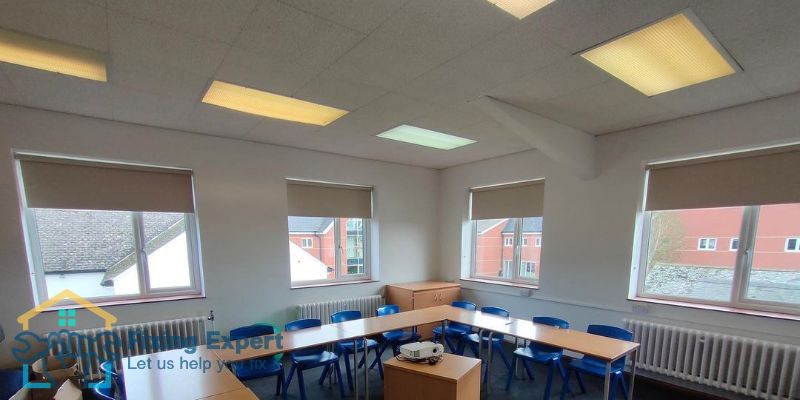
Some schools have wide or tall windows. In such cases, vertical blinds work very well. These blinds use long hanging slats. The slats rotate for privacy and light control. They can also be pulled to one side when full sunlight is needed.
Vertical blinds are commonly used in lecture halls, libraries, labs, and university classrooms. They look organized and professional. They also provide strong coverage for larger glass areas. PVC vertical blinds are especially durable. They handle daily use well and are not difficult to clean. This makes them suitable for institutions with heavy student movement.
Motorized Blinds for Smart Learning Spaces
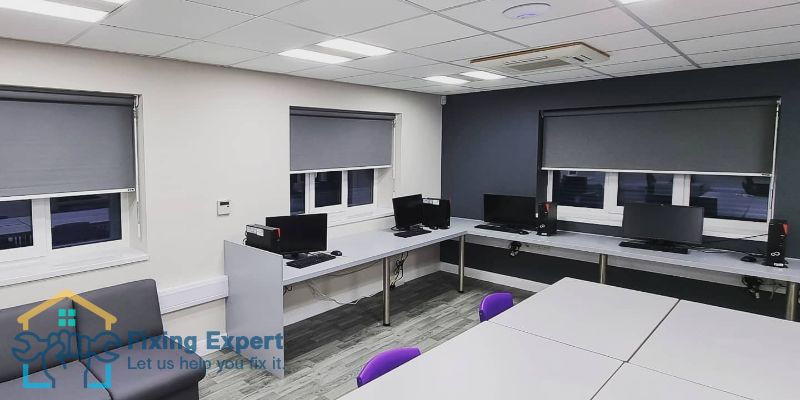
Modern educational institutes are now becoming more technology-driven. Smart boards, projectors, digital presentations, and online classes are common. In such classrooms, motorized blinds are a very efficient option. These blinds work with a remote control or a wall switch. Some can even be automated.
Teachers can adjust the room lighting instantly without leaving their desk area. Another major advantage is safety. There are no dangling cords or chains. This makes the classroom look cleaner and safer. Motorized blinds cost more in the beginning. But they offer convenience and modern functionality that many schools now prefer.
Which Blind Material Is Best?
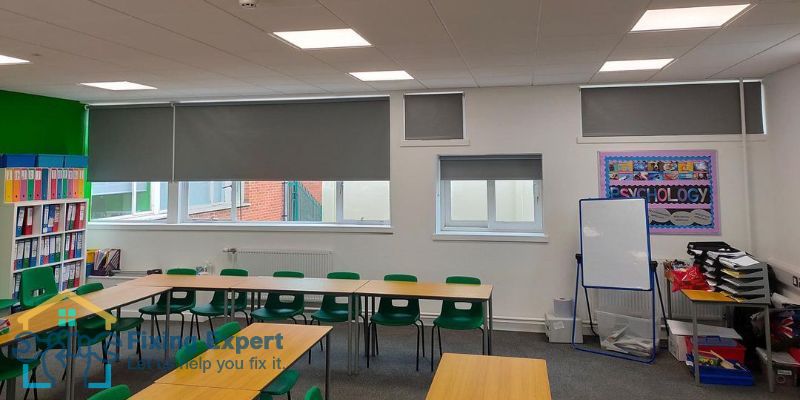
Material matters just as much as blind style.PVC is one of the strongest options. It resists moisture, stains, and daily dirt. It also wipes clean easily.
Vinyl is another good choice. It is affordable and practical for classrooms. Aluminum works well for Venetian blinds because it is lightweight and long-lasting. Soft decorative fabrics may look attractive, but they collect dust faster. They also need more maintenance. For schools, practical materials are always the smarter investment.
How to Keep School Blinds Clean

Clean blinds help create a hygienic classroom.
- Dust should be removed every week. A soft cloth or vacuum brush can do this easily.
- For stains or marks, mild soap water is usually enough. Strong chemicals should be avoided because they can damage the blind surface.
- Teachers and maintenance staff should also inspect cords, rails, brackets, and moving parts regularly.
- Small repairs done on time can increase blind life significantly.
- Deep cleaning every few months also helps maintain a fresh classroom environment.
Final Thoughts
Choosing the best window blinds for school is not only about appearance. It is about creating a better learning space. The right blinds reduce glare. They control heat. They improve privacy. They also support digital teaching methods.
At the same time, they must be safe, durable, and easy to maintain. Roller blinds, Venetian blinds, vertical blinds, and motorized blinds are among the most practical options available today. Each offers its own benefits depending on classroom size and usage. Schools should focus on long-term function rather than just low cost. A good blind system may seem like a small addition, but it can improve classroom comfort every day.