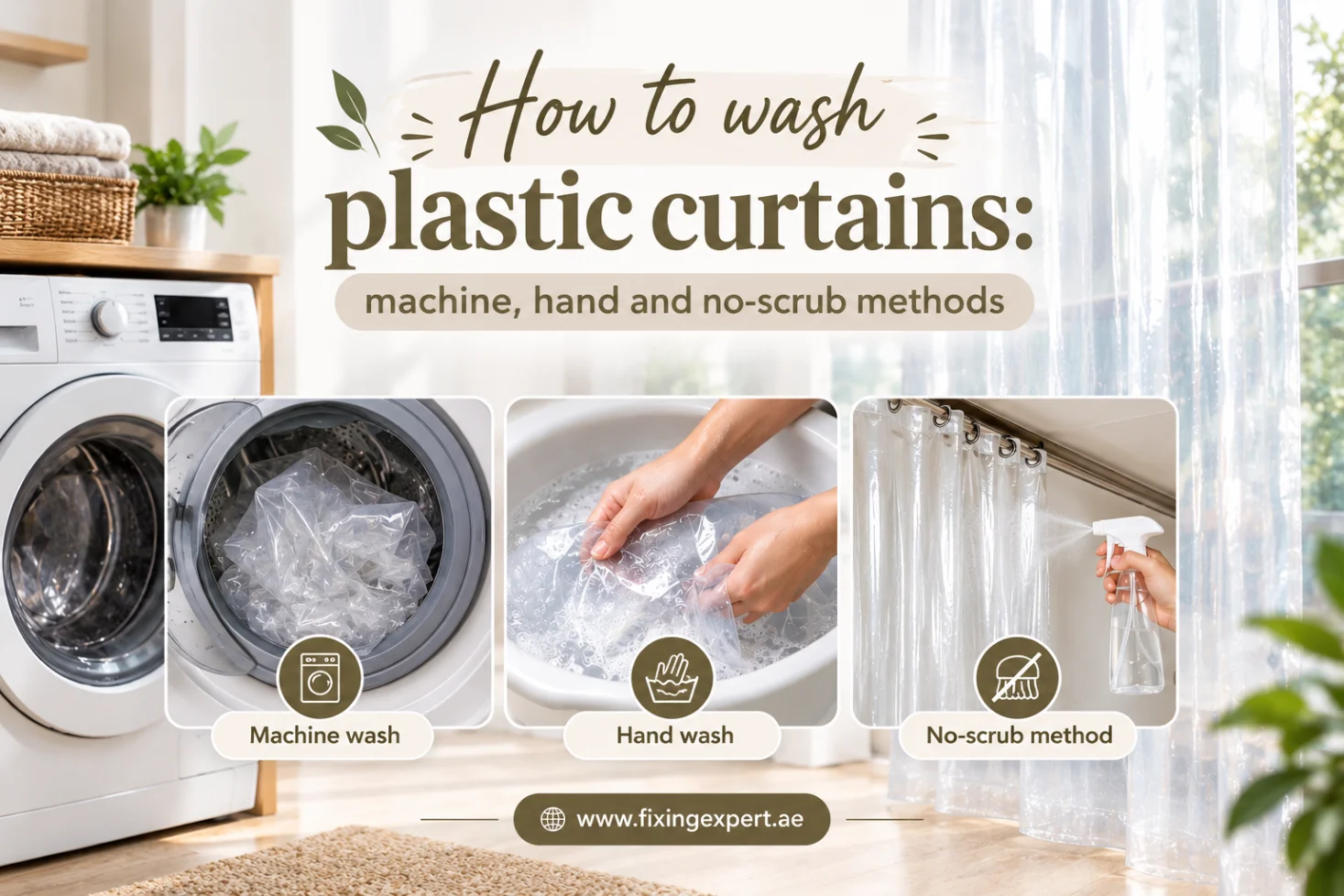
How to wash plastic curtains comes down to five steps: take the curtain down, load it with towels, run a gentle cool or warm cycle, skip the dryer, and hang it up to air dry.
Plastic curtains sit in a wet, warm room every day. Soap spray, body oils and moisture build up on the surface and feed mildew. The good news is that most plastic and vinyl curtains can go in a washing machine, and the rest clean well by hand. If you plan to refit the curtain on rings afterward, our notes on hanging curtains with rings cover the rehang step.
Check the care label first. Most plastic, vinyl and PEVA curtains are machine washable. Use a gentle or delicate cycle, cool or warm water, and a low spin or no spin. Add two bath towels. They rub the curtain lightly and balance the load. Add baking soda with the detergent and white vinegar in the rinse for odor and mildew. Never use hot water and never use a dryer. Heat warps and melts plastic. Hang the curtain back on the rod to air dry, and spread it fully open. Wash about once a month. Wash every two weeks in a damp bathroom.
Supplies and tools
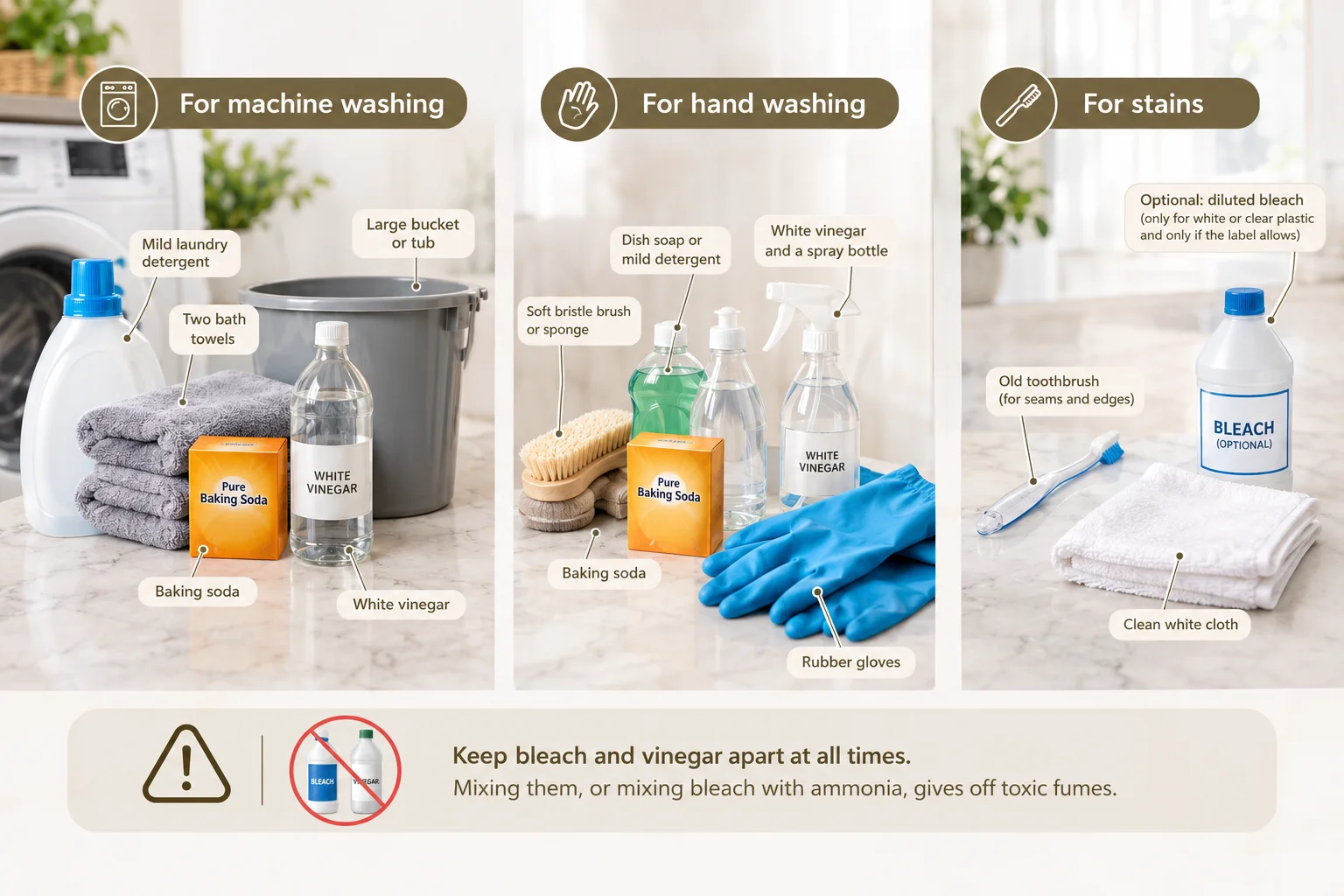
Gather everything before you take the curtain down. This keeps the wet curtain from lying around while you look for a brush.
For machine washing
- Mild laundry detergent
- Two bath towels
- Baking soda
- White vinegar
- A large bucket or the tub for pretreating
For hand washing
- Soft bristle brush or sponge
- Dish soap or mild detergent
- Baking soda
- White vinegar and a spray bottle
- Rubber gloves
For stains
- Old toothbrush for seams and edges
- Clean white cloth
- Optional: diluted bleach, only for white or clear plastic and only if the label allows
Keep bleach and vinegar apart at all times. Mixing them, or mixing bleach with ammonia, gives off toxic fumes.
Can you wash plastic curtains in a washing machine?
Yes, in most cases. Plastic, vinyl, EVA and PEVA shower curtains and liners are usually machine washable. Some coated or very thin liners are not, so read the care label before you start.
When the machine is a good choice
- The curtain is sturdy and not cracked.
- The label does not say hand wash only.
- The stains are light to moderate.
- Your washer can take the load with towels added.
When to hand wash instead
- The label says hand wash only.
- The curtain is thin, brittle or peeling.
- A magnet strip or weight seam looks loose.
- You only need to clean a small section.
Curtains with magnets in the hem usually survive a wash. If the magnets look loose, hand wash to be safe.
How do you wash plastic curtains in a washing machine?
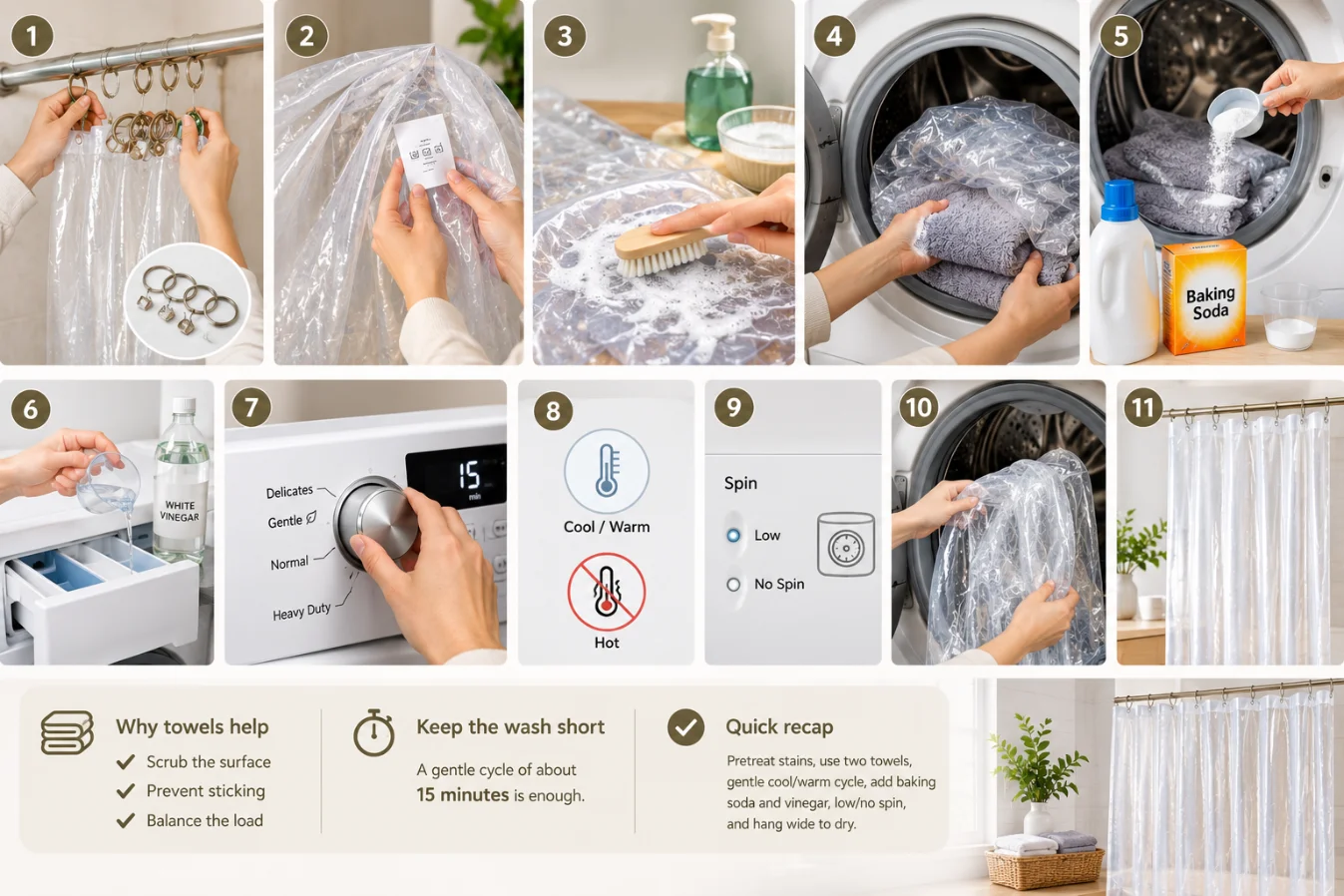
Follow these steps in order. The towels and the gentle cycle protect the plastic, so do not skip them.
Step by step
- Take the curtain off the rod. Remove every ring and hook, because metal can tear plastic in the drum.
- Shake the curtain out and check the tag.
- Pretreat heavy stains. Scrub soap scum or mildew spots with dish soap and a soft brush.
- Place the curtain in the washer with two clean bath towels.
- Add a small amount of mild detergent. Add about a quarter cup of baking soda to the drum.
- Pour a quarter cup of white vinegar into the rinse compartment.
- Choose a gentle or delicate cycle with the highest water level.
- Set the water to cool or warm. Never choose hot.
- Set a low spin, or stop the cycle after the rinse. Plastic does not need a hard spin.
- Take the curtain out as soon as the cycle ends.
- Shake it out and hang it on the rod. Spread it wide so it dries flat.
Why towels help
Two towels do three jobs. They scrub the surface as the drum turns. They stop the plastic sticking to itself. They balance the load so the machine does not shake.
Keep the wash short
A short gentle cycle of about 15 minutes is enough for most plastic curtains. Long hot cycles cause more harm than good.
Pretreat stains, wash with two towels on a gentle cool or warm cycle, add baking soda and vinegar, use low or no spin, and hang wide to dry.
How do you wash plastic curtains by hand?
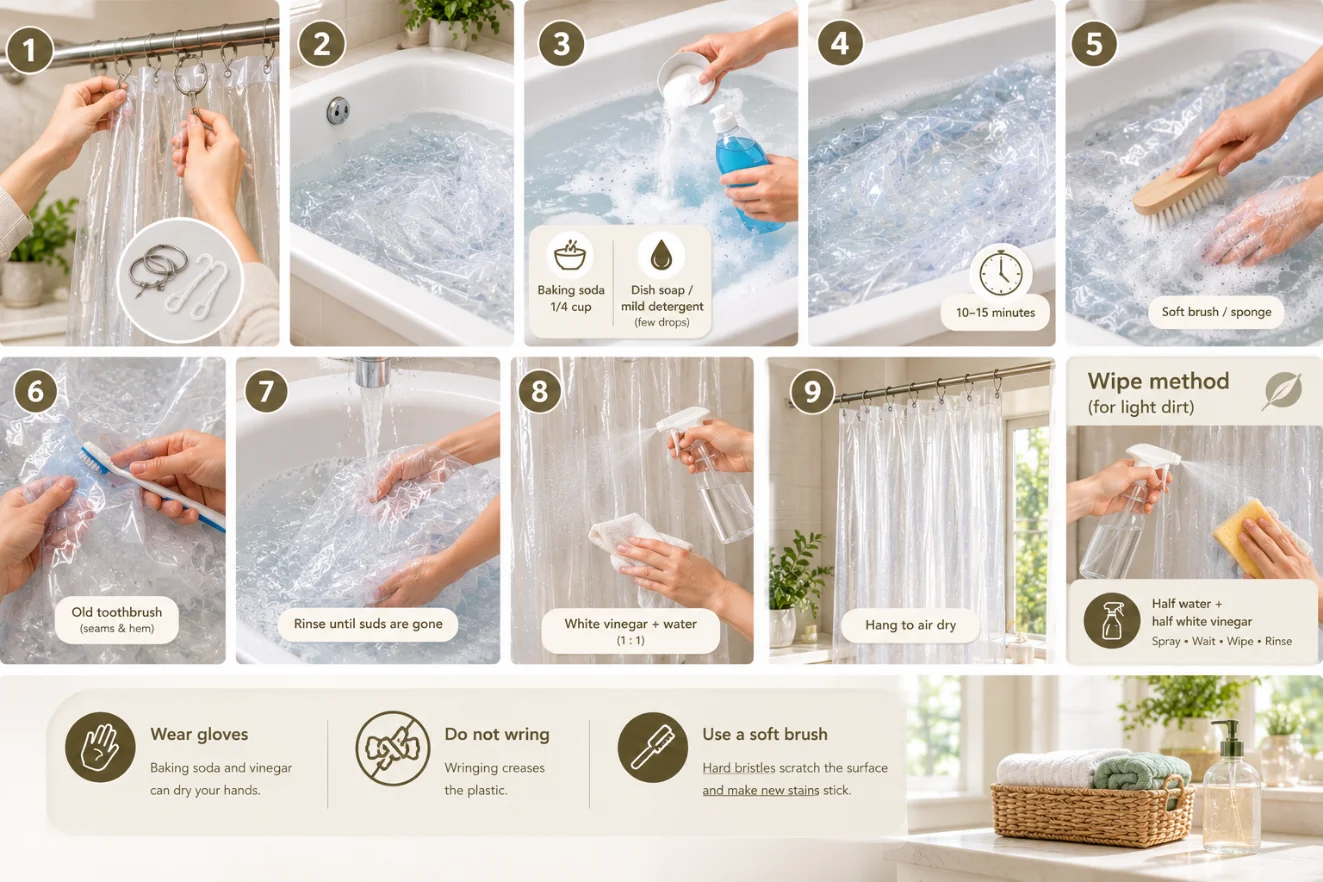
Hand washing is the safest method. It suits thin liners, delicate patterns and any curtain with a hand wash label.
Tub method
- Remove the curtain, rings and hooks.
- Lay the curtain in the bathtub or a large tub.
- Fill with warm water. Add a quarter cup of baking soda and a few drops of dish soap or mild detergent.
- Let it soak for 10 to 15 minutes. Soak stained areas a little longer.
- Scrub with a soft brush or sponge. Work from top to bottom.
- Use an old toothbrush on seams, folds and the hem.
- Drain the tub and rinse with clean water until the suds are gone.
- Wipe the curtain with a 1 to 1 mix of white vinegar and water for extra freshness.
- Rinse again and hang to air dry.
Wipe method for light dirt
Spray the curtain with a half water, half white vinegar mix. Wait a few minutes. Wipe with a damp sponge and rinse.
Tips for hand washing
- Wear gloves. Baking soda and vinegar can dry your hands.
- Do not wring the curtain. Wringing creases the plastic.
- Use a soft brush. Hard bristles scratch the surface and make new stains stick.
Soak the curtain in warm water with baking soda and mild soap, scrub gently, rinse well and hang to dry. Skip wringing and stiff brushes.
How do you clean a plastic curtain without taking it down?
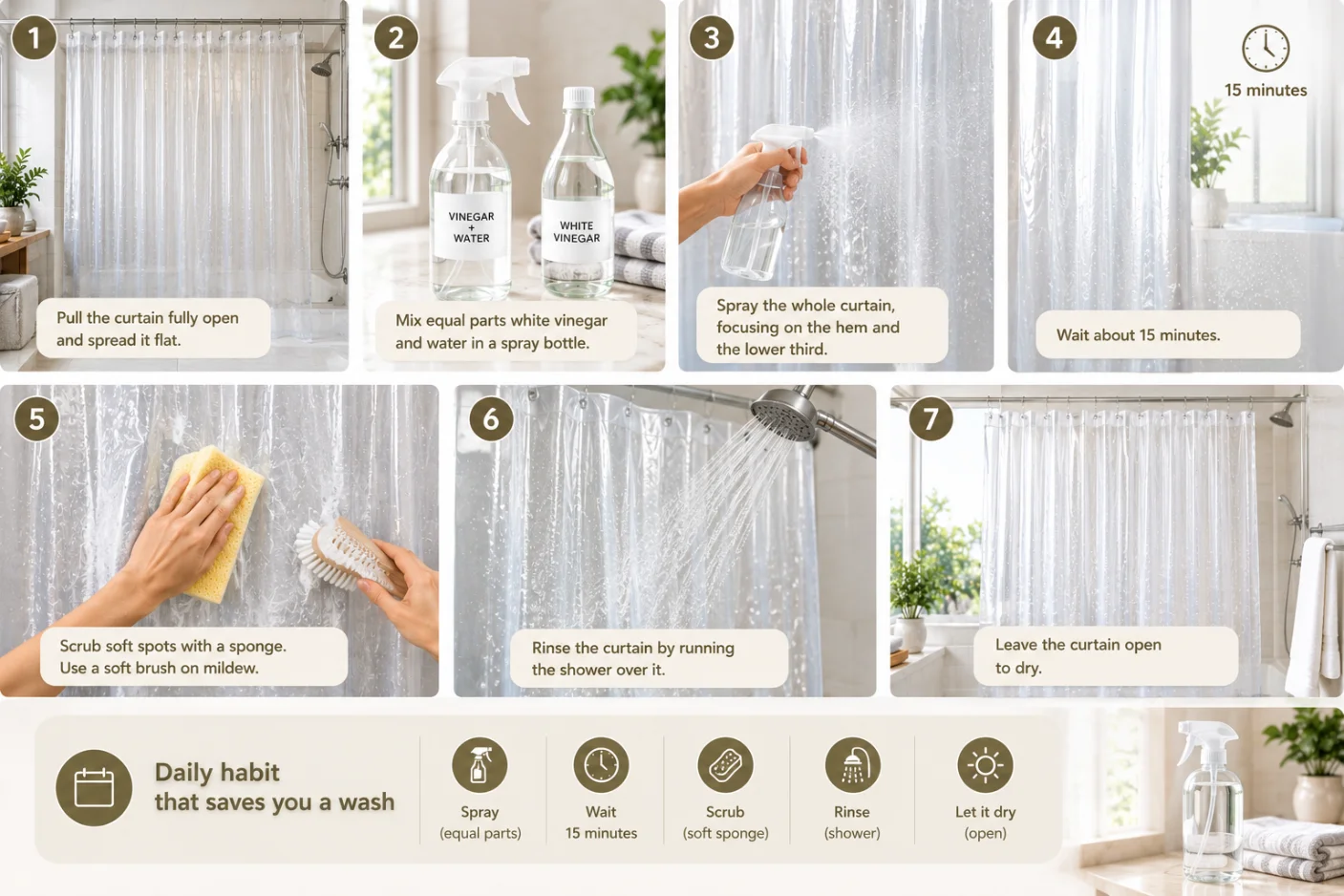
Sometimes you need a quick refresh between full washes. You can clean the curtain while it hangs.
Spray and wipe method
- Pull the curtain fully open and spread it flat.
- Mix equal parts white vinegar and water in a spray bottle.
- Spray the whole curtain, focusing on the hem and the lower third.
- Wait about 15 minutes.
- Scrub soft spots with a sponge. Use a soft brush on mildew.
- Rinse the curtain by running the shower over it.
- Leave the curtain open to dry.
Daily habit that saves you a wash
A light daily spray of the same mix keeps soap scum from setting. It rinses off the next time you shower, so you do not need to wipe it.
Spray with equal parts vinegar and water, wait 15 minutes, scrub with a soft sponge, rinse and let it dry open.
What water temperature is safe for plastic curtains?
Cool or warm water is safest. Hot water softens plastic, which can make it wavy, sticky or thin. Some brands allow hot water with bleach, but most care labels and most cleaning experts advise against it.
| Water temperature | Safe for plastic curtains? | Notes |
|---|---|---|
| Cold | Yes | Safest choice for thin or cheap liners |
| Cool to warm | Yes | Best balance of cleaning and safety |
| Hot | Risky | Can warp, shrink or stick the plastic together |
Match the label
If the label states a temperature, follow it. If there is no label, choose cool. Cool water still cleans well when you add detergent, baking soda and towels.
How do you remove mold and mildew from plastic curtains?
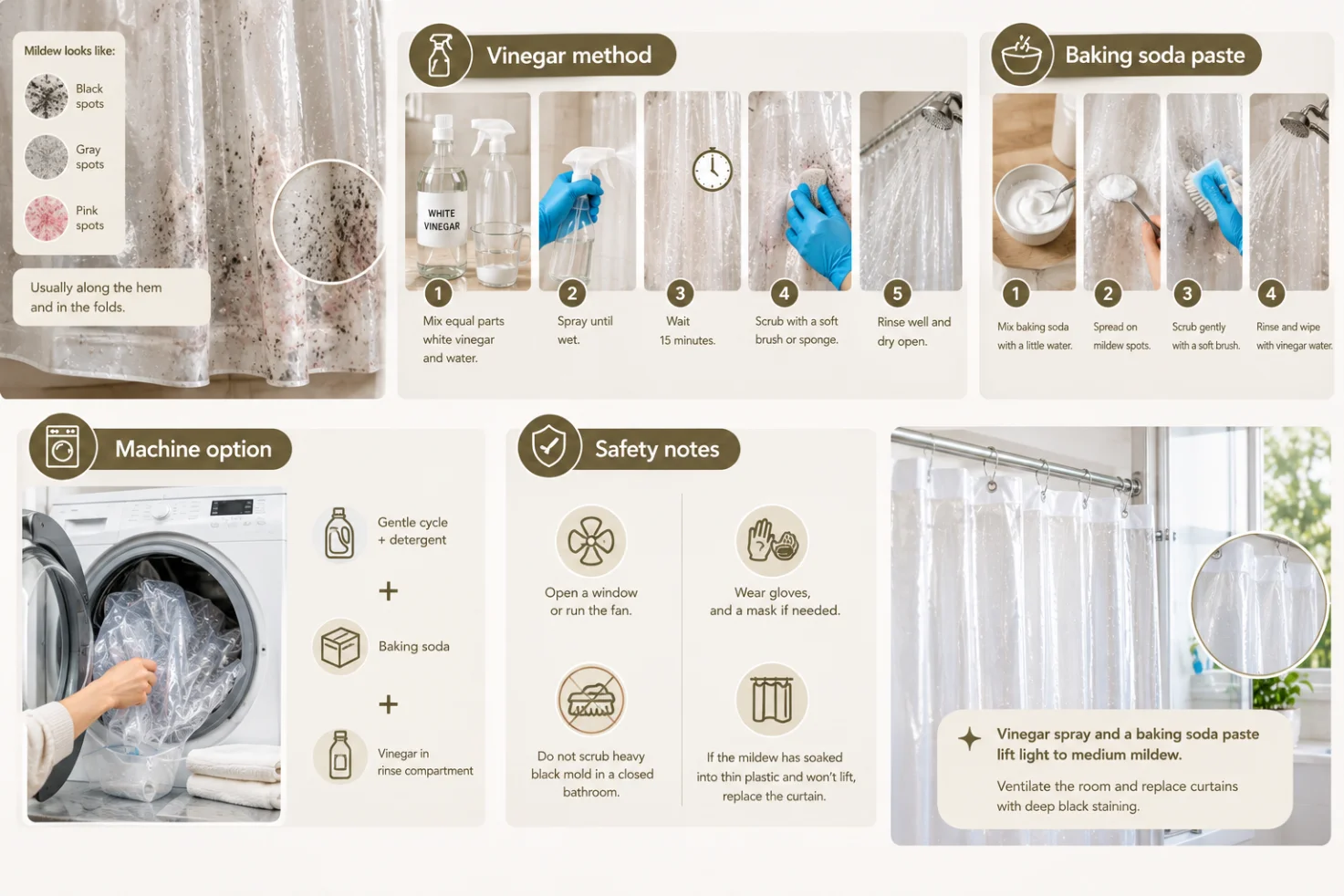
Mildew shows as black, gray or pink spots, usually along the hem and in the folds. It grows where the curtain stays damp. Treat it early, because it spreads into the plastic over time.
Vinegar method
- Mix equal parts white vinegar and water.
- Spray the mildew spots until they are wet.
- Wait 15 minutes.
- Scrub with a soft brush or sponge.
- Rinse well and dry the curtain open.
Baking soda paste for tougher spots
- Mix baking soda with a little water to make a paste.
- Spread it on damp mildew spots.
- Scrub gently with a soft brush.
- Rinse and wipe with vinegar water.
Machine option for a mildew smell
Wash on a gentle cycle with detergent and baking soda, then add white vinegar to the rinse. This removes odor as well as light mildew.
Safety notes
- Open a window or run the fan while you work.
- Wear gloves, and a mask if the mold is heavy.
- Do not scrub heavy black mold in a closed bathroom.
- If the mildew has soaked into thin plastic and will not lift, replace the curtain.
Vinegar spray and a baking soda paste lift light to medium mildew. Ventilate the room and replace curtains with deep black staining.
How do you remove soap scum and hard water stains?
Soap scum is a white or gray film. Hard water leaves cloudy patches or rings. Both come from minerals and soap bonding to the plastic.
Steps for soap scum
- Take the curtain down or lay it in the tub.
- Make a paste of baking soda and dish soap.
- Rub it on the film with a sponge.
- Let it sit for 5 to 10 minutes.
- Rinse, then wash the curtain as usual.
Steps for hard water marks
- Soak the curtain in warm water with a cup of white vinegar for 20 to 30 minutes.
- Scrub marks with a soft brush.
- Rinse well.
Prevent the film from returning
Body wash and non-soap cleansers leave less residue than bar soap. Bar soap is one of the main causes of scum on plastic.
Soap scum lifts with a baking soda and dish soap paste. Hard water marks lift with a warm vinegar soak.
Can you use bleach on plastic curtains?
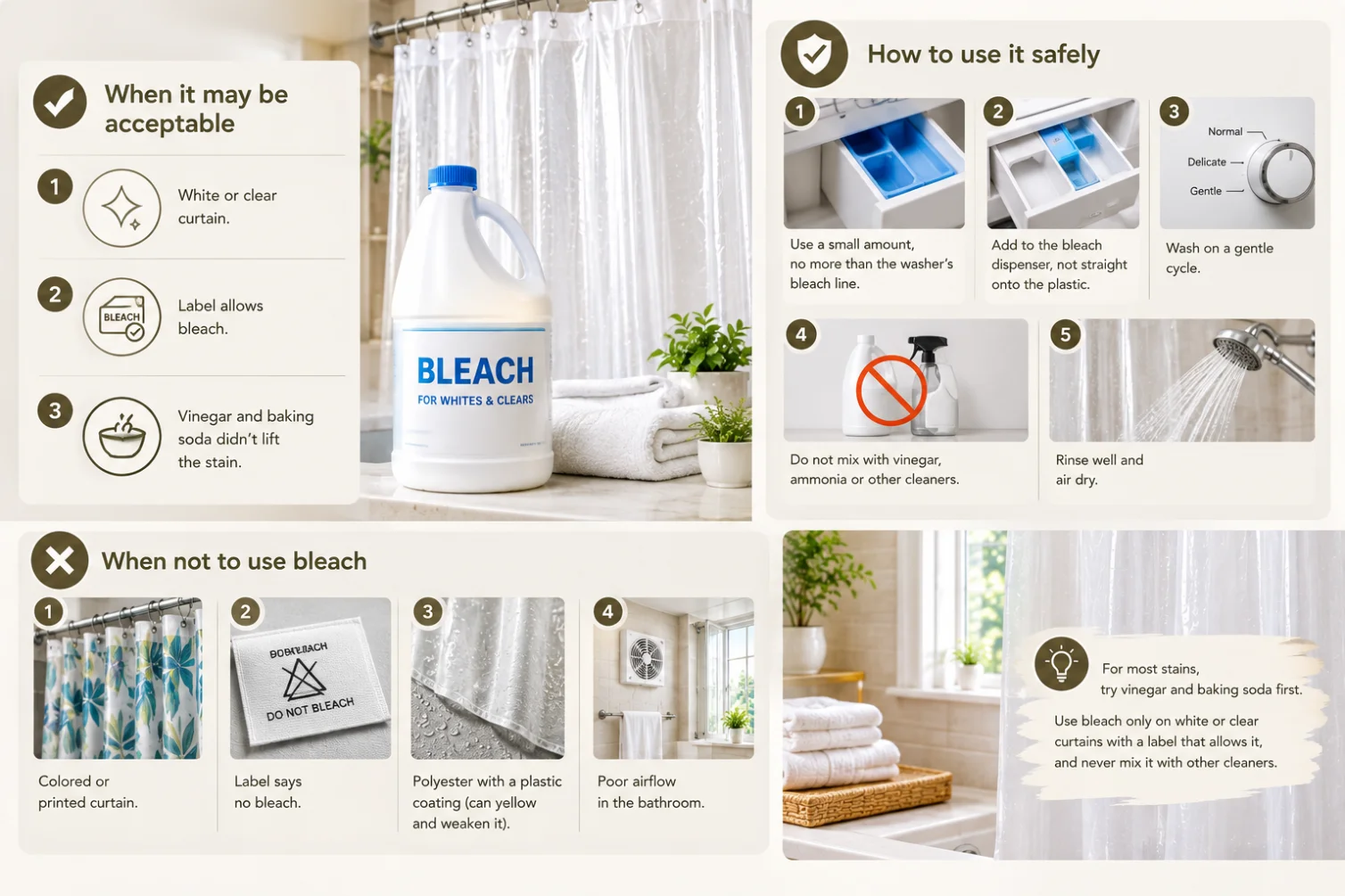
Sometimes, but it is a last resort. Some brands list bleach as safe for white or clear plastic. Others warn that bleach fades color, dulls the plastic or weakens it. Check the label first.
When bleach may be acceptable
- The curtain is white or clear.
- The label allows bleach.
- Vinegar and baking soda did not lift the stain.
How to use it safely
- Use only a small amount, no more than the dose on your washer’s bleach line.
- Add it to the bleach dispenser, not straight onto the plastic.
- Wash on a gentle cycle.
- Do not mix bleach with vinegar, ammonia or other cleaners.
- Rinse the curtain well and air dry.
When not to use bleach
- The curtain is colored or printed.
- The label says no bleach.
- The curtain is polyester with a plastic coating, since bleach can yellow and weaken it.
- The bathroom has poor airflow.
For most stains, try vinegar and baking soda first. Use bleach only on white or clear curtains with a label that allows it, and never mix it with other cleaners.
Can you put plastic curtains in the dryer?
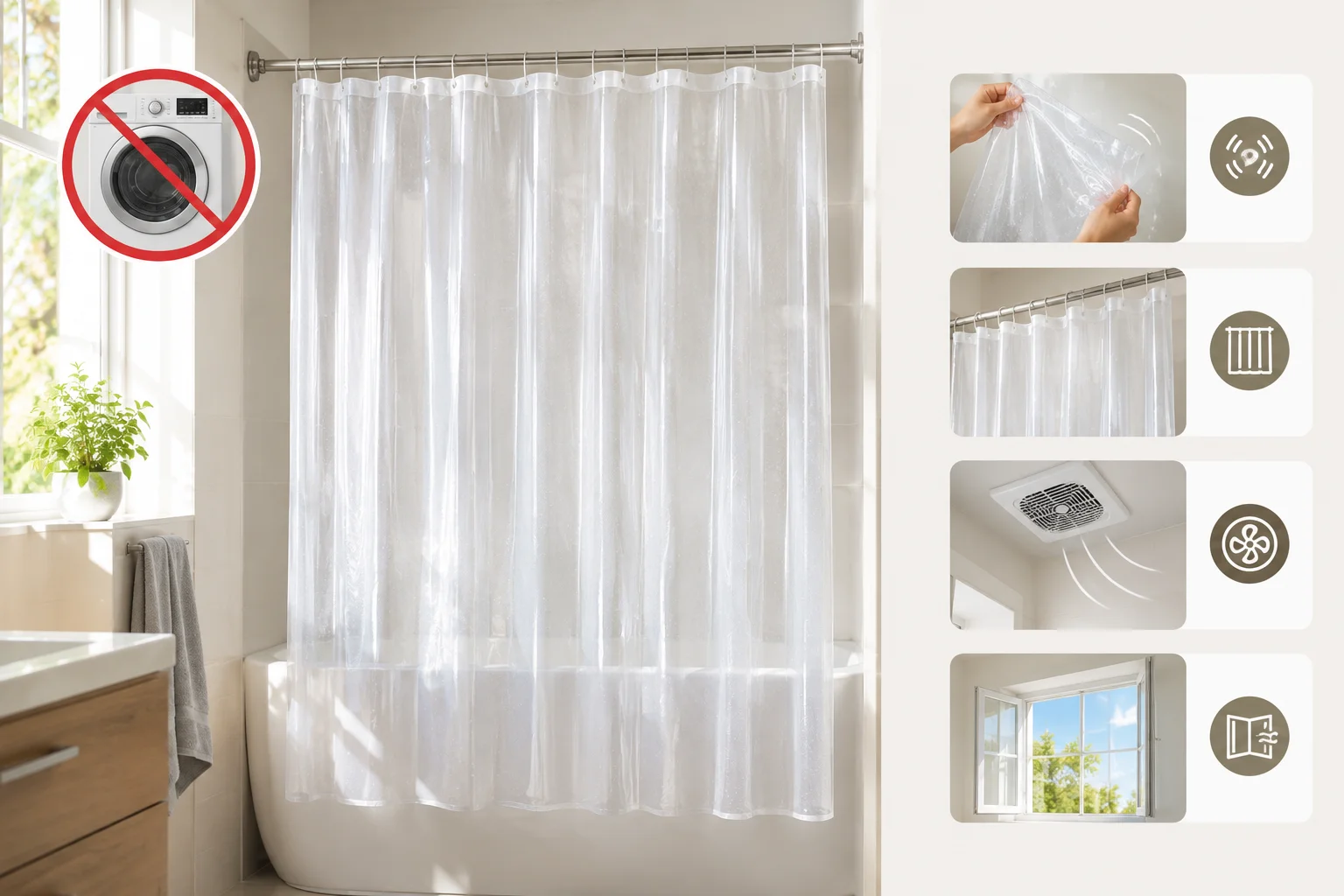
No. Plastic and vinyl curtains can melt, warp or fuse together in a dryer. The heat also makes edges brittle and spoils the shape.
Safe drying steps
- Shake out the curtain right after washing.
- Hang it on the rod and spread it fully open.
- Run the bathroom fan or open a window.
- Leave it until fully dry before you close it.
Why drying flat matters
A bunched wet curtain grows mildew in a day or two. Air moving across the surface dries it faster and prevents new spots.
Never dry plastic curtains in the dryer. Hang them open on the rod with the fan running until they are dry.
How often should you wash plastic curtains?
Most homes do well with a monthly wash. Damp bathrooms and busy households need more.
| Situation | Suggested wash schedule |
|---|---|
| Daily use, poor airflow or a shared bathroom | Every 2 weeks |
| Regular daily use with a fan or window | Once a month |
| Light use or a guest bathroom | Every 1 to 2 months |
| Balcony or outdoor plastic curtains | About every 4 weeks |
| Privacy curtains in healthcare rooms | Every 3 to 4 weeks |
Wipe or spray the curtain between washes, and wash sooner if you notice a musty smell, pink or black spots, or a cloudy film. Pink spots are usually bacteria and black ones are mold, and both show up first where the air stays damp. The same thing happens faster in places where many people touch one curtain, like clinic rooms and ward partitions, which is why those get wiped down far more often than a curtain at home. Plastic curtains hung outside have a different problem. On a balcony, dust and rain leave a gritty film, so a quick rinse with a hose works better than scrubbing.
Wash plastic curtains monthly. Move to every two weeks in damp or shared bathrooms, and wash any time you smell mildew.
Cleaning rings, hooks and the rod
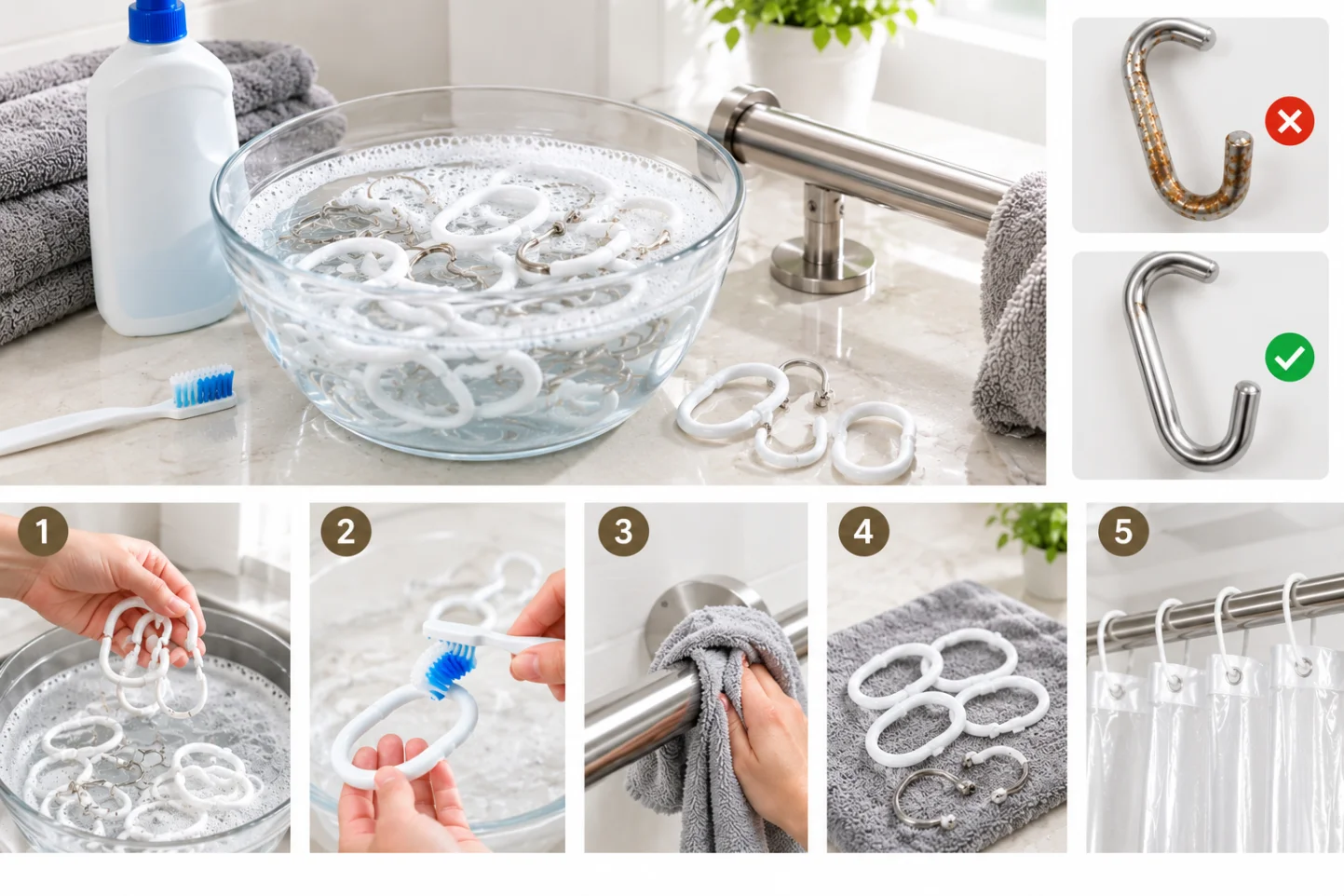
Dirty rings and rods can put grime back on a clean curtain. Clean them at the same time.
Rings and hooks
- Take them off the curtain.
- Soak them in hot water with detergent while the curtain washes.
- Scrub grooves with an old toothbrush.
- Rinse and dry fully before use.
- Replace any bent ring that catches the plastic.
Check the hooks while the curtain is down. Rust on a hook leaves orange marks on wet plastic, and those stains rarely come out. Hooks are made from very different metals and finishes, and plain chrome plating tends to flake once water gets under it, while stainless steel and coated metal hold up better in damp air. If one has already started to corrode, replace it before you hang the clean curtain back up.
The rod
- Wipe the rod with all purpose cleaner or a vinegar and water mix.
- Dry metal rods so they do not spot.
- Check that the brackets are firm.
A rod that bends or sags is usually too thin for the width it spans. Past about 120 cm, a thin rod with no middle support will dip under the weight of a wet plastic curtain, and the diameter and finish of the rod decide how much load it can carry. A thicker rod or a center bracket often solves it without replacing anything. In bathrooms with a ceiling system, the weight is carried along the whole length instead, which is why ceiling tracks never sag and can also be fitted for shower curtains.
Soak rings and hooks in hot soapy water, wipe the rod, dry everything and replace bent or rusty parts.
Plastic curtain types and how to care for each
Not all plastic curtains are the same. Match the method to the material.
| Type | Machine wash | Water | Bleach | Notes |
|---|---|---|---|---|
| Vinyl (PVC) | Yes | Cool to warm | Only white or clear, label allowing | Never dry with heat |
| PEVA or EVA | Yes | Cool | Avoid | Softer plastic, warps more easily |
| Polyester with plastic coating | Often yes | Cool | Avoid | Coating can crack with heat |
| Thick outdoor PVC | Hand wash or rinse | Cool to warm | Avoid | Use a soft brush, rinse well |
| Fabric curtain with a plastic liner | Wash separately | Per label | White fabric only | Wash liner and curtain apart |
If your curtain is fabric only, the steps differ. Our pages on sheer curtains and blackout curtains mention how each fabric behaves.
Vinyl and PEVA both need cool or warm water and air drying. Coated and outdoor plastics are best washed by hand.
How do you stop plastic curtains getting dirty again?

Prevention costs less than deep cleaning. A few small habits keep plastic curtains fresh between washes.
After every shower
- Pull the curtain fully open so it dries flat.
- Leave the liner inside the tub and the curtain outside so air can move between them.
- Run the fan or open a window for 20 minutes.
Each week
- Spray the lower third with a half water, half vinegar mix.
- Wipe the hem with a soft cloth.
- Check for the first signs of mildew.
Small changes that help
- Switch from bar soap to body wash.
- Fix any leak that keeps the bathroom damp.
- Use a weighted hem or magnets to stop the curtain clinging to you.
- Rotate between two curtains, so one is always dry.
Open the curtain to dry after every shower, ventilate the room, spray weekly with vinegar water and use body wash instead of bar soap.
Mistakes to avoid
These errors cause most damage to plastic curtains.
- Washing in hot water
- Using a dryer
- Leaving rings or hooks on during the wash
- Skipping the towels
- Using a hard brush or steel wool
- Mixing bleach with vinegar or ammonia
- Using strong spin cycles
- Leaving a wet curtain bunched up
- Ignoring the care label
Avoid hot water, dryers, metal hardware in the drum, hard brushes and mixed chemicals.
When should you replace a plastic curtain?
Plastic liners are meant to be replaced. Cleaning helps, but it cannot fix damage.
Signs it is time
- Cracks, tears or peeling along the top edge
- Deep black stains that do not lift after two treatments
- A musty smell that returns within days of washing
- A sticky or tacky surface
- Magnets or weights hanging loose
- Yellowing that spreads across the whole curtain
Choosing the next Plastic curtain
Choose a heavier weight for better hang. Pick mildew resistant material for damp rooms. An outer curtain that sits over a liner also helps, because the liner takes the splashes and the fabric layer stays drier. If your bathroom has a window, a separate fabric curtain works well there, and made to measure panels fit best, since a curtain that is too narrow leaves gaps and one that is too long picks up water from the floor. A rod or track that is fixed level and into solid wall also matters, and a proper fitting stops the slow sag that pulls a wet curtain crooked over time.
Replace curtains that crack, peel, smell after washing or hold deep stains.
Quick fixes for common problems
| Problem | Likely cause | Fix |
|---|---|---|
| White film or cloudy patches | Soap scum and hard water | Baking soda and dish soap paste, then a warm vinegar soak |
| Black spots on the hem | Mildew | Vinegar spray, wait 15 minutes, scrub, rinse, dry open |
| Curtain smells after washing | Trapped moisture or leftover mildew | Rewash with vinegar in the rinse, hang open with the fan on |
| Curtain sticks to itself | Wet plastic bunched together | Wash with towels, shake out and spread while damp |
| Curtain looks wavy or warped | Water too hot or dryer used | Hang with light weight at the hem, avoid heat in future |
| Yellow patches | Bleach or old residue | Wash with baking soda and vinegar, replace if it spreads |
| Rust marks near the top | Rusty rings | Replace rings, soak the area in warm vinegar water |
| Creases will not relax | Folded while damp | Rehang, spread wide and let the bathroom warm slightly |
Match the fix to the cause. Vinegar handles mildew and film, baking soda handles odor, and time with airflow handles creases.
Frequently asked questions
Can you wash a plastic curtain in the washing machine?
Yes, if the care label allows it.
Most vinyl, EVA and PEVA curtains handle a gentle cool or warm cycle. Add two towels, remove the rings and skip the dryer. A common case is a liner with light soap scum. It comes out clean after one gentle wash with baking soda and vinegar.
How do you wash a plastic curtain by hand?
Soak it in warm water with baking soda and mild soap, scrub gently, rinse and hang to dry.
Use a large tub or the bath. Soak for 10 to 15 minutes, scrub the hem and seams with a soft brush, and rinse until no suds remain. A curtain with a hand wash label, or one that has thin plastic, does best this way.
What is the best way to clean a plastic shower curtain?
The machine washes on a gentle cycle with towels, baking soda and vinegar.
If the machine is not an option, use the tub soak. For light dirt between washes, spray with equal parts vinegar and water. A curtain in a busy family bathroom often needs the machine wash monthly and the spray weekly.
Can you put plastic curtains in the dryer?
No. Heat can melt, warp or fuse the plastic.
Hang the curtain on the rod and spread it open. Keep the bathroom fan on so it dries faster. If a curtain has already been through a dryer and looks wavy, hang it with a small weight at the hem to help it relax.
What temperature should you wash plastic curtains at?
Use cool or warm water. Avoid hot.
Hot water softens plastic and causes warping. If the label lists a temperature, follow it. When there is no label, cool is the safest choice and still cleans well with detergent and towels.
How often should you wash a plastic curtain?
Wash it about once a month.
Move to every two weeks if the bathroom is damp, small or shared. In a guest bathroom that sees little use, every one to two months is fine. Wash sooner if you see spots or smell mildew.
Can you use bleach on plastic curtains?
Only on white or clear plastic when the label allows it.
Bleach can fade color and weaken plastic. Try vinegar and baking soda first. If you do use bleach, keep it away from vinegar and ammonia and rinse well. A stained white liner is the main case where bleach might be worth trying.
How do you remove mold from a plastic curtain?
Spray equal parts vinegar and water, wait 15 minutes, scrub and rinse.
For tougher spots, use a baking soda paste and a soft brush. Ventilate the room while you work. If black stains stay after two rounds, replace the curtain.
How do you get soap scum off a plastic curtain?
Rub on a baking soda and dish soap paste, wait a few minutes and rinse.
Follow with a normal wash. Switching from bar soap to body wash slows the film from coming back, since bar soap leaves the most residue.
Do you need towels when washing a plastic curtain?
Yes, they help.
Towels scrub the plastic lightly, stop it clinging to itself and balance the drum. Two clean bath towels are enough for a standard curtain.
Can you wash a plastic curtain with the rings still on?
No. Remove all rings and hooks first.
Metal can tear the plastic and bang around the drum. Soak the rings in hot soapy water while the curtain washes, then dry them before rehanging.
Should you use vinegar or baking soda?
Use both, but keep them separate.
Baking soda goes in with the detergent to lift odor and grime. White vinegar goes in the rinse to cut mildew and soften residue. Adding them at different stages works better than mixing them in one cup.
Wrap up
Plastic curtains need only a few minutes and simple supplies. Take the curtain down, wash it gently with towels, use cool or warm water, skip the dryer and let it dry fully open. A short monthly routine and a quick vinegar spray between washes keep mildew away and stretch the life of the curtain.
Wash on a gentle cool or warm cycle, avoid heat, dry open and repeat monthly.