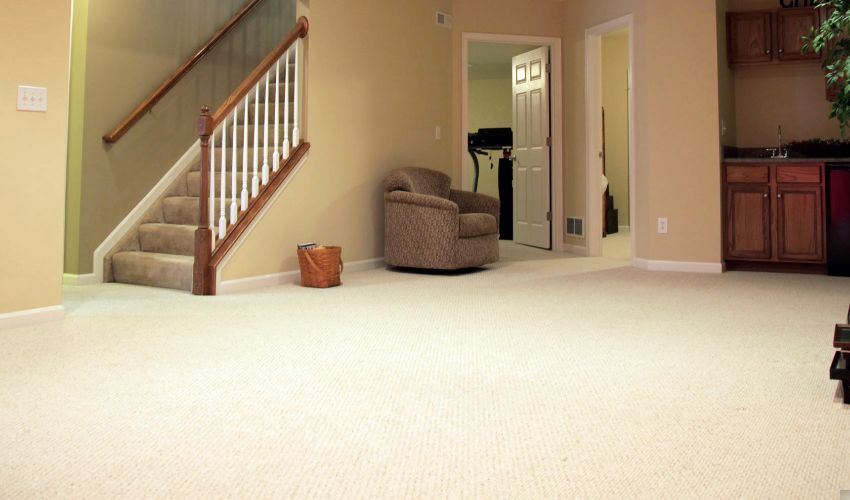
Basements are one of the most challenging areas when it comes to flooring. Unlike upper levels of a home, they are constantly exposed to moisture, humidity, and temperature fluctuations. Even in well-constructed homes, basements tend to retain dampness due to their position below ground level.
This creates a problem for traditional carpets. Many materials absorb moisture, trap odors, and become breeding grounds for mold and mildew. As a result, choosing the right carpet for a basement is not simply a design decision. It is a functional one that directly affects durability, hygiene, and long-term maintenance.
The good news is that modern carpet materials have evolved. There are now several moisture-resistant options that perform well even in difficult basement conditions. However, not all carpets are equal, and each type serves a different purpose depending on how your basement is used.
Why Choosing the Right Basement Carpet Matters
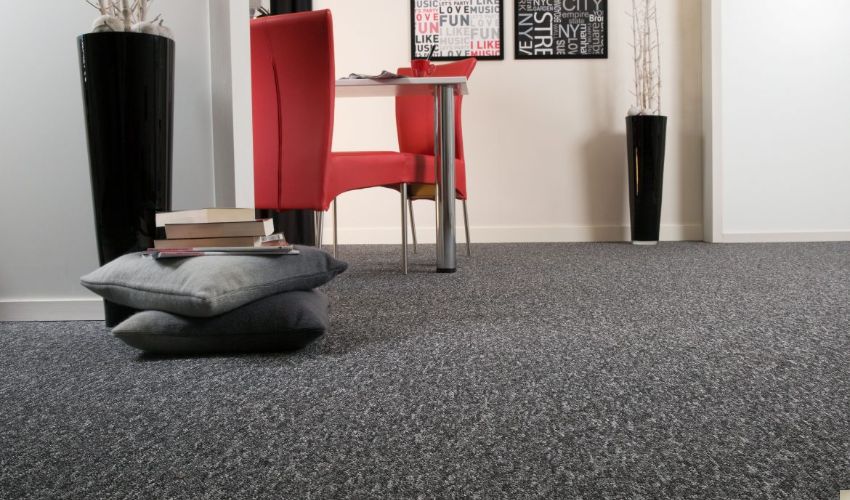
Before selecting a carpet, it is important to understand why basements require a different approach.
Basements naturally attract moisture from the surrounding soil and air. Even if there are no visible leaks, humidity levels tend to be higher than in other parts of the house. Over time, this moisture can seep into flooring materials and cause damage.
Carpets that are not designed for such conditions tend to absorb water, leading to unpleasant odors, bacterial growth, and reduced lifespan. This is especially true for natural fibers like wool, which retain moisture and take longer to dry.
Modern basement design focuses on materials that resist water, dry quickly, and maintain their structure despite environmental changes. This is why synthetic carpets dominate this category.
8 Best Carpet Types for Basements
Choosing the right carpet starts with understanding how each material performs in real conditions. The options below are widely used in modern homes and offer different advantages based on usage, budget, and moisture levels.
Polyester Carpet
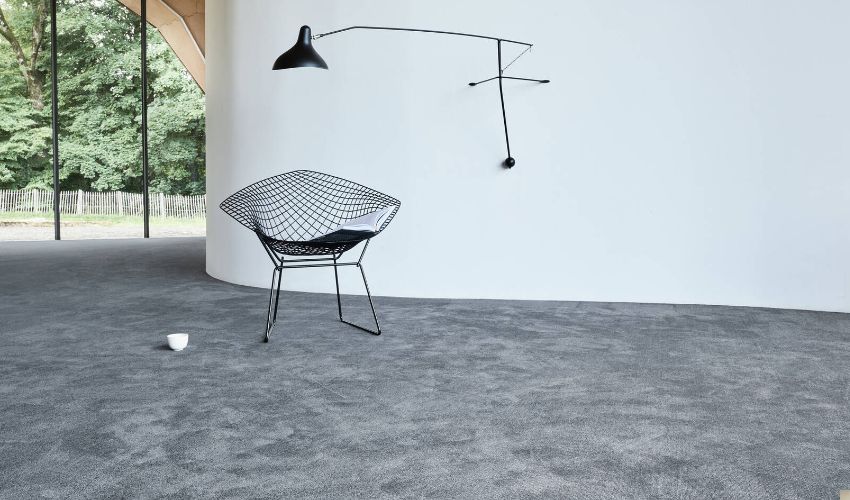
Polyester is often chosen for its affordability and decent moisture resistance. It does not absorb water as easily as natural fibers, which makes it a safer option for basements.
This type of carpet works best in low-traffic areas such as storage rooms or guest spaces that are not used frequently. It also retains color well, which helps maintain its appearance over time.
However, polyester is not very durable. It tends to flatten under pressure and may wear out quickly in areas with heavy foot traffic. For homeowners looking for a cost-effective solution for light use, polyester can be a reasonable choice.
Nylon Carpet
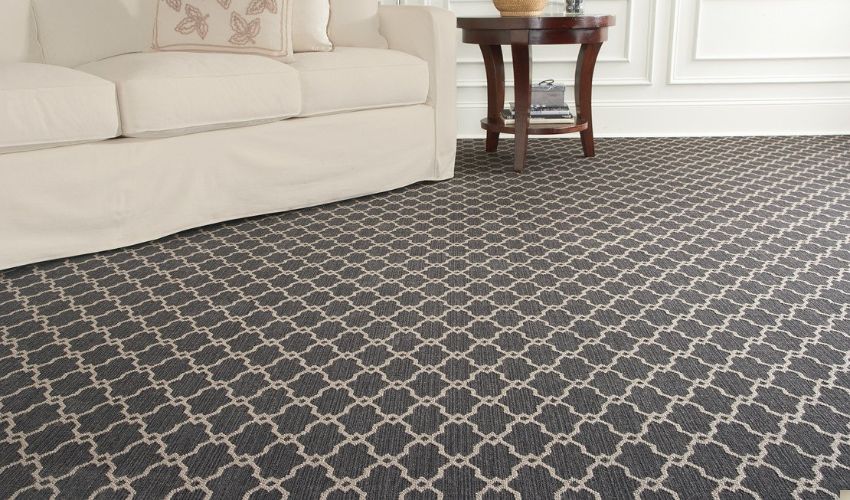
Nylon is one of the most durable carpet materials available. It is known for its strength, flexibility, and ability to maintain its shape even under constant use.
This makes it suitable for basements that are used as living spaces, such as family rooms, play areas, or entertainment zones. It can handle heavy foot traffic without losing its structure.
The main limitation of nylon is its moisture sensitivity. It is not naturally water-resistant and can absorb humidity over time. To use nylon effectively in a basement, it should be paired with a proper moisture barrier or underlayment.
Olefin (Polypropylene) Carpet
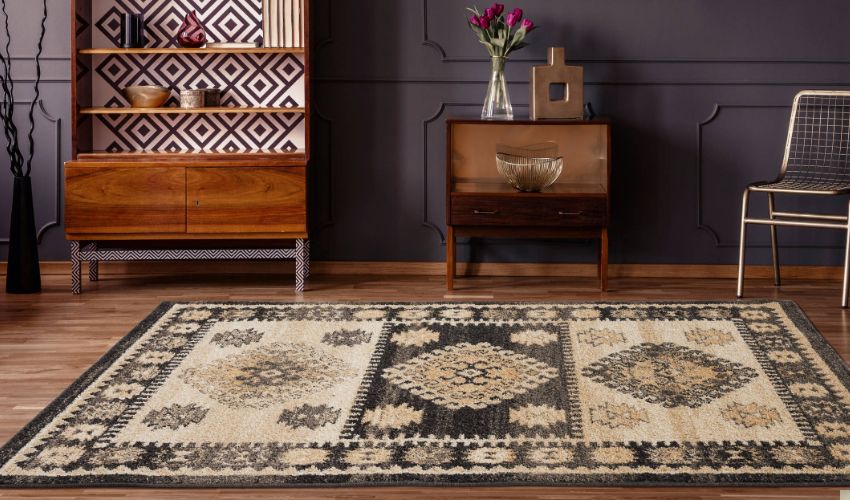
Olefin is highly resistant to moisture, which makes it a strong candidate for basement environments. It does not absorb water and performs well in damp conditions. In addition to moisture resistance, olefin also offers good stain resistance and can handle exposure to light without fading. This makes it suitable for basements with windows or partial sunlight.
However, it is less durable than nylon and tends to wear out more quickly in high-traffic areas. It is best suited for low-use spaces or situations where budget is a priority.
Triexta Carpet
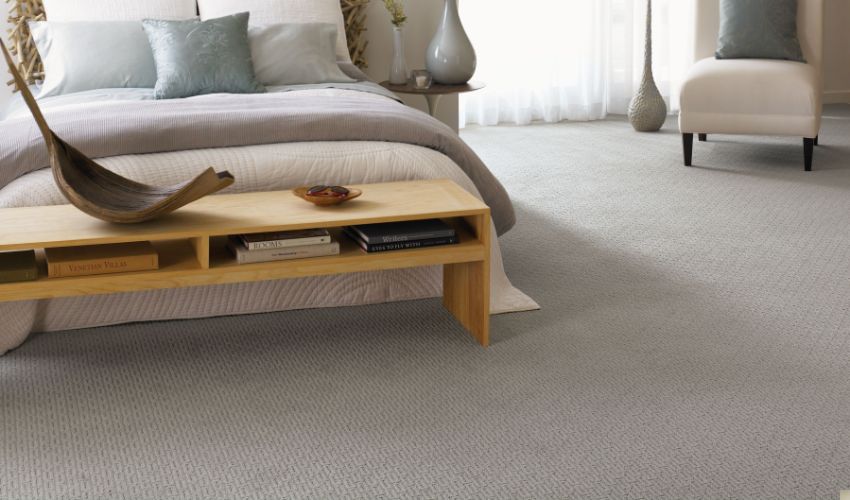
Triexta is one of the most advanced carpet materials available today. It combines durability, softness, and strong resistance to moisture and stains. This makes it ideal for basements that are used regularly. Whether the space is designed as a lounge, home theater, or guest room, triexta performs consistently well.
It is also more environmentally friendly compared to some other synthetic options. Although it is more expensive, it offers better long-term value due to its durability and low maintenance requirements.
Berber Carpet
Berber carpet is characterized by its looped construction, which makes it highly durable and resistant to wear. It is often made from materials like olefin or nylon, combining strength with moisture resistance.
This type of carpet works well in basements with moderate to high foot traffic. It is less likely to show footprints or vacuum marks, which helps maintain a clean appearance.
However, Berber carpets can be less comfortable underfoot compared to softer options. They are more functional than luxurious, making them suitable for practical spaces rather than cozy living areas
Indoor-Outdoor Carpet
Indoor-outdoor carpets are specifically designed to handle moisture and rough conditions. They are made from synthetic fibers that resist water, mold, and mildew.
This makes them one of the safest options for basements that are prone to dampness or occasional water exposure. They are easy to clean and dry quickly, which reduces maintenance concerns.
While they are highly practical, their design options may be limited compared to traditional carpets. They are best suited for utility areas or basements where function is the priority.
Carpet Tiles
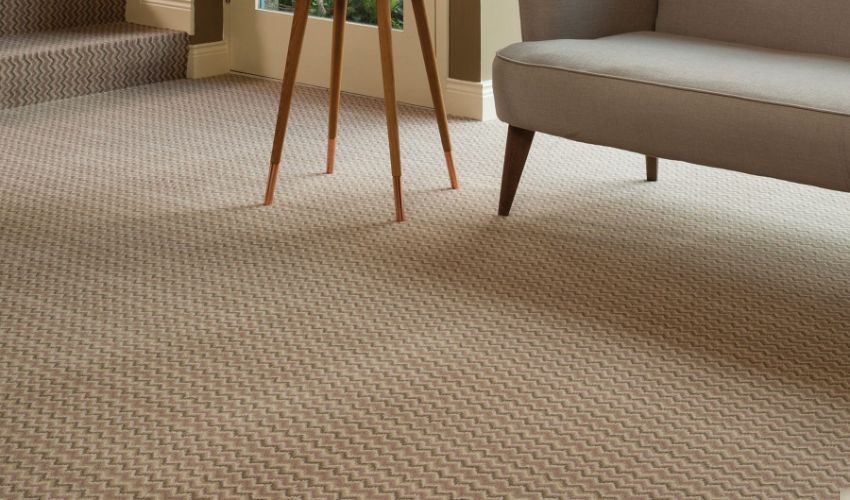
Carpet tiles have become increasingly popular in modern basement design. Instead of installing a single large carpet, tiles are placed in sections.
This approach offers a major advantage. If one area gets damaged due to moisture, you can replace only that section instead of the entire carpet.
Carpet tiles are usually made from moisture-resistant materials and are easy to install and maintain. They are ideal for basements where flexibility and long-term maintenance are important considerations.
Low-Pile Commercial Carpet
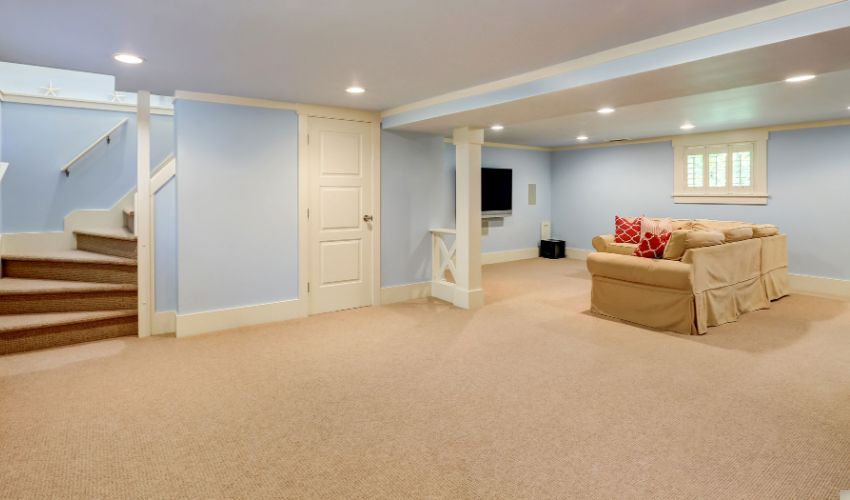
Low-pile commercial carpets are designed for durability and easy maintenance. They are commonly used in offices but are now being adopted in residential basements.
Their tight structure prevents moisture from getting trapped and makes cleaning easier. They also dry faster compared to high-pile carpets.
Although they may not feel as soft as plush carpets, they offer excellent performance in environments where durability and moisture control are priorities.
Key Factors to Consider Before Choosing Basement Carpet
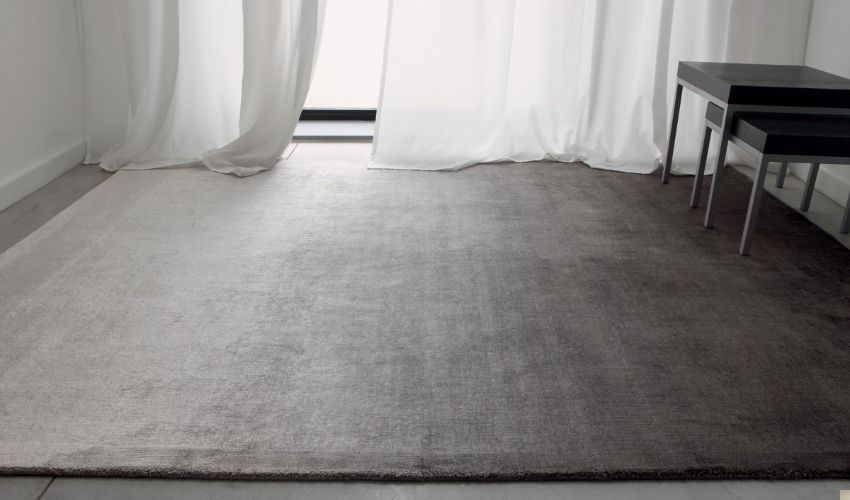
Selecting the right carpet involves more than just picking a material. You need to consider how it will perform in real conditions over time.
Moisture resistance should always be your top priority. Even small amounts of dampness can cause damage if the carpet is not designed to handle it.
The choice between carpet tiles and wall-to-wall installation also matters. Tiles offer flexibility and easier maintenance, while wall-to-wall carpets provide a seamless look but are harder to repair.
Carpet padding is another important factor. Traditional padding can absorb moisture and trap it underneath the carpet. Modern solutions include moisture-resistant padding or skipping padding altogether in certain cases.
Pile height also affects performance. Low-pile carpets are easier to clean and dry faster, making them more suitable for basements. High-pile carpets, while comfortable, tend to trap moisture and require more maintenance.
Final Thoughts
Choosing the best carpet for your basement depends on how the space is used, your budget, and the level of moisture present. For low-traffic areas, polyester or olefin can be a cost-effective solution. For active living spaces, nylon and triexta offer better durability. If moisture is a major concern, indoor-outdoor carpets or carpet tiles provide added protection and flexibility.
Among all options, triexta stands out as the most balanced choice due to its combination of durability, comfort, and moisture resistance. Ultimately, the biggest mistake is focusing only on appearance. Basement flooring must be chosen based on performance. A well-selected carpet not only improves comfort but also ensures long-term reliability in a challenging environment.