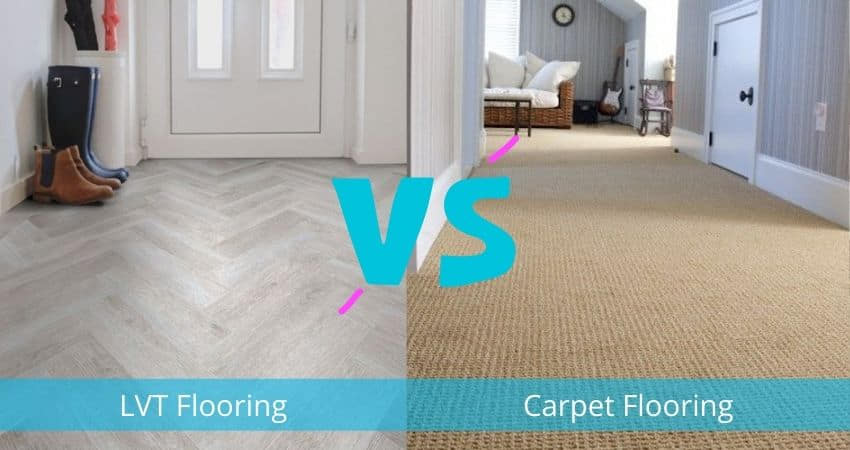
Renovating a basement is no longer just about covering the floor. It is about choosing a surface that can withstand moisture, daily use, and changing temperatures while still looking good over time.
For years, carpet was the default choice for basements. It added warmth and made the space feel more livable. But with the rise of Luxury Vinyl Tile (LVT), the conversation has shifted. LVT has become a strong alternative, especially for spaces that demand durability and low maintenance.
Both options bring value, but they perform very differently in real-life conditions. Understanding these differences is what helps you make a smarter decision rather than just a visual one.
Understanding the Core Difference
At a basic level, carpet and LVT serve different purposes. Carpet is a soft, fiber-based flooring that focuses on comfort and insulation. It creates a cozy environment and works well in spaces where relaxation is the priority.
LVT, on the other hand, is a synthetic flooring designed to replicate materials like wood or stone. It is built in layers, which makes it more resistant to moisture, pressure, and daily wear. This difference in construction is what defines how each performs in a basement setting.
Look and Style: Flexibility vs Warmth
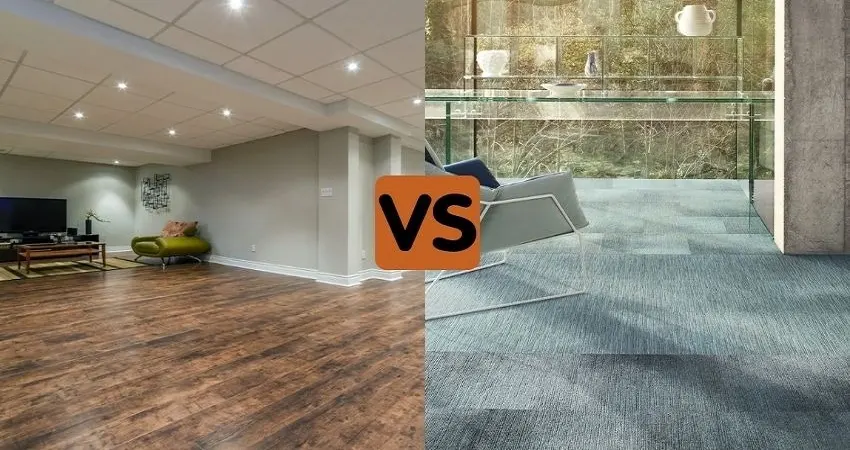
When it comes to design, both options offer variety, but the type of variety is different. Carpets come in multiple colors and textures, but there is often a trade-off. Highly patterned carpets may limit color choices, while bold colors may reduce pattern complexity. This can make it harder to achieve a very specific look.
LVT offers more controlled design flexibility. It can replicate natural wood grains, stone finishes, and modern textures without those limitations. This makes it easier to match a specific interior theme.
In modern interiors, LVT tends to feel more aligned with minimalist and contemporary styles, while carpet works better for soft, cozy environments.
Durability and Maintenance: Where the Gap Widens
This is where the biggest difference appears. Carpet behaves like a filter. It traps dust, absorbs spills, and holds moisture. While this can be useful for improving air quality temporarily, it also makes cleaning more demanding. Over time, trapped dirt and moisture can affect both hygiene and durability.
LVT performs very differently. It is non-porous, which means it does not absorb water or stains easily. Dust and spills remain on the surface, making cleaning quicker and more effective. For basements, where moisture can be unpredictable, this difference is critical. LVT handles these conditions with far less risk of long-term damage.
Application: Where Each Option Works Best
Carpet still has its place. It works well in low-traffic basement areas like TV lounges or personal spaces where comfort matters more than durability.
However, modern basements are often used for multiple purposes. They can include home offices, gyms, or storage areas. In these cases, LVT becomes a more practical choice because it can handle frequent movement and heavier use. This shift in how basements are used is one of the main reasons LVT has gained popularity.
Cost: Short-Term vs Long-Term Thinking
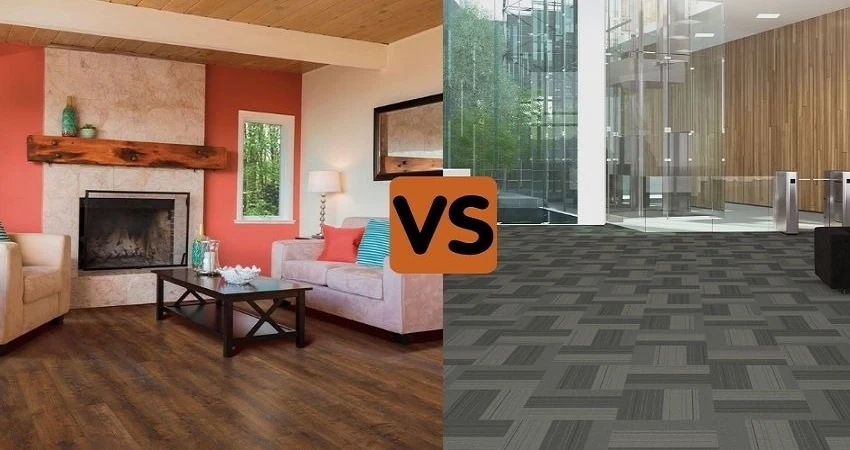
At first glance, carpet usually feels like the more affordable option. The installation cost is lower, and it is easier to set up. LVT may require a higher upfront investment, especially if you choose high-quality designs. However, its maintenance cost is significantly lower. It does not require deep cleaning as often, and it tends to last longer without needing replacement. When you look beyond the initial expense, LVT often provides better value over time.
Sound and Comfort: Carpet Still Leads
Carpet has a clear advantage when it comes to sound absorption. It reduces noise naturally and makes a space feel quieter and more comfortable. LVT can also reduce sound, but usually only when combined with underlayment. Without it, it may feel harder underfoot and slightly louder. If your priority is comfort and a quieter environment, carpet still performs better in this area.
Pros and Cons in Real Terms
LVT stands out for its durability, moisture resistance, and ease of maintenance. It is also versatile in design and performs well in high-traffic areas. However, it is less eco-friendly in some cases and can be harder to remove once installed.
Carpet offers warmth, comfort, and better insulation for both sound and temperature. It is more budget-friendly initially, but it requires more maintenance and is more vulnerable to stains, moisture, and allergens.
5 Practical Insights Most Buyers Overlook
Below, we have mentioned the factors that most of the buyers overlook while selecting between LVT and carpets.
- Before choosing any flooring, test your basement for moisture levels. Even the best carpet will fail quickly in a damp environment.
- You do not have to choose just one. Many modern basements use LVT for the main area and a rug or carpet section for comfort zones.
A poorly prepared subfloor can ruin both LVT and carpet. Leveling and sealing the base significantly improves durability. - A basement used daily needs a different solution than one used occasionally. Match the flooring to how the space actually functions.
- Choose a flooring option that fits your cleaning routine. A low-maintenance floor only works if it aligns with your lifestyle.
Final Words
There is no universal answer, but there is a practical one. If your basement is prone to moisture, used frequently, or designed as a multi-purpose space, LVT is the more reliable and long-lasting option. It handles wear better, requires less maintenance effort, and adapts to modern usage.
Carpet still works well if your goal is to create a warm, quiet, and comfortable environment with minimal foot traffic. It brings a softness that LVT cannot fully replicate. In most modern scenarios, LVT is the smarter overall investment. Not because carpet is outdated, but because the demands of basement spaces have changed. The better choice is not about which material is superior in general. It is about which one performs better in your specific conditions.