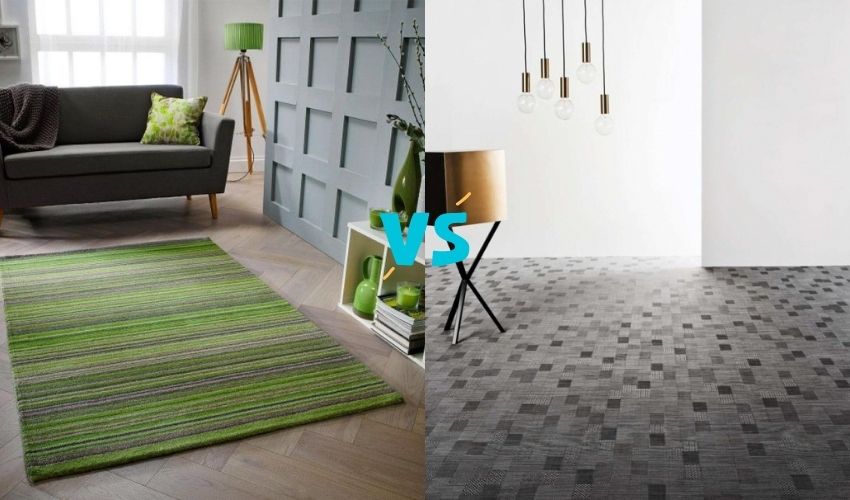
You walk on floor coverings every day, but most people rarely think about what actually lies beneath their feet. Rugs and carpets may seem similar at first glance, yet they serve very different purposes in a space. Choosing between them isn’t just about style, t affects comfort, maintenance, cost, and how flexible your interior design can be over time.
If you’re trying to decide which one fits your space better, the answer isn’t as straightforward as “one is better than the other.” It depends on how you use your room, your lifestyle, and how often you like to update your interiors.
What Is a Rug?
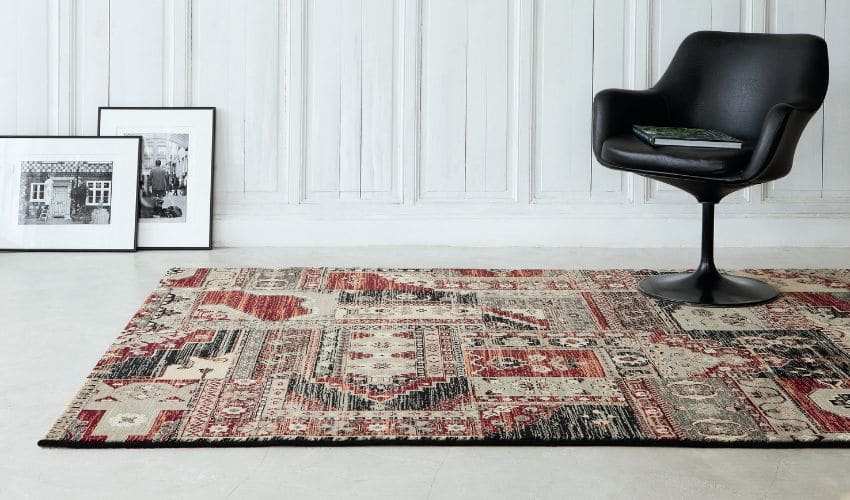
A rug is a movable floor covering designed to cover a specific area rather than the entire room. It is typically made from materials such as wool, jute, cotton, or synthetic fibers like olefin. Rugs are often used to define spaces, add texture, or introduce color and pattern into a room.
What makes rugs stand out is their flexibility. You can place them under furniture, layer them, or move them whenever needed. They are more design-driven and are often used to enhance aesthetics rather than act as a permanent flooring solution
What Is a Carpet?
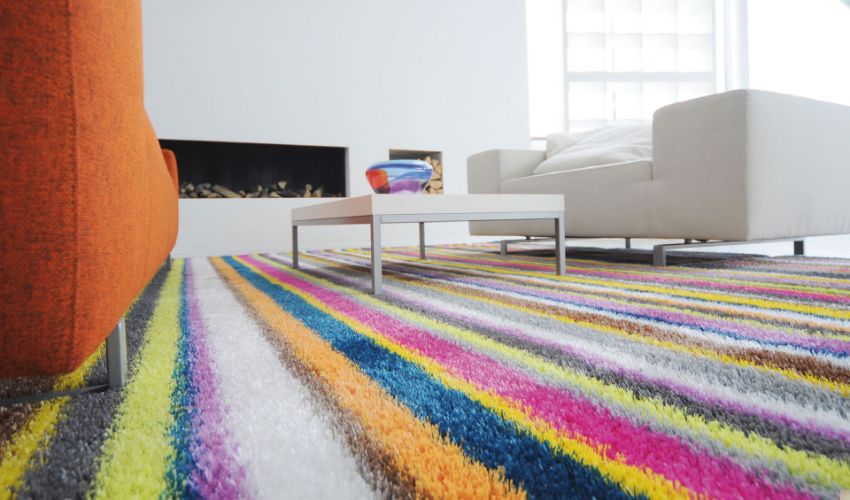
A carpet is a wall-to-wall floor covering that is installed throughout the room. It consists of a top pile layer for comfort and a backing layer that attaches to the floor. Carpets are designed for full coverage, making them more effective for insulation, comfort, and noise reduction.
Unlike rugs, carpets are not meant to be moved frequently. Once installed, they become a permanent part of the room. While modern carpets also come in various styles, their primary role remains practical, providing a consistent and comfortable surface throughout the space.
10 Differences Between Rugs and Carpets
If you want to know the difference between the rugs and carpets, read the points mentioned below
1. Size
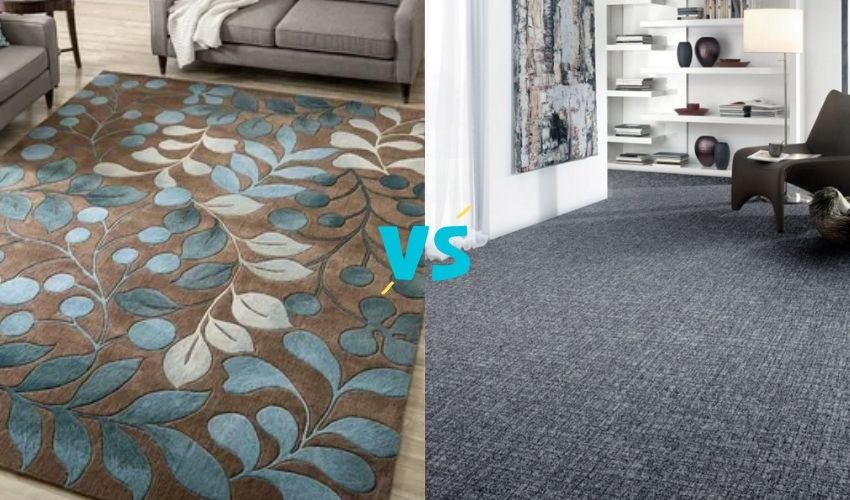
The most obvious difference lies in size. Rugs are smaller and available in standard dimensions like 3’x5’, 5’x8’, or 8’x10’. They are designed to cover specific areas, such as under a coffee table or beside a bed. Carpets, on the other hand, are measured according to the entire room. They are cut and installed wall-to-wall, making them a complete flooring solution rather than an accent piece.
2. Shape
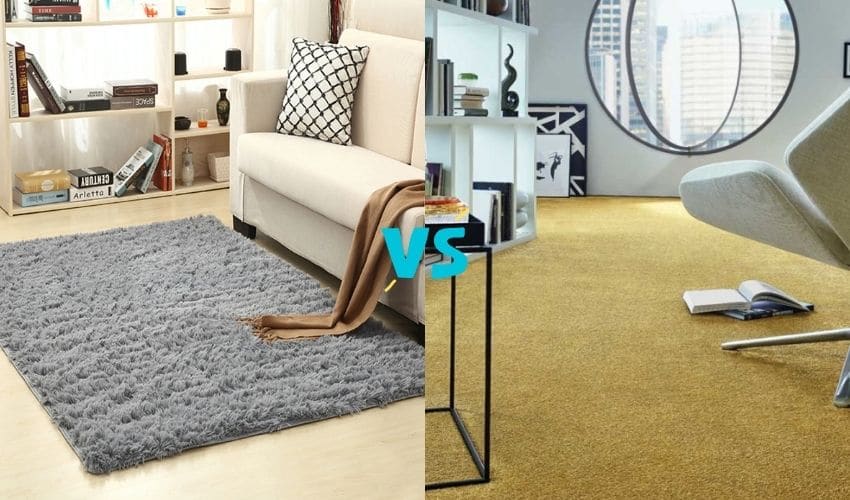
Rugs come in a variety of shapes, including rectangular, round, and oval, as well as runners. This allows more creativity in how they are used within a space. Carpets, however, are usually shaped according to the room layout, which is typically square or rectangular. This limits design flexibility but ensures a uniform and seamless appearance throughout the room.
3. Portability
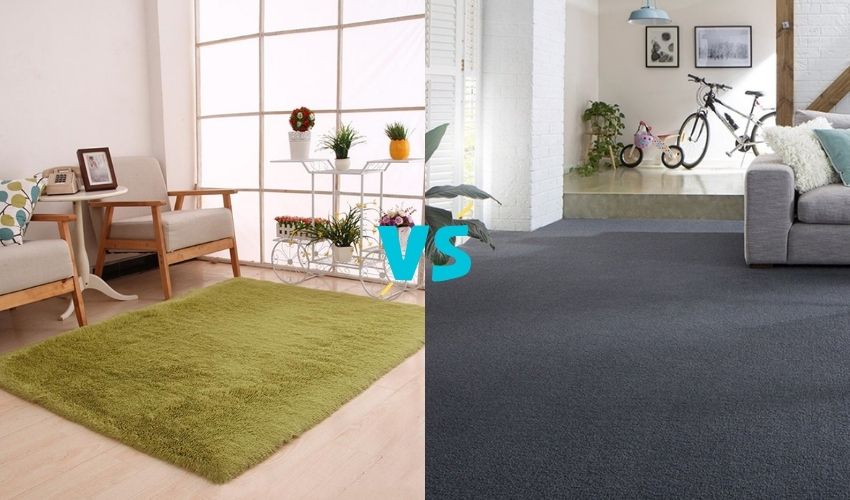
Portability is one of the biggest advantages of rugs. They can be easily moved, repositioned, or even taken to another home. This makes them ideal for people who like to update their interiors frequently. Carpets, in contrast, are fixed installations. Removing or replacing them requires effort and often professional help, which makes them less flexible in the long run.
4. Usage
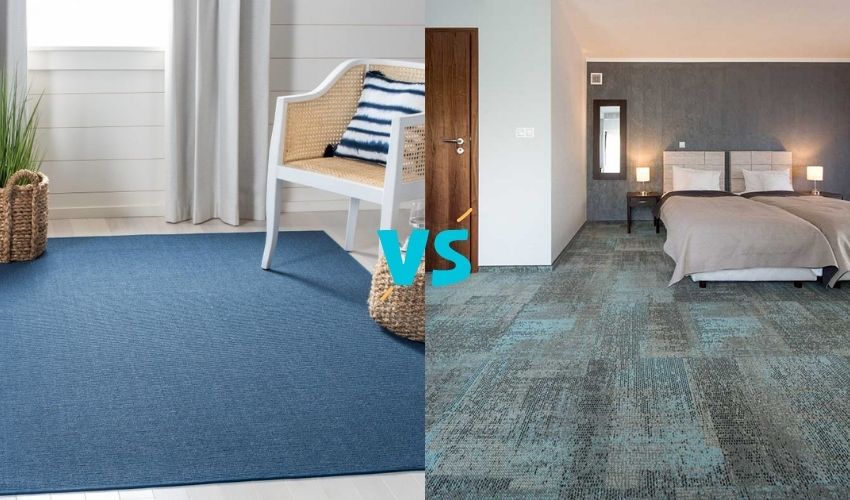
Rugs are mainly used for decoration and to highlight specific areas. They help define spaces, especially in open-plan layouts. Carpets are more functional and are used as a base flooring solution. They provide comfort underfoot, reduce noise, and add insulation, making them more of a necessity in certain environments.
5. Maintenance
Rugs are easier to maintain because they are smaller and portable. They can be shaken, vacuumed, or even washed, depending on the material. Carpets require more effort to clean since they cover the entire floor. Deep cleaning often involves professional services, and stains can be harder to remove due to the fixed nature of carpets.
6. Styles and Design
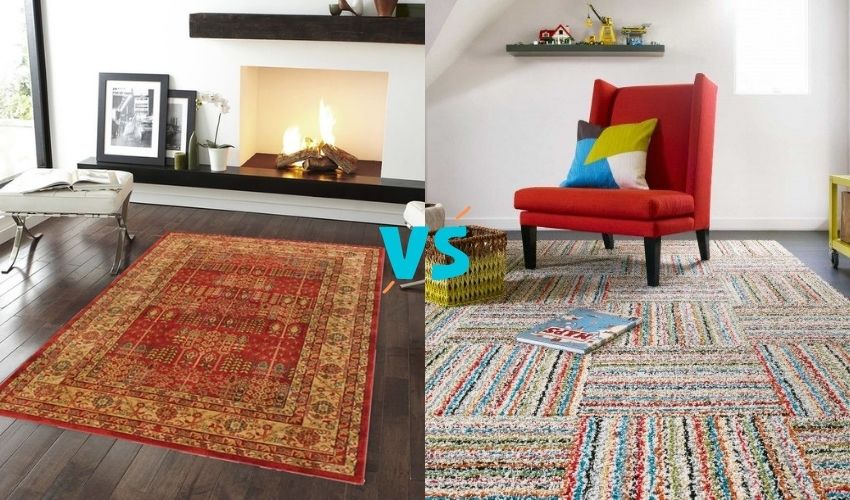
Rugs are generally more diverse in terms of design. They come in bold patterns, intricate textures, and a wide range of colors, making them ideal for adding personality to a room. Carpets tend to have more subtle designs because they cover the entire space. While modern carpets do offer style variations, they are usually less visually dominant than rugs.
7. Placement
Rugs are placed strategically in certain areas such as living rooms, bedrooms, or hallways. They can be layered or positioned under furniture to create visual zones. Carpets are installed across the entire room, providing uniform coverage. This makes carpets more suitable for spaces where consistent flooring is required.
8. Durability
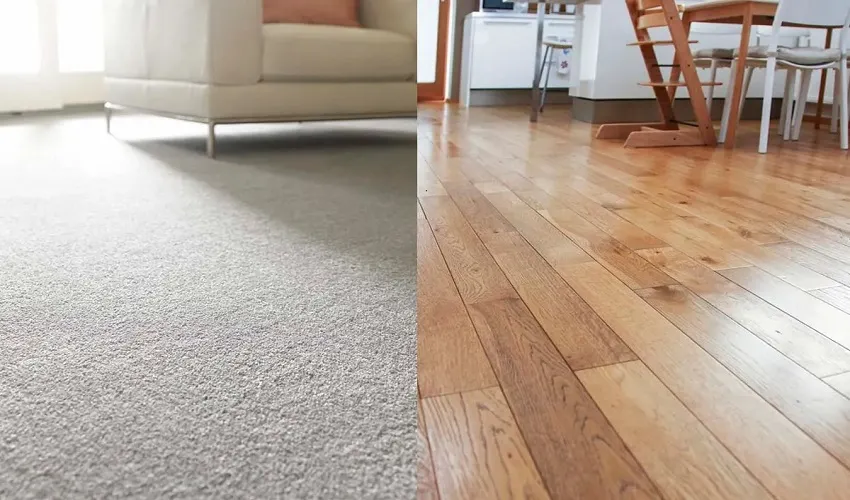
Durability depends on material and usage, but carpets generally last longer because they are designed for full-time use. Rugs, while durable in high-quality materials like wool, may wear out faster if placed in high-traffic areas. However, since rugs can be replaced individually, they offer more flexibility in managing wear and tear.
9. Permanence
Rugs are temporary additions and can be changed easily as trends or preferences evolve. Carpets are long-term installations and are often considered a fixed part of the home. This makes carpets a better choice for stability, while rugs suit those who prefer adaptability.
10. Price
Rugs are usually more affordable upfront because of their smaller size. However, high-end rugs can be expensive depending on the material and craftsmanship. Carpets require a larger investment due to installation and coverage area. Over time, maintenance and replacement costs should also be considered when comparing the two.
Rugs: Pros and Cons
Rugs offer flexibility and design freedom that carpets cannot match. They are easy to move, clean, and replace, making them ideal for dynamic interiors. Their ability to add color, texture, and personality makes them a popular choice for modern homes.
However, rugs are not without drawbacks. They can slip or bunch up, creating tripping hazards, especially in homes with children or the elderly. They also provide less insulation compared to carpets and may require additional padding for comfort.
Carpets: Pros and Cons
Carpets provide a consistent and comfortable surface across the entire room. They improve insulation, reduce noise, and create a cohesive look. This makes them particularly useful in colder environments or spaces where comfort is a priority.
On the downside, carpets are harder to clean and maintain. They can trap dust, allergens, and stains more easily. Their lack of portability also means you’re committing to a long-term design choice, which may not suit everyone.
How to Choose the Right Option?
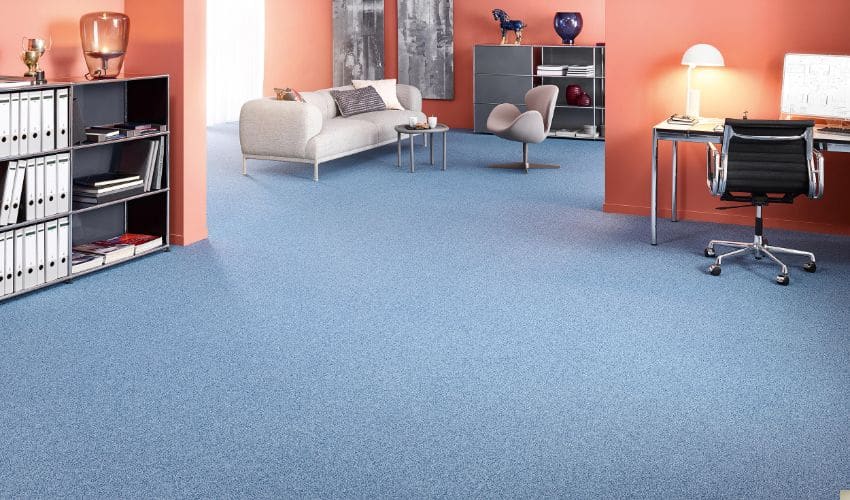
Choosing between a rug and a carpet depends on how you use your space rather than just how you want it to look. If you prefer flexibility, frequent design updates, or want to highlight specific areas, rugs are the better choice. They allow you to experiment without making permanent changes.
If comfort, insulation, and a uniform look matter more, carpets are a stronger option. They work well in bedrooms, offices, or any space where a consistent surface is needed. You should also consider factors like material, texture, color, and placement. These elements influence not only the appearance but also the practicality of your floor covering.
Final Thought
The difference between rugs and carpets isn’t just technical; it’s functional. Rugs give you freedom and style flexibility, while carpets offer stability and comfort. Instead of asking which one is better, it’s more useful to ask what your space actually needs. Once you focus on function alongside aesthetics, the decision becomes much easier and far more practical.