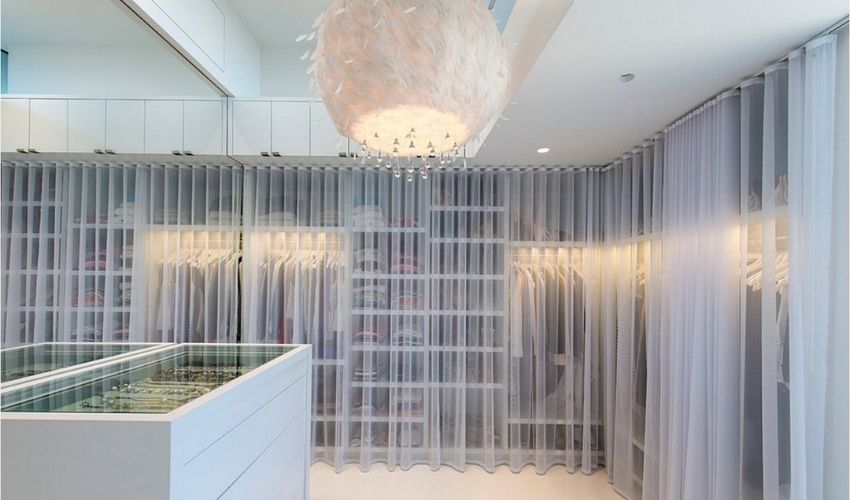
Window treatments are often treated as a finishing step. In reality, they influence how a space feels more than most furniture pieces. Light, privacy, temperature, and even perceived room size are affected by how windows are styled. Among all options, sheer curtains hold a unique position because they work subtly. They do not dominate the space, yet they shape it in a noticeable way.
Sheer curtains are made from lightweight fabrics such as voile, linen blends, cotton, or polyester. Each fabric behaves differently, but the core purpose remains the same. They filter light, soften edges, and add a layer without heaviness. This makes them relevant in modern interiors where simplicity and functionality are preferred.
Many homeowners install sheers without a clear plan. That leads to flat results. To use them effectively, you need to understand where they fit and what role they play. Below are 10 well-defined and practical uses of sheer curtains that go beyond basic decoration and help complete a space properly.
1. Add a Clean and Modern Finish to Interiors
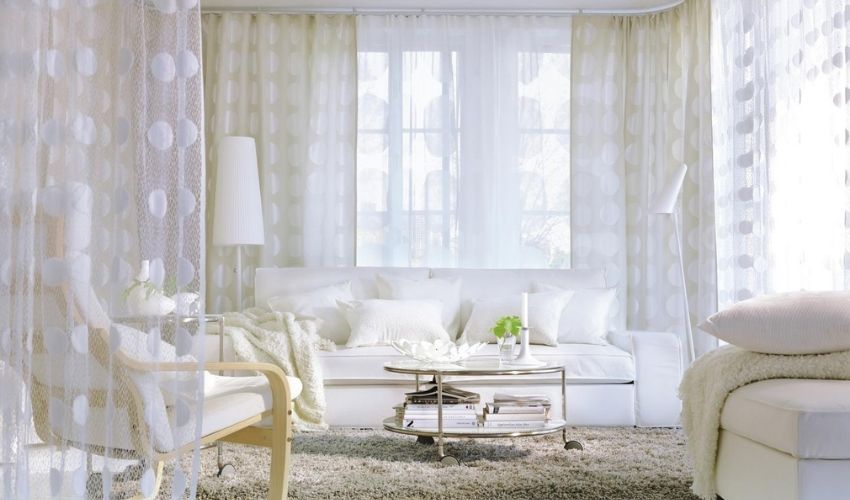
Sheer curtains help refine a room without making it feel crowded. Modern interiors rely on balance. Hard materials like glass, metal, and tiles can make a space feel cold. Sheers soften these surfaces without introducing visual clutter.
Their lightweight nature allows them to blend into the background while still improving the overall look. Neutral tones such as white, off-white, or soft beige are commonly used because they support the design instead of competing with it.
This is why sheer curtains are often seen in minimal homes. They maintain openness while still making the space feel finished. Without them, windows can look harsh or incomplete.
2. Control and Diffuse Natural Light
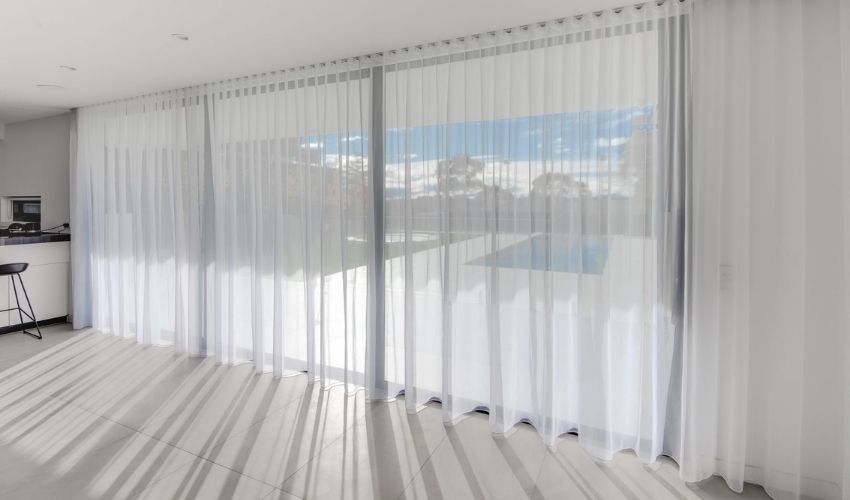
Natural light is essential, but direct sunlight can create discomfort. It causes glare, heats up the room, and fades furniture over time. Sheer curtains solve this problem by filtering light instead of blocking it.
When sunlight passes through sheer fabric, it spreads evenly across the room. This creates a softer and more comfortable environment. The room stays bright, but without sharp shadows or harsh beams.
This use is especially effective in spaces with large windows or strong sun exposure. Instead of avoiding sunlight, sheer curtains allow you to manage it properly.
3. Create a Flexible Layered Window System
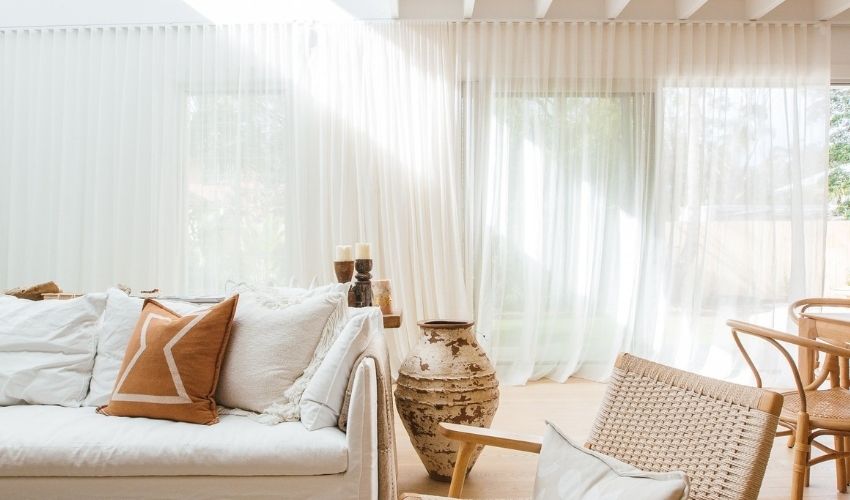
Sheer curtains are rarely used alone in functional spaces. Their real strength appears when they are layered with other treatments like blackout curtains or blinds.
During the day, the sheer layer allows light to enter while maintaining some privacy. At night, the heavier layer blocks visibility and controls light completely. This combination gives full flexibility without compromising on design.
Layering also improves insulation. It reduces heat transfer through windows, which helps maintain indoor temperature. While this may not be the primary reason for choosing sheers, it adds practical value.
4. Improve Privacy Without Making the Room Dark
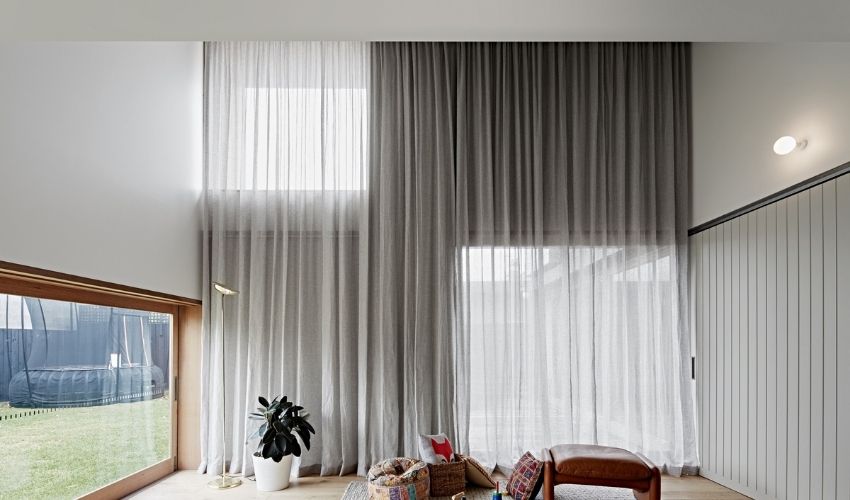
Privacy is often associated with heavy curtains. However, that approach can make a room feel closed and dark during the day. Sheer curtains offer a middle ground.
They obscure direct visibility from outside while still allowing light to pass through. This makes them suitable for living rooms, balconies, and street-facing windows where full privacy is not always required.
It is important to understand their limitation. At night, when indoor lights are on, sheer curtains alone are not enough. This is where layering becomes necessary. Used correctly, they provide daytime privacy without sacrificing openness.
5. Define Spaces in Open Layout Homes
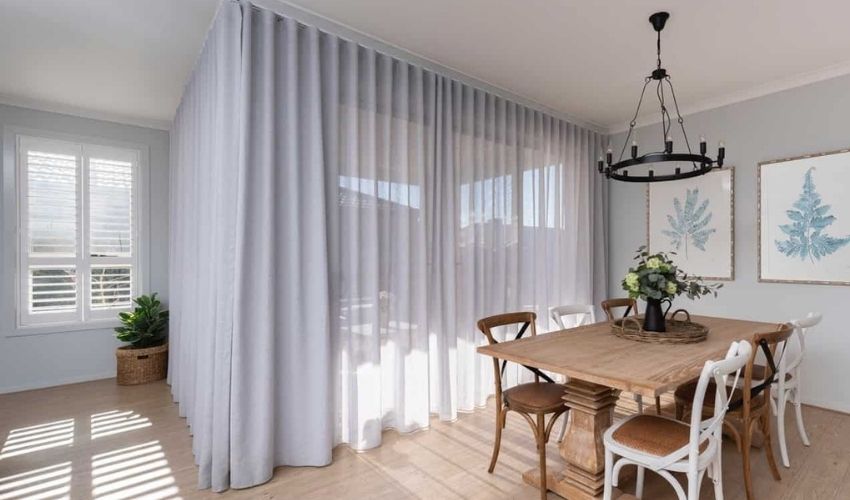
Modern homes often use open layouts. While this creates a spacious feel, it also removes clear boundaries between areas. Sheer curtains can be used to solve this problem without adding permanent structures.
They act as soft dividers. For example, they can separate a living area from a dining space or create a private corner in a studio apartment. Unlike solid partitions, they maintain light flow and visual connection.
This flexibility is valuable. Spaces can be adjusted based on need without structural changes. It is a practical solution that also enhances the design.
6. Style Large Windows with Multiple Panels
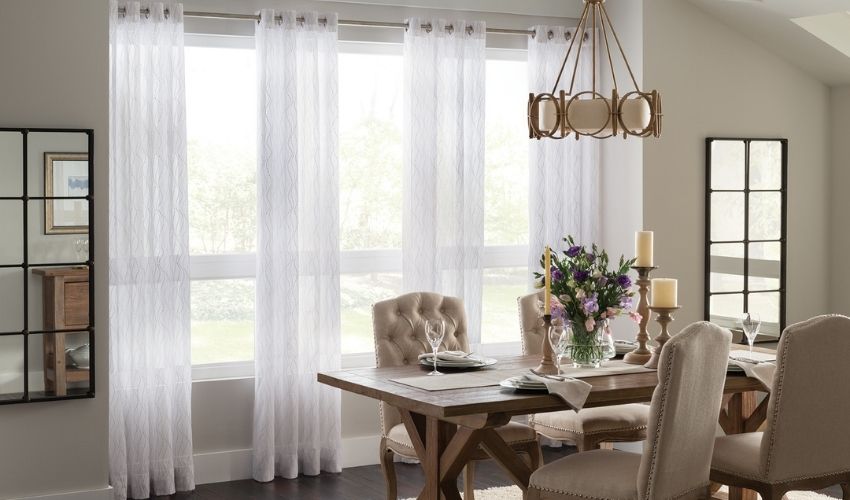
Large windows are difficult to handle with a single curtain panel. They often look stretched and lack depth. Sheer curtains allow the use of multiple panels, which improves both function and appearance.
More fabric creates natural folds. These folds add movement and texture to the room. They also improve how light spreads across the space, making it feel softer.
Combining panels in similar tones can add subtle variation. The goal is not contrast, but depth. This method works particularly well in wide living room windows or sliding glass doors
7. Enhance Bedrooms with Soft Layering
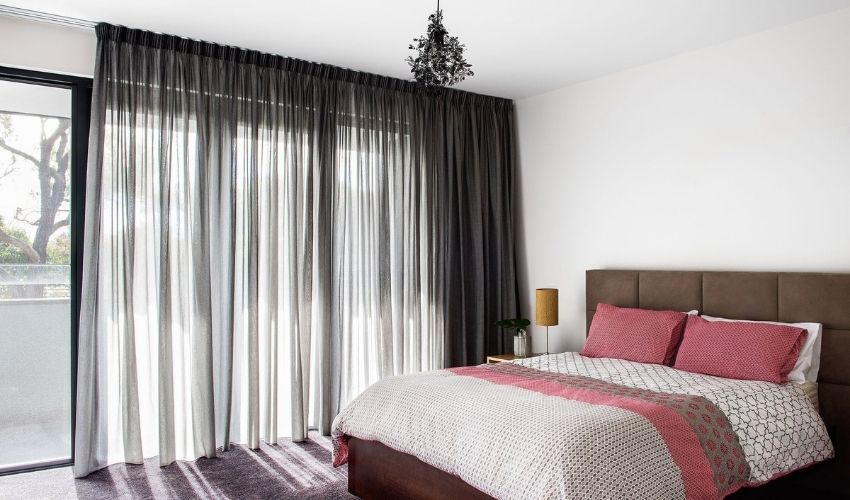
Bedrooms benefit from softness more than any other space. Sheer curtains help achieve this without adding heaviness.
They can be used around the bed as a canopy or as a backdrop behind the headboard. This creates a layered look that feels comfortable and visually balanced. It also helps define the sleeping area, especially in larger rooms.
When combined with silk curtains, sheers also contribute to better sleep conditions. During the day, they maintain brightness. At night, the layered setup ensures privacy and darkness.
8. Improve Room Proportions and Visual Scale
Sheer curtains can change how a room is perceived. Proper installation can make windows look larger and ceilings appear higher.
Mounting curtains closer to the ceiling creates a vertical line that draws the eye upward. Extending the curtain rod beyond the window frame increases the perceived width of the window. These small adjustments have a strong visual impact.
This technique is particularly useful in smaller rooms. It improves proportion without requiring structural changes or additional decor.
9. Create Ambient Lighting Effects
Lighting and sheer curtains work together to enhance atmosphere. During the day, sunlight passing through the fabric creates a soft glow. At night, artificial lighting can produce a similar effect.
Placing warm lights behind or near sheer curtains diffuses the light evenly. This removes harsh shadows and creates a calm environment. It is especially effective in bedrooms and relaxation areas.
The key is subtlety. Strong or cool-toned lighting can reduce the effect. Soft, warm lighting works best with sheer fabrics.
10. Refresh Interiors Without Major Renovation
One of the most practical uses of sheer curtains is how easily they update a space.Window curtains requires less effort than replacing furniture or repainting walls, yet it can significantly alter the room’s appearance.
Switching from heavy to sheer curtains instantly makes a space feel lighter and more open. It also aligns the room with modern design trends that favor simplicity and natural light.
This makes sheer curtains a cost-effective solution for improving interiors. They provide noticeable results without requiring major changes.
Final Thoughts
Sheer curtains are often underestimated because they appear simple. In reality, they are one of the most adaptable elements in interior design. Their strength lies in how they interact with light, space, and other materials.
Most issues come from using them without a clear purpose. Poor sizing, incorrect placement, or lack of layering reduces their effectiveness. When used thoughtfully, they can solve multiple design challenges at once.
Completing a room is not about adding more items. It is about making existing elements work together. Sheer curtains play a quiet but important role in that process. They connect different parts of a room and improve how the space feels without drawing unnecessary attention.
Read more.
- 7 Best Ways To Hang Sheer Curtains
- How To Layer Sheer And Blackout Curtains?
- Use of Rings In Hanging Curtain
- How To Hang Pocket Rod Curtains With Pin Hooks? Pro Tip