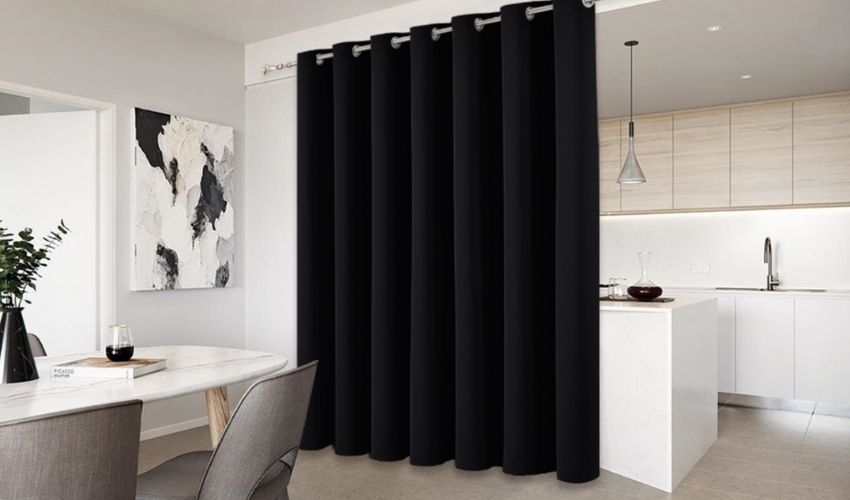
Noise has quietly become one of the biggest comfort issues in modern homes. It is no longer limited to busy streets or commercial areas. Even residential neighbourhoods now deal with constant background sound. Traffic, construction, shared walls, and open spaces all contribute to it.
Window treatments are no longer just about privacy or style. They are now part of how a space feels and functions. Many homeowners look at window curtains and blinds as simple décor choices. But both can influence how much outside noise enters a room.
At first glance, they may seem similar. Both cover windows. Both control the light. Both add to the interior look. But when it comes to noise reduction, their performance is not equal. The difference comes down to how they are built and how they interact with sound.
Why Noise Control Matters in Modern Spaces
Continuous noise exposure affects more than comfort. It slowly impacts sleep quality and concentration. Over time, it can also increase stress levels. Many people underestimate this effect because it builds gradually.
Homes located near roads, playgrounds, or commercial zones face stronger noise issues. Even indoor noise can become a problem in shared buildings. The challenge is not always a loud sound. It is often the constant presence of moderate noise.
Complete soundproofing usually requires structural changes. That means adding insulation, sealing gaps, or modifying walls. This is not always practical or affordable for most homeowners.
This is where window treatments come in. They offer a more accessible way to reduce noise. They do not eliminate sound completely, but they can lower its intensity. The result is a space that feels calmer and more controlled.
Soundproof Curtains
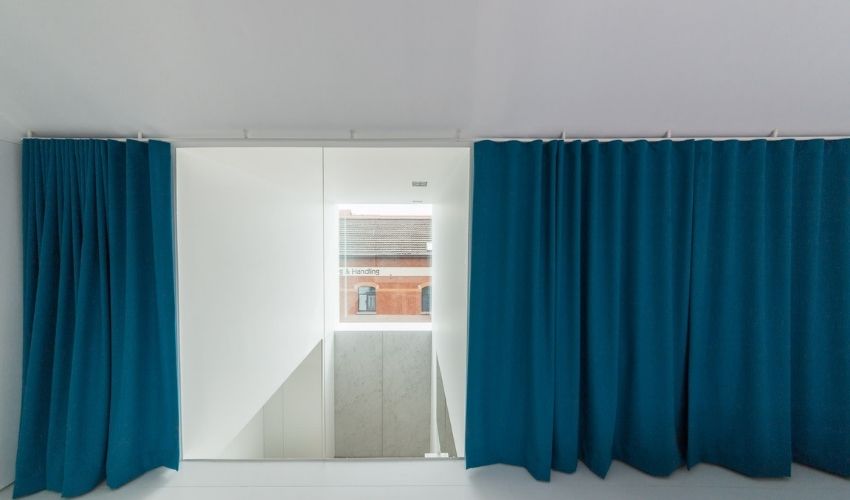
Soundproof curtains are designed with one main principle. That principle is mass. The heavier the material, the better it can absorb and block sound.
These curtains are made with multiple layers of thick fabric. Some also include mass-loaded vinyl or tightly woven cores. This combination increases density and reduces sound transmission.
Another important factor is coverage. Modern soundproof curtains are designed to extend beyond the window frame. They cover the sides and sometimes even reach the floor completely. This reduces the gaps where sound can enter.
They work by absorbing sound waves before they pass through the glass. They also reduce echo inside the room. While they are not completely soundproof in technical terms, they create a noticeable difference.
They are especially effective against common urban noise. This includes traffic, voices, and general outdoor activity. The improvement is not subtle. In many cases, it changes how the room feels entirely.
Soundproof Blinds
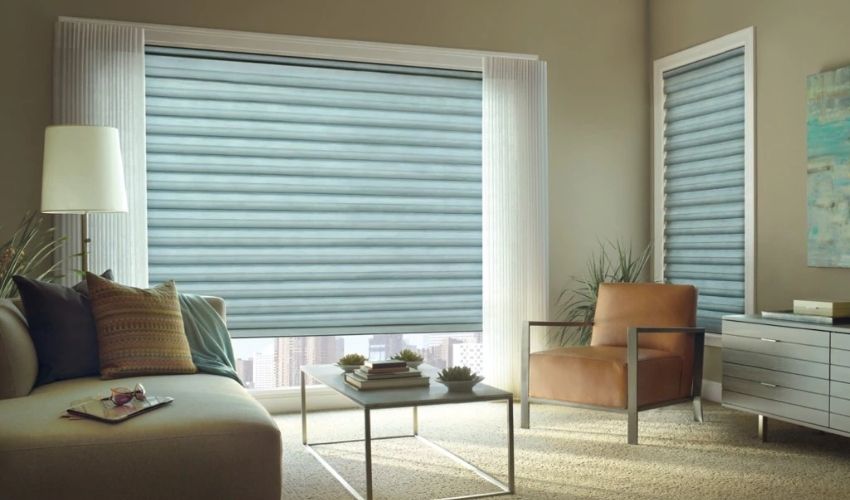
Blinds take a different approach. Instead of relying on weight, they rely on structure. Their design focuses more on insulation than absorption.
Cellular or roman blinds are the most common example. They contain air pockets within their layers. These pockets trap air and create a barrier. This helps with temperature control and slightly reduces sound.
However, blinds have a structural limitation. They cannot fully seal the window. Small gaps remain around the edges and between slats. Sound easily travels through these openings.
Even when thicker materials are used, the overall effect remains limited. Blinds can soften noise slightly. They can also reduce echo inside a room. But they do not block external noise in a significant way.
This makes them more suitable for mild acoustic improvement. They are not ideal for environments with strong or constant noise.
Key Differences That Matter
The difference between curtains and blinds becomes clear when you focus on performance. Curtains are designed to absorb and block sound. window Blinds are designed to manage light and provide basic insulation.
Curtains create a more continuous surface. This reduces the paths through which sound can travel. Blinds, on the other hand, are segmented. Their structure allows sound to pass through more easily.
Another key difference is density. Curtains use heavy materials that slow down sound waves. Blinds rely on trapped air, which offers only partial resistance.
This is why expectations need to be realistic. Curtains can noticeably reduce noise levels. Blinds can only soften them slightly.
Soundproof Curtains vs Blinds — Comparison Table
| Feature | Soundproof Curtains | Soundproof Blinds |
| Noise Reduction | High and clearly noticeable | Moderate and limited |
| Material | Thick, layered, high-density | Lightweight or structured |
| Coverage | Full coverage with minimal gaps | Partial coverage with gaps |
| Performance Focus | Absorption and blocking | Insulation and diffusion |
| Best Use Case | Strong external noise control | Mild indoor sound control |
| Installation | Requires rods or track systems | Simple and quick fitting |
| Aesthetic | Soft, heavy, and layered look | Clean and minimal style |
| Cost | Medium to high | Medium |
Can You Combine Both?
Layering curtains and blinds has become a practical design approach. It is not only about aesthetics anymore. It also improves performance.
Blinds can manage light and privacy during the day. Curtains can be used when stronger noise reduction is needed. This combination allows flexibility throughout the day.
However, layering should be done with intention. Using both without a clear purpose can make the space feel heavy. The goal should be balance and function. When done correctly, layering offers better results than relying on a single solution.
What Should You Choose? Soundproof Curtains or Blinds
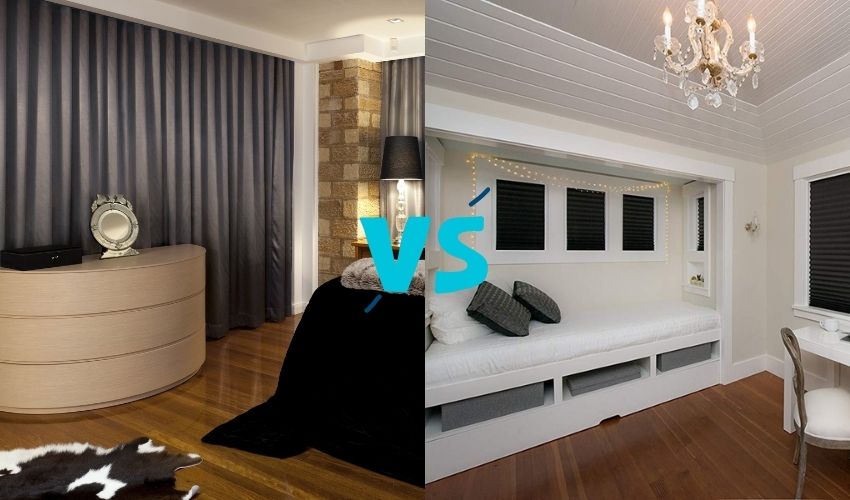
The right choice depends on your priority. If reducing outside noise is important, curtains are the stronger option. Their material and coverage give them a clear advantage.
Blinds work better in controlled environments. They suit spaces where noise is not intense. They are also preferred for a minimal and clean look. In many real-world situations, curtains provide more noticeable benefits. Blinds can support the setup, but they rarely replace it.
Final Thought
The term “soundproof” often creates unrealistic expectations. Neither Motorized curtains nor blinds can block sound completely on their own. True soundproofing requires structural solutions. However, the difference in performance still matters. Curtains reduce noise in a way that is easy to notice.
Read More.