How To Cut Vinyl Flooring By Using Best Tools
How To Cut Vinyl Flooring By Using Best Tools
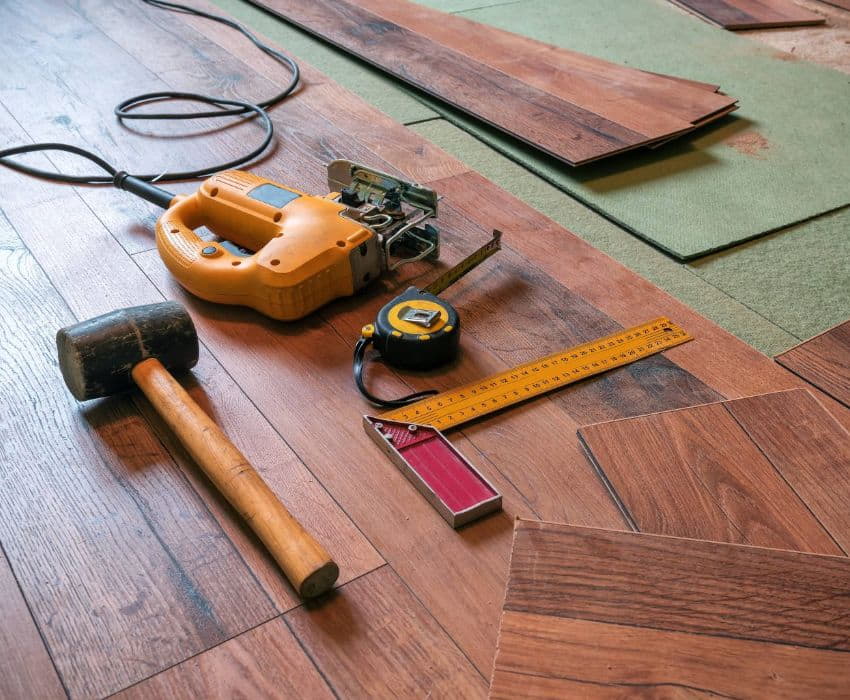
Vinyl flooring comes in narrow, medium, and large rectangular planks. To lay them in diverse patterns (herringbone, diagonal, staggered), you need to cut them to the specific dimensions and your preferred design needs.
Vinyl plank trimming, when accurately performed, guarantees an effortless and precise flooring installation. In this article by Fixing Expert, we’re going to explain the right way to cut vinyl flooring and the different tools that can be used for this purpose. We will also suggest the best ones for this purpose.
Types Of Tools For Cutting Vinyl Flooring
When it comes to the available choices, there are two different tool options to cut vinyl plank flooring, as explained.
- Manual Handy Tools
- Power Tools
1. Handy Tools
This category, of course, comprises tools that need to be operated manually for cutting vinyl flooring. In this section, there are various tools, and we’re going to explain them one by one.
1. Hand Saw
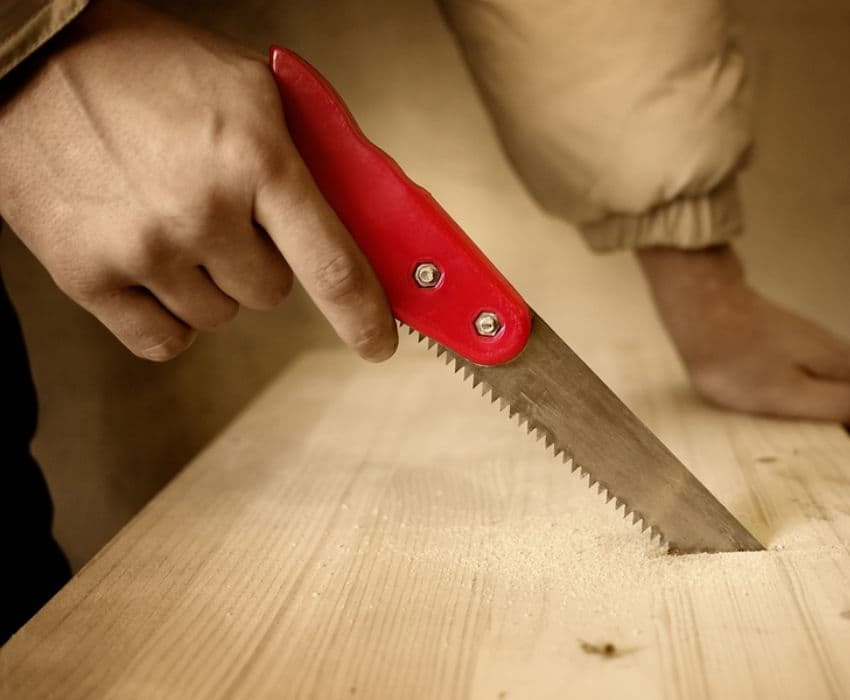
Almost all people can use a hand saw because it’s too simple to operate and doesn’t require any expertise. For this purpose, you’ll have to take care not to damage yourself (as with all other cutting tools). You need a hand saw with fine teeth (more than 12 blades TPI–tooth per inch) to easily cut vinyl planks.
2. Utility Knife
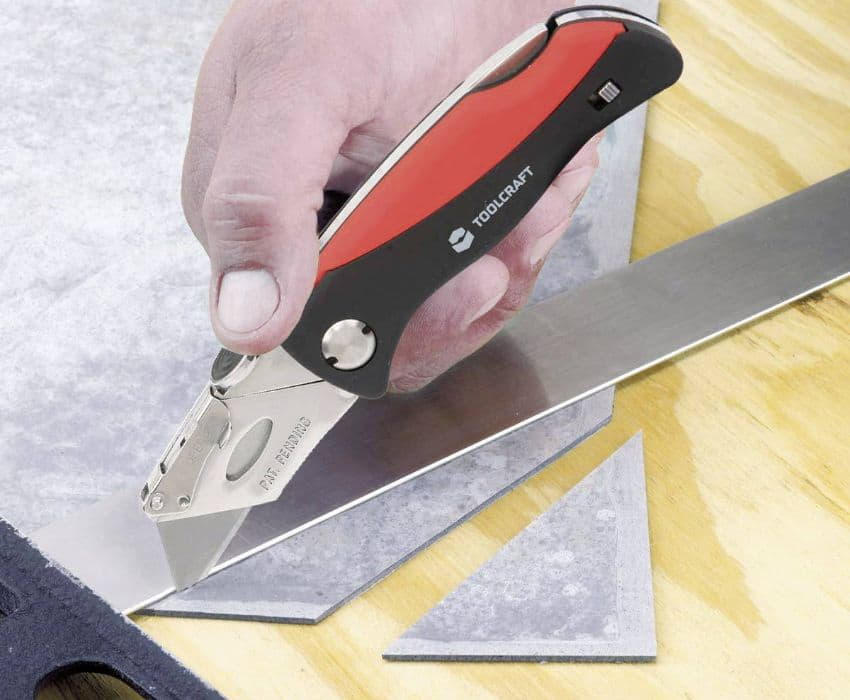
The next option is to use a utility knife to make minor cuts in the vinyl floors. In other words, you can give marks or indentations utilizing a utility knife to indicate where to start cutting. And, of course, the whole flooring can’t be cut just by using a utility knife.
3. Vinyl Plank Cutter
The portable, light-weight, and efficient vinyl plank cutter has a lever system. It is made of aluminium and steel alloy with durable and sharp removable blades. It is operated manually by applying force to the handles, allowing for both straight and angled cuts. You can see the dimensions and the angles on the built-in scale.
4. Wall Trimmer

A wall trimmer is a valuable tool that can easily cut vinyl sheets applied to the wall surfaces. It features a precise control knob and can easily cut through planks of vinyl flooring.
5. Scissors
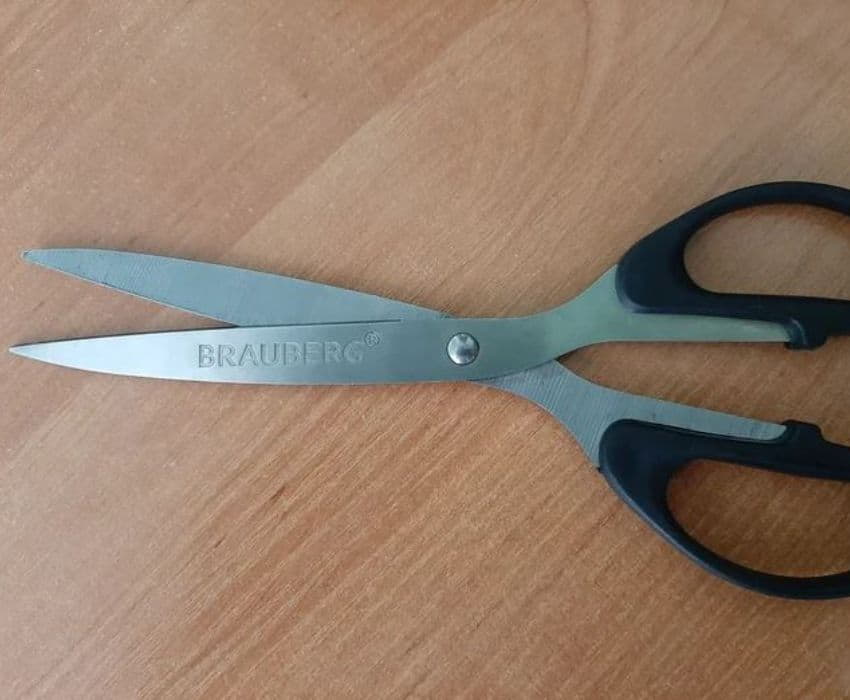
Soft sheets of vinyl flooring can be cut using scissors. Also, scissors can function the same as a utility knife, in case one can’t be found in the household. Thus, you can also place marks to identify and cut the vinyl sheets.
6. Snap Cutter
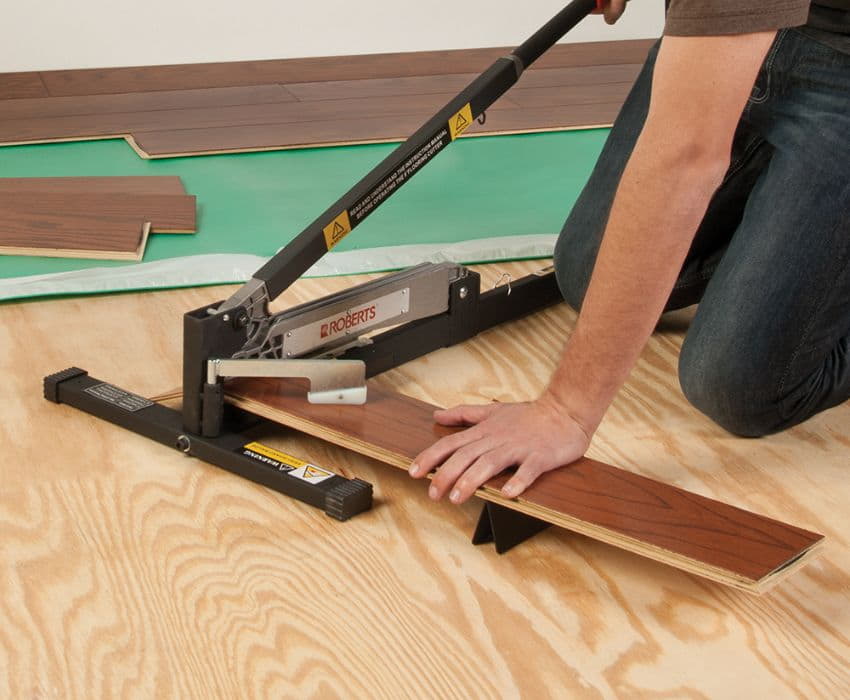
A snap cutter or tile cutter is a great tool to cut vinyl plank flooring. Keep in mind that snap cutters come in various versions for cutting different surfaces. You can rent a tile cutter that is used for flooring installations. That’s because it comprises a sharp blade to cut the vinyl sheets or planks without any crumbs.
Pros & Cons Of Cutting Vinyl Planks With Manual Handy Tools
Let’s take a look at the pros and cons of using handy tools to cut vinyl plank flooring.
Advantages
- There is no electricity usage for handy tools, and the respective cost is saved.
- Handy tools are best for small-scale flooring installations.
- Such tools require no expertise for operation.
Disadvantages
- Handy tools can’t be used for large-scale flooring installations.
- Manual tools require more effort to cut flooring.
2. Power Tools
Power tools are most commonly used for large-scale vinyl flooring installations to complete the process efficiently. Let’s explore how to cut vinyl flooring using power tools. These cutting tools operate on electricity, and the recommended ones are explained below.
1. Miter Saw
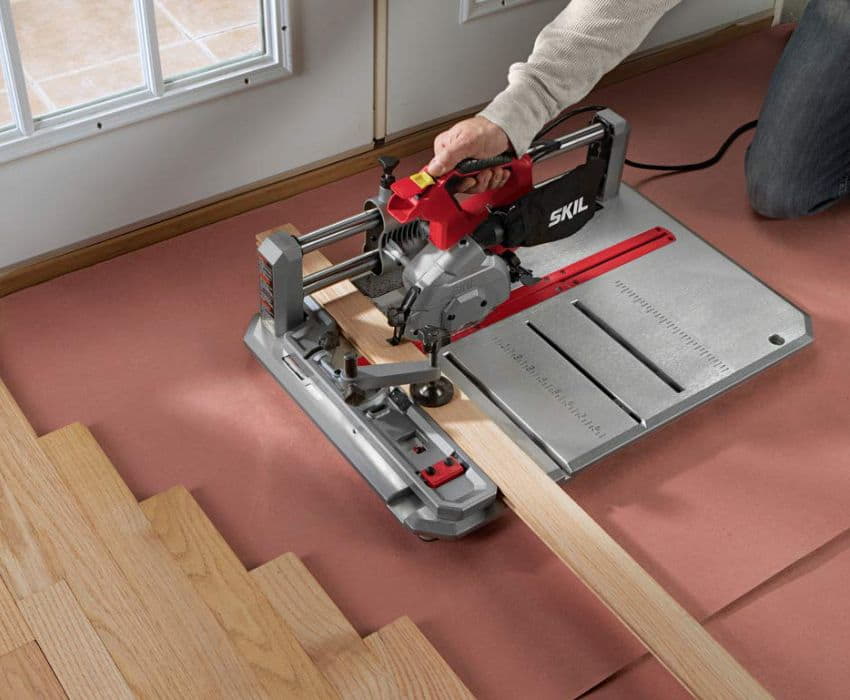
A miter saw is a power-operated cutting tool used in vinyl plank installation projects. It cuts vinyl flooring planks just like a table saw. However, you won’t find it ideal if you want to cut your vinyl flooring sheets longitudinally. Again, you’ll need a fine-toothed blade when a miter saw is to be used.
2. Jigsaw

It’s undeniably one of the best cutting tools for vinyl plank flooring installations. That’s because a jigsaw lets you cut vinyl sheets in any direction and shape. Also, you’ll find a jigsaw to be most useful when cutting around odd corners and pipes for installing vinyl flooring.
3. Circular Saw
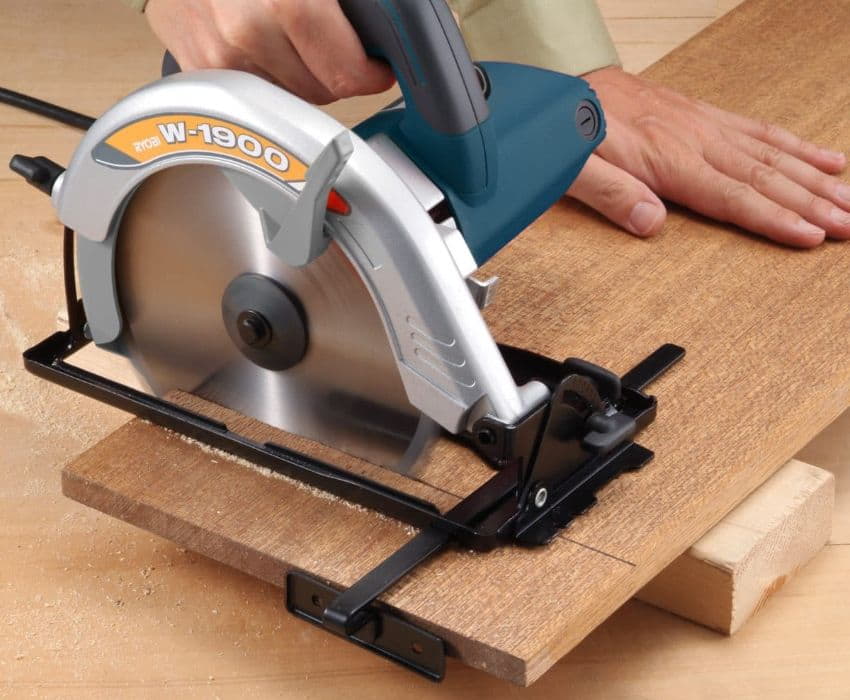
A circular saw is a cutting tool that’s even better than a jigsaw for cutting vinyl flooring. That’s because a circular saw can cut vinyl planks rapidly and efficiently. All you need to know is to keep the plank positioned correctly under the blade.
However, some of you may find the circular saw a bulky machine and therefore, would like to find an alternative. Don’t worry, a mini-handheld circular saw is just the right option for you then. It’s smaller in size and equally as efficient as the larger version.
4. Table Saw
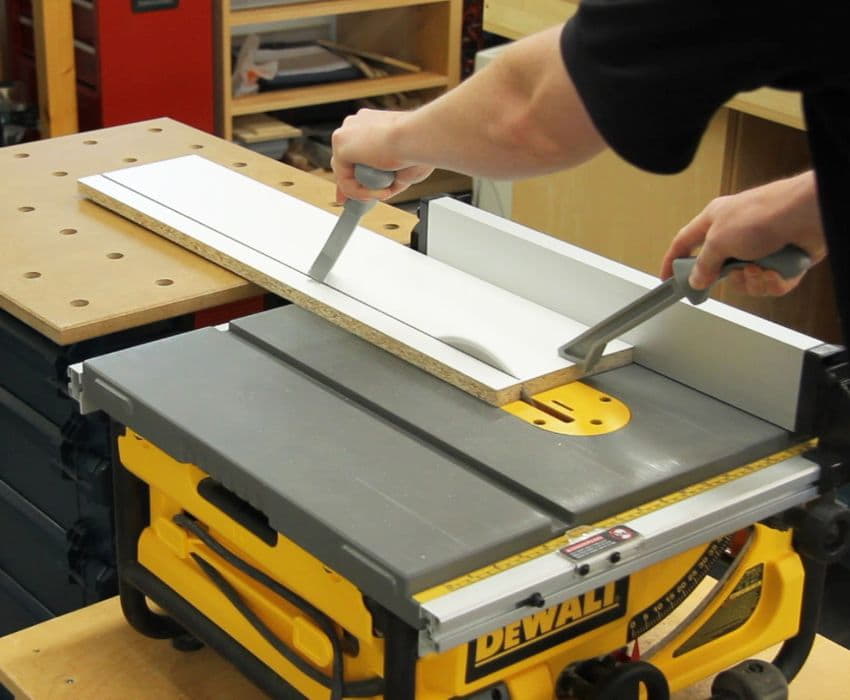
This tool is used by professionals who know how to cut vinyl plank flooring. A table saw can be used to shape the planks into the desired shape before installation. Again, you should not use a blade with low TPI (teeth per inch) because it will result in uneven, rough cuts.
5. Dremel
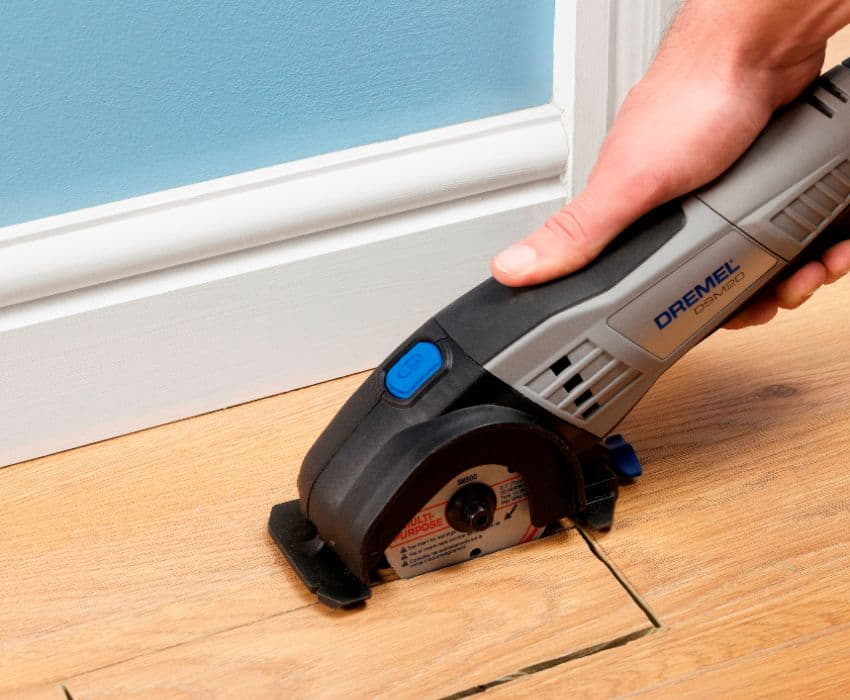
For grinding, shaping, and polishing the vinyl planks for commercial projects, a Dremel is commonly used. This cutting tool comprises a rotary blade at one end for engraving and routing purposes. Even though small in size, there will be no efficacy complaints when using a Dremel for cutting vinyl plank flooring.
Benefits & Limitations Of Cutting Vinyl Planks With Power Tools
Just as the perks and pros are enjoyable, the downsides of using power tools for cutting vinyl planks can’t be overlooked.
Benefits
- These tools can cut textured or embossed laminate tiles quickly.
- There’s no need to put that much effort into it as with manual cutting tools.
- All the cuts are even and smooth when using power tools.
Limitations
- Mostly, power tools are large-sized equipment mounted in one place and can’t be moved. So, you need to take individual planks and make cuts in them.
- Power tools for cutting vinyl planks are the primary reasons for a surge in electricity bills.
How To Cut Vinyl Flooring?
After choosing the ideal tools for cutting the vinyl planks, it is time to fit the planks.
1. Cutting Short Length
First, you need to decide whether to give a longitudinal cut or a horizontal cut. Measure the plank or tile and mark the cut accordingly. Now, you must score the cut line and snap off the cut section.
2. Cutting Longer Length
Determine and mark the cut area of vinyl flooring. Score the cut line and secure the plank or tile tightly in place. Use a jigsaw to cut the flooring into pieces along the cut line.
3. Cutting Vinyl Flooring For Pipes and Corners
Measure pipes or corners precisely. Score the cut lines on the flooring plank surface to fit it exactly into the desired space. Never score the curved cut marks with bare hands.
4. Cutting Peel-And-Stick Vinyl Flooring
Take measurements and draw the cut mark using a pencil. Using a utility knife, cut the vinyl flooring to the exact size.
Safety Tips For Cutting Vinyl Planks
When dealing with cutting tools, you need to be careful to avoid injury. You should follow the safety tips mentioned below to keep yourself safe from any kind of harm.
1. Eyes Protection
You should wear safety goggles when dealing with cutting tools. It will keep the wood dust from harming your eyes when cutting the vinyl plank.
2. Hearing Protectors
There’s immense noise from power-cutting tools, which can cause hearing damage. Therefore, it’s essential to make use of earmuffs or earplugs to protect your ears.
3. Rubber Gloves
Rubber gloves are mandatory when cutting vinyl flooring planks. That’s because these gloves will protect your hands and fingers from damage in case of an accident or other unexpected situations.
Final Thoughts
A DIY vinyl installation project requires you to have proper knowledge. In this article, we’ve categorized and explained all the manual and power tools, along with their benefits, used for cutting vinyl planks to the desired shape and size. Additionally, the process of cutting vinyl plank flooring has also been illustrated in detail. If you still have any questions or concerns, feel free to ask in the comment section.
Read more about How To Combine Tile And Wood Flooring?
FAQs | Frequently Asked Questions
1. How to Ensure A Straight Cut When Cutting Vinyl Plank Flooring?
Never give it a second thought when cutting vinyl plank flooring. Make sure that the cutter blade comprises fine teeth with high TPI (teeth per inch) to give a smooth and straight appearance.
2. How To Minimize Waste When Cutting Vinyl Flooring?
When cutting vinyl plank, make sure that you cut the plank to the desired size, starting at the plank’s periphery to minimize the waste
3. How To Prevent Chipping Or Cracking Of Vinyl Plank During Cutting?
Most commonly, vinyl planks are chipped or cracked when cut with a rough-tooth blade. That’s why you should always apply a fine-tooth blade with more TPI value to avoid chipping or cracking
4. How To Make Curves Or Irregular Cuts In Vinyl Flooring?
Usually, you’ll have to make curves or irregular cuts in vinyl flooring when applied around the edges and corners. To begin with, always take precise measurements of the area to ensure a proper fit and draw cut lines.
5. How To Join Two Pieces Of Vinyl Flooring After Cutting Them?
First, lay the vinyl flooring and overlap the seams up to 1 inch. Then, glue down the overlapped seams for attachment purposes. Don’t forget to match the wood texture when overlapping the seams for a continuous flooring design appearance.